
Articles · Sep 11, 2026
Hedra AI Review 2026: Features, Pricing, and How It Compares
An honest Hedra AI review for 2026: what the avatar models and Studio do well, where they fall short, pricing, and how it compares for interactive avatars.
This review is for teams deciding whether Hedra fits their next avatar project. We looked at the whole platform: the avatar models that turn a still image and an audio track into a talking-character clip, and the Creative Studio and developer API built around them.
Along the way we checked avatar creation, expressiveness, render times, languages, output quality, and pricing, using Hedra's own product pages as the source for every fact. Where Hedra does something well, we say so, and where it falls short, we say that too.
What is Hedra?
Hedra calls itself a research lab for visual intelligence. It builds AI models that generate video, images, and audio, and it runs the platform where people use them, from solo creators up to large businesses.
The product splits into three parts. Creative Studio is an agent you brief, and it plans, generates, and edits across video, image, and audio models on a canvas the whole team can share. The avatar models, Character-3, Hedra Avatar, and Omnia, turn a still image and an audio track into a talking-character clip. And a developer API puts the full model catalog behind one key, Hedra's own models and models from other labs alike. The pricing page reports more than 20 million users, developers, and businesses.
The company keeps shipping, too. Its newest avatar model, Omnia, released in February 2026, adds moving environments and camera control to the character performances, and the Studio agent picked up reusable skills, saved brand elements, and connectors to the tools your team already uses.
Pre-rendered vs. interactive avatars
Since everything Hedra sells renders video ahead of time, it helps to understand the difference between pre-rendered and interactive avatars before we go feature by feature.
A pre-rendered avatar video is generated before anyone watches it. You pick a character, supply the audio, and the platform renders a finished clip, so every viewer sees the same video. An interactive avatar works more like a video call. It is generated during the conversation itself, which means it listens while you talk, thinks about a reply, and renders the character saying it in real time.
| Pre-rendered avatar video | Interactive avatar | |
|---|---|---|
| What it is | A finished clip rendered from an image and audio before anyone watches it | A character generated during the conversation itself |
| Hedra's product | Character-3, Hedra Avatar, and Omnia, with the Studio and the API over them | None today |
| How you interact | Playback only, the same clip for every viewer | Two-way, it answers you like a video call |
| Typical uses | UGC ads, explainers, brand and podcast clips | Support, sales demos, tutoring, kiosks |
Everything Hedra ships is a pre-rendered avatar product. We checked hedra.com for a live product, and there is not one today. The avatar models, the Studio, and the API each return a finished clip you download or publish. Hedra's research pages describe models that perceive and predict the physical world, but that work has not shipped as an avatar you can talk to.
Hedra review at a glance
Here's how Hedra performs across the dimensions we evaluated:
| Dimension | What Hedra ships | Notes |
|---|---|---|
| Primary product | Pre-rendered character video via Character-3, Hedra Avatar, and Omnia | Creative Studio and a developer API sit on top |
| Avatar creation | A still image plus an audio track, any style of character | No training step or per-avatar setup |
| Expressiveness | Audio-driven motion and micro-expressions, camera control on Omnia | Expression is guided by text prompt, per clip |
| Video length | Uncut clips up to 10 minutes on the longform models | Omnia generates about 8 seconds at 1080p |
| Languages | Full multi-language support on Hedra Avatar | Voice models from ElevenLabs and MiniMax in the catalog |
| Resolution | 540p, 720p, and 1080p on the avatar models | Other catalog models reach 4K |
| Pricing | Free plan, paid plans from $15/month | Avatar video bills per second of finished clip |
Product and pricing information: Hedra product and pricing pages, September 2026.
Characters and avatar creation
This covers the pre-rendered avatars, because every character Hedra makes ends up in a rendered clip. Making one is simple. You upload a still image, add an audio track, and the model returns the character speaking it, with no training step and no per-avatar setup. The range is wide too, and Hedra's own example galleries run from photorealistic presenters to a talking bear, a fox scientist, an app mascot, and a claymation musician.
To keep a character recognizable across projects, the Studio lets you save characters, products, and visual references as Elements, which the agent reuses in later generations.
Strength: Character range is an area Hedra handles well. If it fits in a picture, the models can make it talk, and stylized and non-human characters get the same treatment as photorealistic humans.
Limitation: Consistency between clips takes work, because each video is a fresh generation. Hedra's own guidance recommends keeping a library of approved character angles so the same character looks the same across videos.
Expressiveness and motion
This also covers the pre-rendered avatars, and it is where Hedra has invested most recently. The models are audio-driven, so the voice you upload shapes the performance. The rhythm of the speech influences how the body moves, and emotional cues in the voice shape the facial expressions. Omnia adds micro-expressions like blinks and eyebrow raises, continuous body movement, and stable hands, plus camera direction you write into the prompt, so a clip can push in on the character or orbit it while it talks.
Strength: The performances are expressive for rendered video, and the camera control is something most avatar tools do not offer at all.
Limitation: You direct expression with text prompts, one clip at a time, and nothing changes once a render starts. Hedra's own guidance also notes that characters sometimes over-gesture, with a restraining line in the prompt as the fix.
Render times and video length
These numbers describe the pre-rendered avatars. Hedra's models generate finished clips, so the time that matters is how long a render takes and how long a clip can run. Character-3 and Hedra Avatar both output uncut videos up to 10 minutes, with the length set by your audio, so a 3-minute recording becomes a 3-minute video. Omnia trades length for control and generates around 8 seconds at 1080p, which means longer Omnia pieces are assembled from clips.
Strength: The 10-minute cap on the longform models is generous, and billing follows the finished clip, so a 10-second video is charged as 10 seconds.
Limitation: Hedra does not publish typical render times for its avatar models, so test with your own scripts before you commit to a production schedule.
Languages and voices
Language coverage runs through the pre-rendered avatars as well. Hedra Avatar ships with full multi-language support, so the character speaks whatever language the audio carries, and speaker selection handles scripts with more than one voice, talking or singing.
The audio itself can come from the same platform. The catalog includes ElevenLabs voice models, a multilingual tier among them, and MiniMax speech models covering 40+ languages, so you can generate the voiceover and the video in one place.
Strength: The audio side is well covered, because the platform that animates the character also generates the speech, in one workflow.
Limitation: There is no built-in translation product on hedra.com, so re-voicing a finished video into another language means generating new audio and rendering the clip again.
Developers and integration
Hedra's API covers the whole catalog, the avatar models included, and everything it produces is pre-rendered video. One key authenticates every model. You submit a job, then poll for the result or receive a signed webhook when it finishes, and a playground builds a ready-to-run request from each model's schema. Billing on the developer side is in dollars per generation.
The Studio connects outward as well. MCP connectors link the agent to the tools and data your team already uses, and Multiplayer Spaces put everyone on one canvas in real time.
Strength: The developer experience is thorough, with signed webhooks, structured errors, and one endpoint across video, image, and audio models.
Limitation: Every job is asynchronous. You submit and wait for a finished file, so the API cannot stream an avatar into a live conversation.
Resolution and output
Most of these numbers describe the pre-rendered avatars. The avatar models render at 540p, 720p, or 1080p, across aspect ratios from square to widescreen and vertical. Elsewhere in the catalog the ceiling is higher, with video models reaching 4K and Topaz upscalers available for cleaning up finished footage.
Strength: 1080p avatar output covers social and marketing work, and the upscalers give you a path above it.
Limitation: The avatar models themselves stop at 1080p, so 4K character video means adding an upscaling step after the render. And if you cancel a subscription, the account keeps only limited watermarked generations until you resubscribe.
Pricing and plans
Pricing works the same across everything Hedra generates, because it runs on one credit system. Credits are the unit of work for video, image, and audio alike, and avatar video is deducted by the second of finished clip, so short videos cost less than long ones.
There is a free plan to start, with no credit card required. Paid plans add monthly credits, faster generation, and commercial use.
| Plan | Monthly price | Included credits | Notes |
|---|---|---|---|
| Basic | $15 | 1,500/month | Slower generations, commercial use |
| Creator | $30 | 5,400/month | Faster generation |
| Professional | $75 | 14,400/month | Fastest generation, Teams access |
| Teams | $75 | 14,400/month | The business plan, same allowance |
| Enterprise | Custom | Custom | Private deployments, SSO, dedicated support |
Pricing captured from hedra.com's pricing page, September 2026, billed monthly. Confirm current rates before you buy.
On the developer side, avatar video bills per second of finished clip, from 2.5 cents at 540p up to 6.25 cents at 1080p. And read the credit rules before you choose. Monthly credits reset each billing cycle and do not roll over, while credits from credit packs never expire.
What is LemonSlice and why it's a better Hedra alternative
LemonSlice is an AI research lab building interactive characters that talk, listen, and react in real time. You give it a photo, and moments later that character is on screen holding a live conversation with your users.
The easiest way to picture it is through what you can build. An avatar tutor can walk a student through a problem step by step and react to every answer. A support agent can greet customers on your site and help them face to face, not through a chat window. A sales avatar can run a demo, answer questions, and qualify the lead while it talks. The same characters work as onboarding guides inside a product, kiosk concierges, and language partners that let learners practice without pressure.
Under the hood it runs a Character World Model, an end-to-end video diffusion transformer. It is the same class of model behind Veo 3 and Sora, run live during the conversation. Every pixel is generated at 20fps on a single GPU, body and background included, so nothing is composited or pre-recorded.
Creation is instant, with no training to wait on, no per-avatar fee, and unlimited avatars on every plan. If it has a face, LemonSlice can animate it, so cartoons, animals, and mascots work as well as photorealistic humans.
The character also has a body and an environment. Hand gestures and natural body language emerge as part of the performance. You can trigger emotions like happiness, sadness, and anger through the Action Engine, and an image update changes clothing or scene mid-conversation.
It's fast too. LemonSlice 2.1 Flash responds in 471ms on average, making it the fastest model among major avatar providers in published benchmarks, and users consistently rate the avatars as more expressive and natural to talk to.
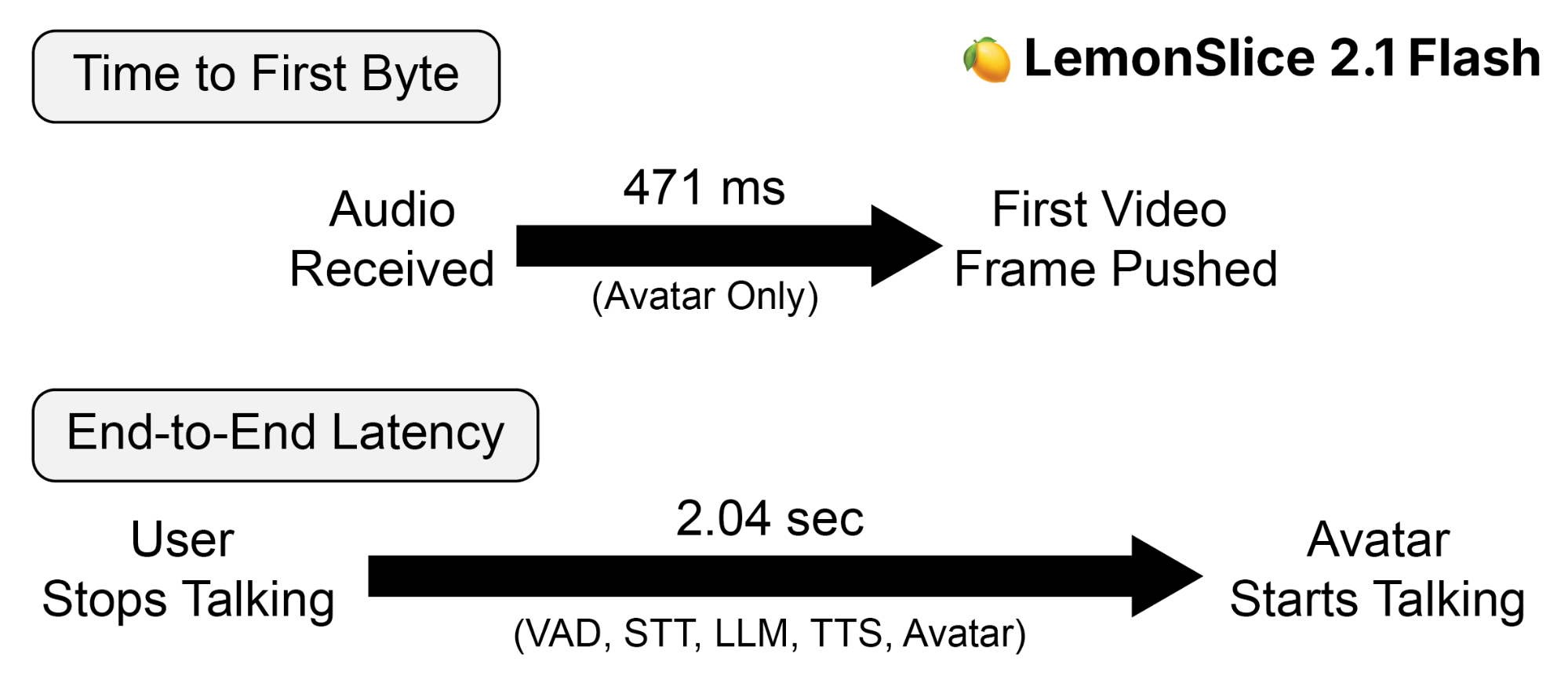
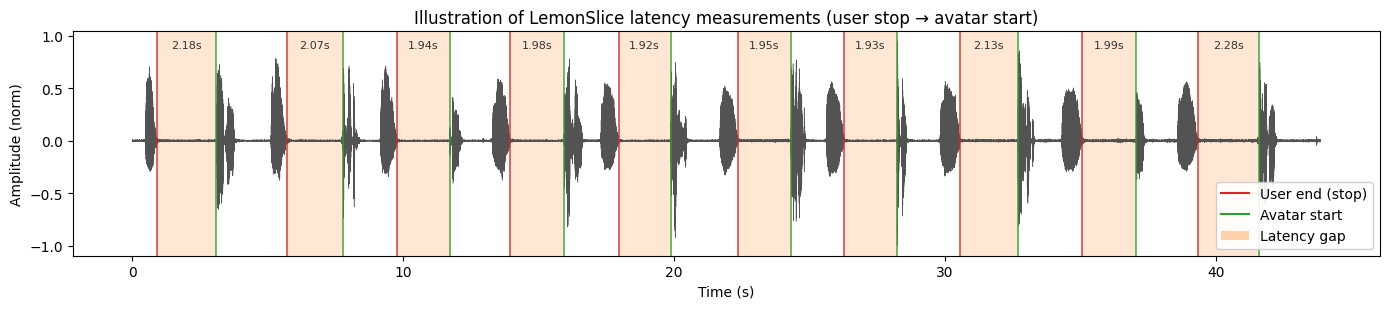
That is why LemonSlice is the better Hedra alternative for interactive avatars. A Hedra character performs a script inside a rendered clip, while LemonSlice generates the character live during the conversation, so it can listen, answer, and react to the person in front of it.
You can chat with a featured avatar for free, then build your own from $8/month.
LemonSlice vs. Hedra: comparison at a glance
Here's how the two stack up side by side:
| LemonSlice | Hedra | |
|---|---|---|
| Photorealistic humans | ✅ | ✅ |
| Cartoon and stylized characters | ✅ | ✅ |
| Non-human characters | ✅ | ✅ |
| Live two-way conversation | ✅ | ✖️ |
| Dynamic hand gestures in live conversation | ✅ | ✖️ Rendered clips only |
| Controllable emotions | ✅ Action Engine, mid-conversation | Text prompt, set per clip |
| Clothing and scene swaps | ✅ Mid-conversation image update | ✖️ New render per change |
| Camera direction | ✖️ | ✅ Push-ins, tracking, orbits on Omnia |
| Cost per minute | $0.1367/min avatar-only (top self-serve plan) | $1.50 to $3.75 per minute of rendered avatar video (API, by resolution) |
| Speed | Live replies, 471ms fastest among major avatar providers | Renders before playback, render times unpublished |
| Integrations | LiveKit, Pipecat, Agora, WebSockets, any LLM or voice provider | One API across models, signed webhooks, MCP connectors |
| Resolution | 512px standard, HD on Enterprise | ✅ 1080p avatar models, 4K elsewhere in the catalog |
| Pre-rendered clip production | ✖️ | ✅ |
| Entry price | $8/month | ✅ Free plan, paid from $15/month |
Product and pricing information: vendor product and pricing pages, September 2026.
Who should use Hedra
Choose Hedra for character video production. Creators and marketing teams get talking-character clips in any style from a single image, uncut runs up to 10 minutes, and camera control on Omnia for clips that feel directed.
It's also a reasonable pick as a general creative workspace, because the Studio agent plans and generates across leading video, image, and voice models on one canvas, and the API puts the same catalog behind one key for developers.
Who should use LemonSlice
Choose LemonSlice when the interactive avatar is the product. Consumer-facing experiences, tutors, and companion apps reward expressiveness, and users consistently rate LemonSlice avatars as more natural to talk to.
It's also the better fit for physical installations, because LemonSlice powers some of the most visible in the world, including Microsoft's life-size AI Teddy Roosevelt.
And if you're a developer wiring a face onto an existing voice agent, LemonSlice plugs straight into LiveKit, Pipecat, and Agora, and works with any LLM or voice provider.
The Verdict
Choose Hedra if your main job is pre-rendered character video. The avatar models animate any style of character from one image, the Studio agent covers the creative work around the clip, and Omnia adds camera control most avatar tools do not have. A free plan lets you try all of it without a card.
Choose LemonSlice if your main job is an interactive avatar. The avatars are more expressive and natural, with hands and a full body that respond live, and they can be any character in any style, created instantly from a single photo. The published response times lead the category.
The clearest way to decide: if the avatar performs a script, choose Hedra. If it holds a conversation you want users to stay in, choose LemonSlice. And if you want to see the difference before you decide, talk to a LemonSlice avatar and judge it for yourself.