
Articles · Sep 11, 2026
Runway Review 2026: Features, Pricing, and How It Compares
An honest Runway review for 2026: what the Gen-4.5 models and Characters avatars do well, where they fall short, pricing by plan, and how it compares for interactive avatars.
This review is for teams deciding whether Runway fits their next video project. We looked at both sides of the product: the generation side that renders finished video from prompts and edits, and the newer Characters side that holds live conversations.
Along the way we checked the model lineup, the editing workspace, the avatar product, ease of use, output quality, and pricing, using Runway's own product pages as the source for every fact. Where Runway does something well, we say so, and where it falls short, we say that too.
What is Runway?

Runway is an AI research company that builds video models, and it describes its work as Real-World Intelligence, models that understand, simulate, and act in the world. The company reports more than 60 million creatives using its tools.
The product splits into three platforms. Runway Creative is the workspace where you generate and edit video, images, and audio in one place. Runway Dev is the API platform for developers, and Runway Robotics applies the same models to physical machines. This review covers the Creative platform and the avatar product, because those are the two sides a video or product team would actually evaluate.
The models sit at the middle of all of it. Gen-4.5, Runway's newest video generation model, turns text and images into video, while Aleph 2.0 edits footage that already exists, so you change one frame and the edit carries through the whole clip. The workspace also carries licensed models from other labs, including Kling 3.0 and Seedance, all billed through one credit balance.
The newest addition is Runway Characters, real-time video agents you create from a single image and talk to live. We cover it in its own section, because it is a different kind of product from the rest of the platform.
Pre-rendered vs. interactive avatars
Most of what Runway generates is pre-rendered video, finished clips with nobody talking back, but its Characters product makes interactive avatars, so it helps to understand the difference between the two before we go feature by feature.
A pre-rendered video is generated ahead of time. You write a prompt or a script, the platform renders a finished clip, and every viewer watches the same video. An interactive avatar works more like a video call. It is generated during the conversation itself, which means it listens while you talk, thinks about a reply, and renders the character saying it in real time.
| Pre-rendered video | Interactive avatar | |
|---|---|---|
| What it is | A finished clip rendered from a prompt before anyone watches it | A character generated during the conversation itself |
| Runway's product | Gen-4.5, Aleph 2.0, and the Creative workspace | Runway Characters, billed through Runway Dev |
| How you interact | Playback only, the same clip for every viewer | Two-way, it answers you like a video call |
| Typical uses | Ads, film shots, social clips, edited footage | Support, tutoring, sales demos, kiosks |
Runway ships both, and its core is the pre-rendered work, because the workspace, the plan credits, and nearly every model revolve around finished clips. Characters carries the interactive avatars, and it arrived much more recently.
Runway review at a glance
Here's how Runway performs across the dimensions we evaluated:
| Dimension | What Runway ships | Notes |
|---|---|---|
| Primary product | Pre-rendered video via the Creative workspace | Characters is the interactive avatar product |
| Model lineup | Gen-4.5, Aleph 2.0, plus licensed models from other labs | One credit balance covers them all |
| Editing | Edit Studio, Runway Agent, one-job apps, node-based Workflows | Projects capped per plan |
| Interactive avatars | Characters, real-time agents from one image at 24fps | Billed separately through Runway Dev |
| Ease of use | Apps and an agent for fast starts, Academy for training | Per-model credit rates take learning |
| Resolution | Up to 1080p generation with 4K upscaling | HDR and ProRes on the Max plan only |
| Pricing | Credit plans from $12/month on annual billing | Standard and Pro credits reset monthly |
Product and pricing information: Runway product and pricing pages, September 2026.
Models and generation quality
This section is about the pre-rendered videos, because generation is Runway's core job. The in-house lineup covers the main creative formats:
- Gen-4.5 generates new video from text and images, built for motion quality, prompt adherence, and visual fidelity
- Aleph 2.0 edits existing footage, so one changed frame updates the whole clip
- Image and audio models cover stills, music, speech, and sound effects
On top of its own models, Runway licenses models from other labs, including Kling 3.0, Seedance 2.5, and Nano Banana Pro. That matters in practice, because you can run the same prompt through several models and keep the best result without paying for a second subscription.
Strength: The lineup is broad, and one plan covers Runway's own models plus the licensed ones, which makes the workspace a single place to compare outputs.
Limitation: Generation runs in short segments, with Gen-4.5 billed at 60 credits per 5 seconds, so longer videos are assembled from multiple clips and every attempt draws from the same credit balance, including the ones you discard.
Editing tools and the workspace
This covers the pre-rendered videos too, because everything renders into the same Creative workspace. Runway is more than a prompt box, and the tools around the models are a real part of what you pay for.
Edit Studio, built on Aleph 2.0, lets you edit one frame of a video and apply the change to the rest of it. Runway Agent plans and builds an end-to-end video from a plain conversation. There is also a growing set of one-job apps, like Add Dialogue, Remove from Video, and Change Backdrop, plus node-based Workflows that chain models together for more control. Runway MCP even connects the platform to assistants like Claude and ChatGPT.
Strength: Generation, editing, upscaling, and audio all live in one place, which saves the export and import loop between separate tools.
Limitation: Projects are capped per plan, three on Standard and ten on Max, and the toolset is large enough that Runway runs its own Academy to teach it.
Characters and interactive avatars
This one is about the interactive avatars. Runway Characters are real-time video agents made from a single image. You drop in a picture, pick a voice or clone one from a sample, and start talking, and the platform supports photorealistic and animated styles, human or not.
The product around the avatar is fairly complete. A knowledge base grounds answers in your own documents, tool calling lets the character trigger actions in your app, and Vision lets it see a webcam or a shared screen. Deployment runs through a one-line widget, a React SDK, a LiveKit integration, or directly inside Zoom, Meet, and Teams meetings.
On speed, Runway quotes a 1.75 second server-side turnaround from when you stop speaking, with video streamed at 24fps. That figure measures the server's part of the reply, so the wait a user actually feels also includes the network and the rest of the pipeline. Interface research puts the comfortable pause near one second, which makes the full round trip the number to ask about.
Strength: The ecosystem is well built for a young product, because the knowledge base, tool calling, and the one-line widget cover most of what a first deployment needs.
Limitation: Characters bills through Runway Dev credits instead of your Creative plan, so subscription credits do not cover avatar sessions, and each session is metered separately at 2 credits per 6 seconds.
Ease of use and learning curve
This covers both the pre-rendered videos and the interactive avatars, because both start from the same account. The friendliest paths in are the one-job apps, which take an upload and a prompt, and Runway Agent, which turns a described idea into a finished video. There are also mobile apps for iOS and Android, so first results do not require a desktop.
Character setup is simple as well. Drop an image, pick a voice, and start the chat.
Strength: Getting a first result is easy, and the apps and the Agent get a non-technical user to usable output without learning the full workspace.
Limitation: Credit budgeting takes learning, because every model bills at its own rate, 60 credits per 5 seconds on Gen-4.5 against 140 for Aleph 2.0, and the rate also moves with duration and resolution.
Resolution and output
Most of the numbers here describe the pre-rendered videos. Generations run up to 1080p, every paid plan includes 4K upscaling, and no paid plan carries a watermark. The Max plan adds studio-grade formats, including HDR, ProRes, and image sequences. For the interactive avatars, Characters streams at 24fps in HD, with sample clips published at 720p.
Strength: Output quality is an area Runway handles well, and if a clean, watermark-free 4K deliverable is your first requirement, the platform covers it from the entry plan up.
Limitation: 4K arrives through upscaling, native generation tops out at 1080p, and the studio-grade formats sit on the Max plan only.
Pricing and plans
Pricing runs on one credit system for the Creative platform, and every generation draws from the same balance whether it is video, image, or audio. The interactive avatars are the exception, because Characters bills separately through Runway Dev.
The free plan includes 125 one-time credits that never expire, plus 5GB of storage. There is no monthly refill, so the free credits work as a one-time test drive.
| Plan | Monthly price (annual billing) | Monthly credits | Notes |
|---|---|---|---|
| Free | $0 | 125 one-time | 5GB storage, credits never expire |
| Standard | $12 | 625 (about 52s of Gen-4.5) | 3 projects, no watermarks, 4K upscaling |
| Pro | $28 | 2,250 (about 187s of Gen-4.5) | Custom voice clone, credit top-ups |
| Max | $76 | 9,500 (about 791s of Gen-4.5) | One-month credit rollover, HDR and ProRes |
Pricing captured from Runway's pricing page, September 2026, with annual billing selected. Monthly billing runs higher, with Standard at $15. Confirm current rates before you buy.
Read the meter rules before you choose. Standard and Pro credits reset each billing cycle without rolling over, Max carries unused credits forward one month, and top-up credits, which sell in blocks of 1,000 or more, do not expire. Character sessions bill through Runway Dev at 2 credits per 6 seconds, which works out to about $0.20 per minute of conversation.
What is LemonSlice and why it's a better Runway alternative
LemonSlice is an AI research lab building interactive characters that talk, listen, and react in real time. You give it a photo, and moments later that character is on screen holding a live conversation with your users.
The easiest way to picture it is through what you can build. An avatar tutor can walk a student through a problem step by step and react to every answer. A support agent can greet customers on your site and help them face to face, not through a chat window. A sales avatar can run a demo, answer questions, and qualify the lead while it talks. The same characters work as onboarding guides inside a product, kiosk concierges, and language partners that let learners practice without pressure.
Under the hood it runs a Character World Model, an end-to-end video diffusion transformer. It is the same class of model behind Veo 3 and Sora, run live during the conversation. Every pixel is generated at 20fps on a single GPU, body and background included, so nothing is composited or pre-recorded.
Creation is instant, with no training to wait on, no per-avatar fee, and unlimited avatars on every plan. If it has a face, LemonSlice can animate it, so cartoons, animals, and mascots work as well as photorealistic humans.
The character also has a body and an environment. Hand gestures and natural body language emerge as part of the performance. You can trigger emotions like happiness, sadness, and anger through the Action Engine, and an image update changes clothing or scene mid-conversation.
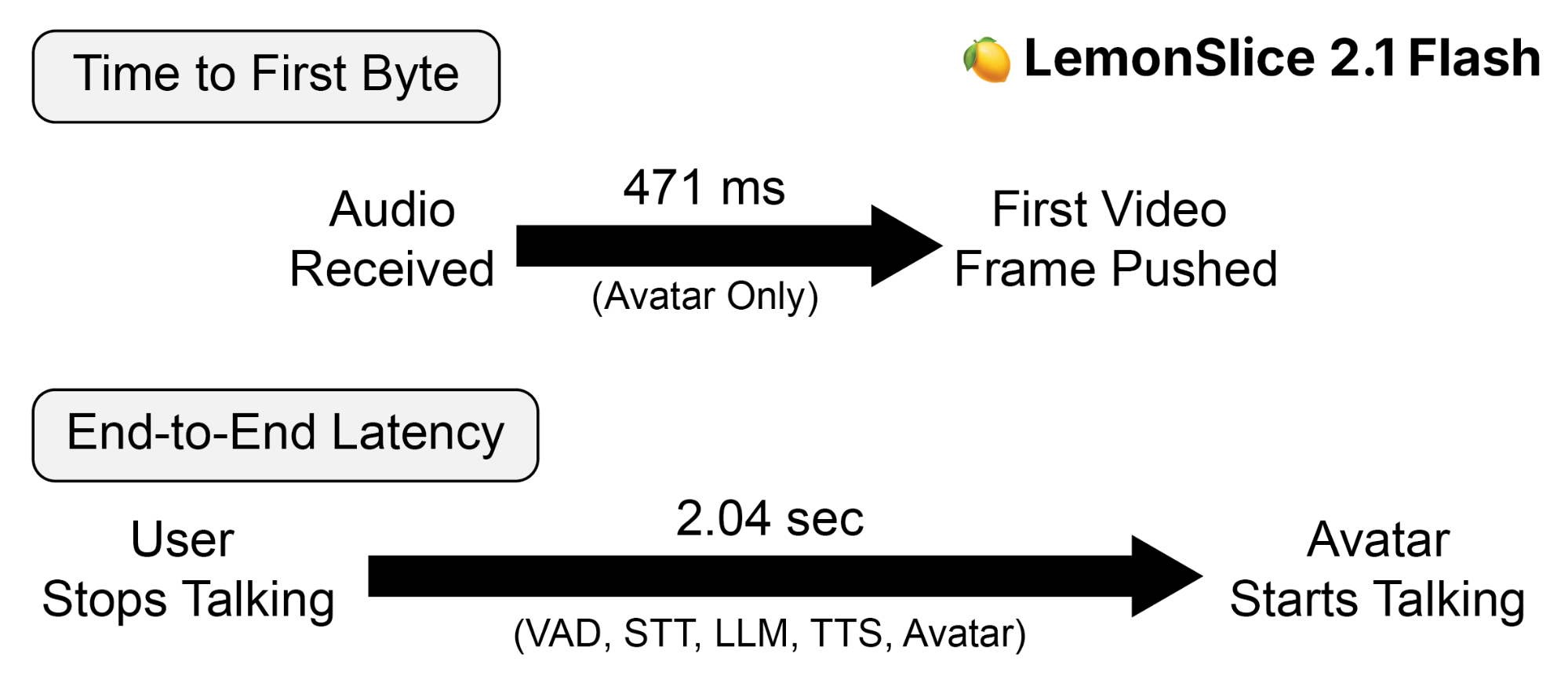
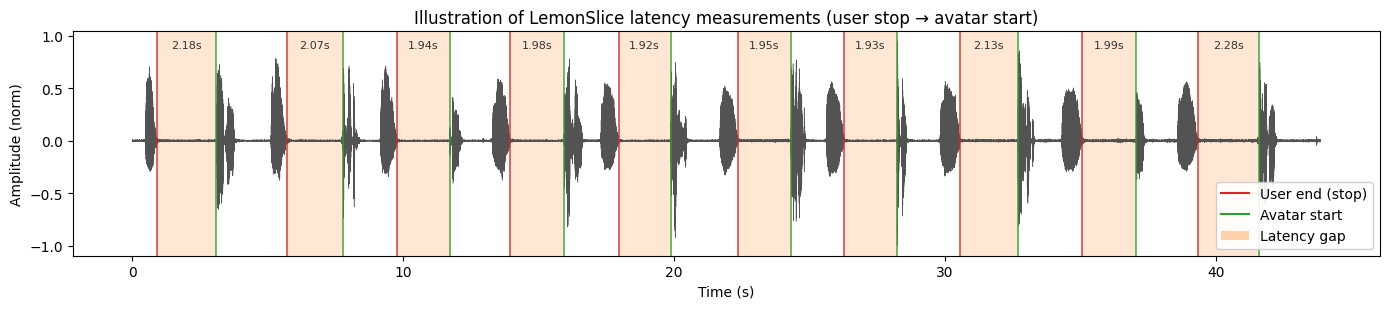
It's fast too. LemonSlice 2.1 Flash responds in 471ms on average, making it the fastest model among major avatar providers in published benchmarks, and users consistently rate the avatars as more expressive and natural to talk to.
That focus is why LemonSlice is the better Runway alternative for interactive avatars. Runway is a video platform with an avatar product attached, while LemonSlice builds the avatar as the whole product, with triggerable emotions and mid-conversation clothing and scene changes that Runway's Characters pages do not list.
You can chat with a featured avatar for free, then build your own from $8/month.
LemonSlice vs. Runway: comparison at a glance
The two overlap on interactive avatars, so that is where the table focuses:
| LemonSlice | Runway | |
|---|---|---|
| Photorealistic humans | ✅ | ✅ |
| Cartoon and non-human characters | ✅ | ✅ |
| Live conversation | ✅ | ✅ Characters |
| Triggerable emotions and actions | ✅ Action Engine | ✖️ Not listed |
| Clothing and scene swaps | ✅ Mid-conversation image update | ✖️ Not listed |
| Custom avatar cost and creation time | $0, instant from one photo, unlimited on every plan | $0, instant from one image, unlimited |
| Cost per minute | $0.1367/min avatar-only (top self-serve plan) | About $0.20/min of active session (Dev credits) |
| Speed in end-to-end benchmarks | Fastest among major avatar providers | No published end-to-end benchmark, vendor quotes 1.75s server-side |
| Integrations | LiveKit, Pipecat, Agora, WebSockets, any LLM or voice provider | ✅ LiveKit, React SDK, widget, plus Zoom, Meet, and Teams meetings |
| Resolution | 512px standard, HD on Enterprise | ✅ HD at 24fps for avatars, 1080p video with 4K upscaling |
| Pre-rendered video production | ✖️ | ✅ Full Creative suite |
| Entry price | $8/month | $12/month on annual billing, avatar sessions billed separately |
Product and pricing information: vendor product and pricing pages, September 2026.
Who should use Runway
Choose Runway for producing video. Marketing, film, and creative teams get generation, editing, upscaling, and audio in one workspace, plus licensed models from several labs under a single subscription, and Aleph 2.0 covers the editing jobs that pure generators skip.
It's also a reasonable place to try a first interactive avatar, because Characters ships with a knowledge base, a one-line widget, and meeting integrations, and it lives inside a platform your creative team may already use.
Who should use LemonSlice
Choose LemonSlice when the interactive avatar is the product. Consumer-facing experiences, tutors, and companion apps reward expressiveness, and users consistently rate LemonSlice avatars as more natural to talk to.
It's also the better fit for physical installations, because LemonSlice powers some of the most visible in the world, including Microsoft's life-size AI Teddy Roosevelt.
And if you're a developer wiring a face onto an existing voice agent, LemonSlice plugs straight into LiveKit, Pipecat, and Agora, and works with any LLM or voice provider.
The Verdict
Choose Runway if your main job is pre-rendered video. The model lineup is deep, Aleph 2.0 edits footage you already have, one subscription covers models from several labs, and the output reaches watermark-free 4K. Characters adds a capable interactive avatar on top.
Choose LemonSlice if your main job is the interactive avatar itself. The avatars are more expressive and natural, with hands and a full body rather than a framed face. They can be any character in any style, created instantly from a single photo, with an emotion engine and mid-conversation scene changes, and the published response times lead the category.
The clearest way to decide: if the output is a finished clip, choose Runway. If it is a conversation you want users to stay in, choose LemonSlice. And if you want to see the difference before you decide, talk to a LemonSlice avatar and judge it for yourself.