AI's Role in Customer Success: The Complete Guide for CS Leaders
.avif)

Deploy an avatar that answers questions, guides customers, and drives meaningful conversations 24/7.
Customer success has undergone a fundamental transformation. The discipline, once powered by manual check-ins, spreadsheet tracking, and intuition-driven health assessments, now operates through predictive precision and intelligent automation. Artificial intelligence separates CS teams that react to problems from those that anticipate them months in advance. The shift from guesswork to data-driven foresight is reshaping how SaaS companies protect revenue, expand accounts, and build customer relationships that withstand competitive pressure.
This guide explores how to optimize AI in customer success in practice, which tools deliver measurable results, and how CS leaders can implement these technologies without sacrificing the human relationships that define customer success.
Why Customer Success Teams Are Betting on AI
SaaS economics have shifted. Hypergrowth at any cost gave way to sustainable retention and efficient expansion. This strategic pivot placed customer success at the center of revenue operations at precisely the moment artificial intelligence became mature enough to matter. CS teams now manage larger portfolios with constrained resources, delivering personalized experiences to hundreds or thousands of accounts.
AI addresses this tension directly. Instead of choosing between high-touch service and portfolio coverage, CS teams can deliver both. The technology handles data synthesis, pattern recognition, and workflow automation while Customer Success Managers (CSMs) focus on relationship building and strategic advice.
The Economics of AI-Powered Retention
AI excels at detecting behavioral signals that human analysis misses. A CSM managing 80 accounts cannot possibly track every shift in login frequency, feature adoption decline, or subtle change in support ticket tone. Predictive analytics can, and they do it continuously across entire portfolios. The numbers validate this approach. In real-world testing, AI models have achieved 83% accuracy in churn prediction.
For customer retention, AI identifies what successful long-term customers have in common, from onboarding patterns to usage habits. For renewal conversations and upsell timing, it recognizes behavior that precedes account expansion, helping CSMs initiate conversations at optimal moments. This capability transforms retention from reactive firefighting into a proactive partnership.
Scaling Personal Touch Without Scaling Headcount
The math of customer success has always constrained growth: high-touch experiences require proportional headcount increases. AI rewrites this equation.
Yves Rocher delivered personalized product recommendations using AI, resulting in an 11x higher purchase rate compared to standard campaigns. Mutiny leveraged AI to create custom microsites for key accounts, cutting content creation time by 90% while doubling meeting conversion rates. These results demonstrate how AI enables scale without sacrificing personalization.
CS teams can now deliver personalized customer engagement across all segments without adding staff. New customers receive tailored onboarding sequences. Mid-market accounts trigger proactive outreach based on usage patterns. Enterprise clients benefit from CSMs who arrive at every interaction prepared with AI-synthesized insights.
How AI Tools Transform Core CS Functions
The most productive way to think about AI in customer success is not as a replacement for CSMs, but as an intelligence layer that elevates every function from onboarding through renewal. The customer success manager remains the strategist; AI becomes the research assistant, analyst, and automation engine.
Predictive Analytics for Proactive Intervention
Predictive analytics synthesizes product usage, support tickets, customer sentiment, and billing patterns to forecast churn months before visible warning signs emerge. This capability fundamentally changes how CS teams allocate effort. Instead of reacting to cancellation requests, they intervene when customers begin disengaging.
The technology works by identifying subtle combinations of risk: a slight decline in feature adoption combined with delayed email responses and increased support ticket volume might individually seem unremarkable, but together signal serious churn risk. AI detects these patterns across hundreds of accounts simultaneously, surfacing which ones require immediate attention.
This shift from reactive to proactive defines modern customer success strategy. CSMs receive prioritized lists of accounts requiring intervention, complete with context explaining why each customer needs attention.
Automated Workflows That Free Strategic Time
CSMs spend substantial time on routine tasks: scheduling check-in calls, updating CRM records, preparing follow-up notes, and triggering renewal reminders. AI-powered automation handles these repetitive tasks without manual intervention, freeing CSMs to focus on high-value activities.
When automation manages administrative burden, CSMs can solve complex problems, build strategic relationships, and identify expansion opportunities. Email sequences fire automatically based on customer journey milestones. Health assessments run continuously. Follow-up communications are automatically generated from meeting transcripts, saving your CS and Sales teams time.
This capability removes the grunt work so humans can focus on what they do best: building trust and driving mutual success.
Real-Time Customer Health Scoring
Traditional health scoring relied on surface metrics: login frequency, support ticket volume, NPS scores. AI-powered health scoring goes deeper, analyzing customer behavior using complex algorithms across every touchpoint to detect risk signals that static dashboards miss.
Modern systems track customer data from product telemetry, support interactions, email engagement, community activity, and even voice sentiment from recorded calls. The result is a dynamic health score that updates continuously, surfacing accounts requiring attention before customers escalate complaints or cancel contracts.
Best AI Tools for Customer Success Teams
The landscape has evolved from isolated point solutions to integrated ecosystems purpose-built for customer work. Leading platforms combine predictive intelligence, automation, and actionable insights within tools designed specifically for how CS teams operate.
These integrated AI solutions represent the next generation of customer success platforms. Instead of cobbling together generic tools, customer success teams now access dedicated infrastructure that addresses the full customer journey. The following platforms demonstrate different approaches to AI-powered customer success, each with distinct strengths for specific use cases and organizational needs.
LemonSlice: Real-Time Interactive Video Agents for Customer Guidance
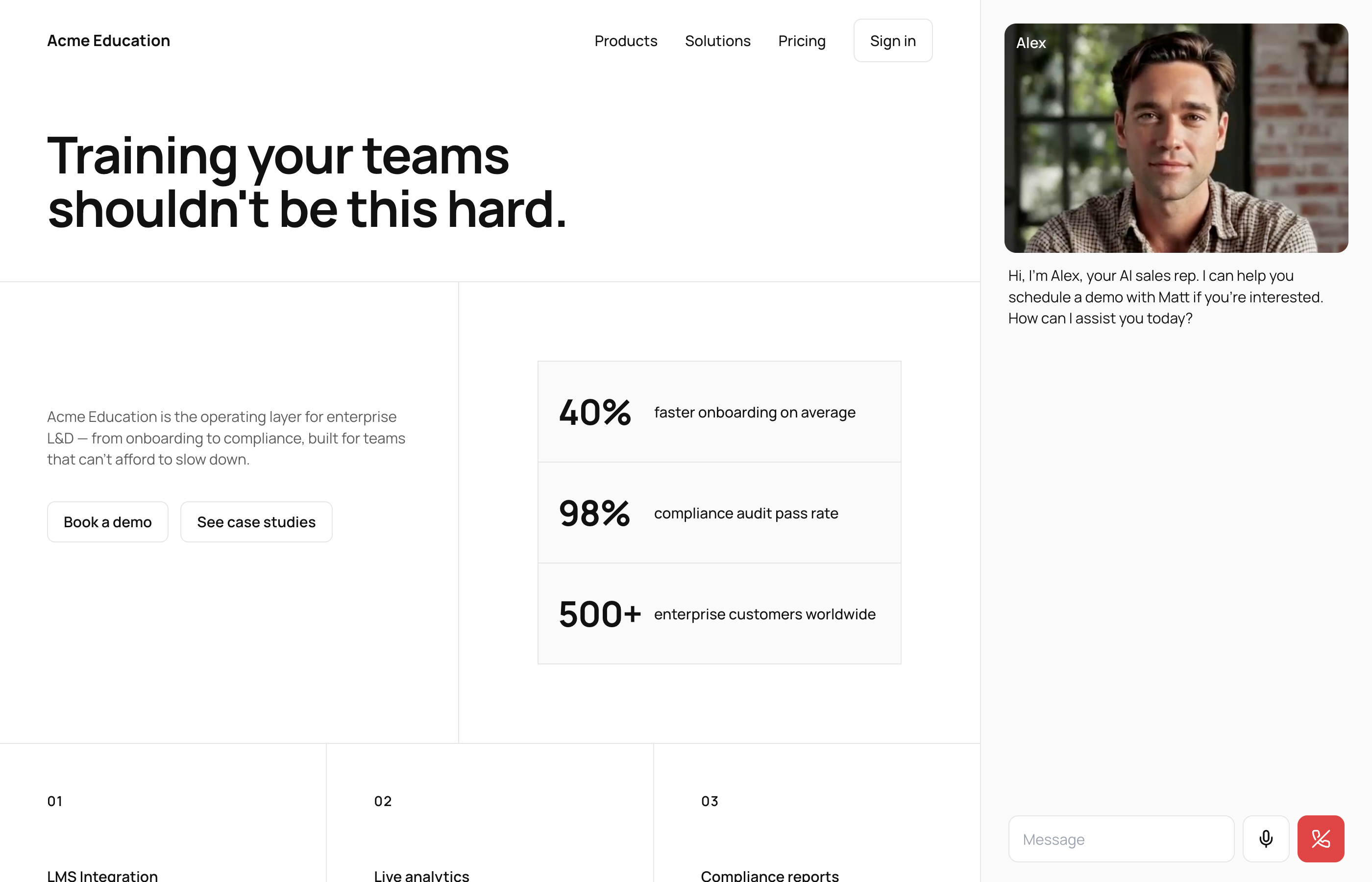
LemonSlice transforms any photo into a conversational video agent capable of delivering live customer guidance, product education, and support powered by your knowledge base. Unlike static FAQ pages or scripted chatbots, these AI agents respond in real-time with natural micro-expressions, emotional tone adaptation, and conversational flow that feels genuinely human.
For CS teams, the practical applications are immediate. Onboarding acceleration ramps up when new customers receive instant product guidance without CSM bottlenecks, reducing time-to-value and improving activation rates. Self-service support reduces ticket volume when customers can resolve questions independently through conversational video. Personalized education adapts based on customer segment, delivering guidance that matches specific pain points and objectives.
The embedded knowledge base integration ensures accuracy and brand consistency. Every response draws from your documentation, your data, your voice. This enables high-touch interaction at scale across distributed teams and time zones, without waiting for human availability. The expressiveness of video agents creates genuine customer engagement, meaning customers interact naturally rather than feeling they're using a tool.
Getting Started with LemonSlice
- Create Your Avatar: Upload a single photo of a portrait, cartoon, or brand mascot. LemonSlice animates it into a speaking avatar in seconds. No video recording or model training required.
- Customize Appearance: Adjust welcome screens, default expressions, and visual styling. LemonSlice supports photorealistic humans, illustrated characters, and stylized designs.
- Configure Voice: Choose from the built-in voice library or create custom voices with AI (use prompts like "warm, professional female voice") or voice cloning from audio samples. The same avatar can speak multiple languages fluently. Switch languages mid-conversation without changing the character or retraining the model.
- Connect Your LLM: LemonSlice is LLM-agnostic. Plug in OpenAI, Anthropic, or any model you use via API. The conversational interface stays consistent regardless of which model powers the responses.
- Upload Your Knowledge Base: Provide the information your agent needs to reference to answer questions accurately and stay on-brand. Upload documents, FAQs, product specs, or company policies.
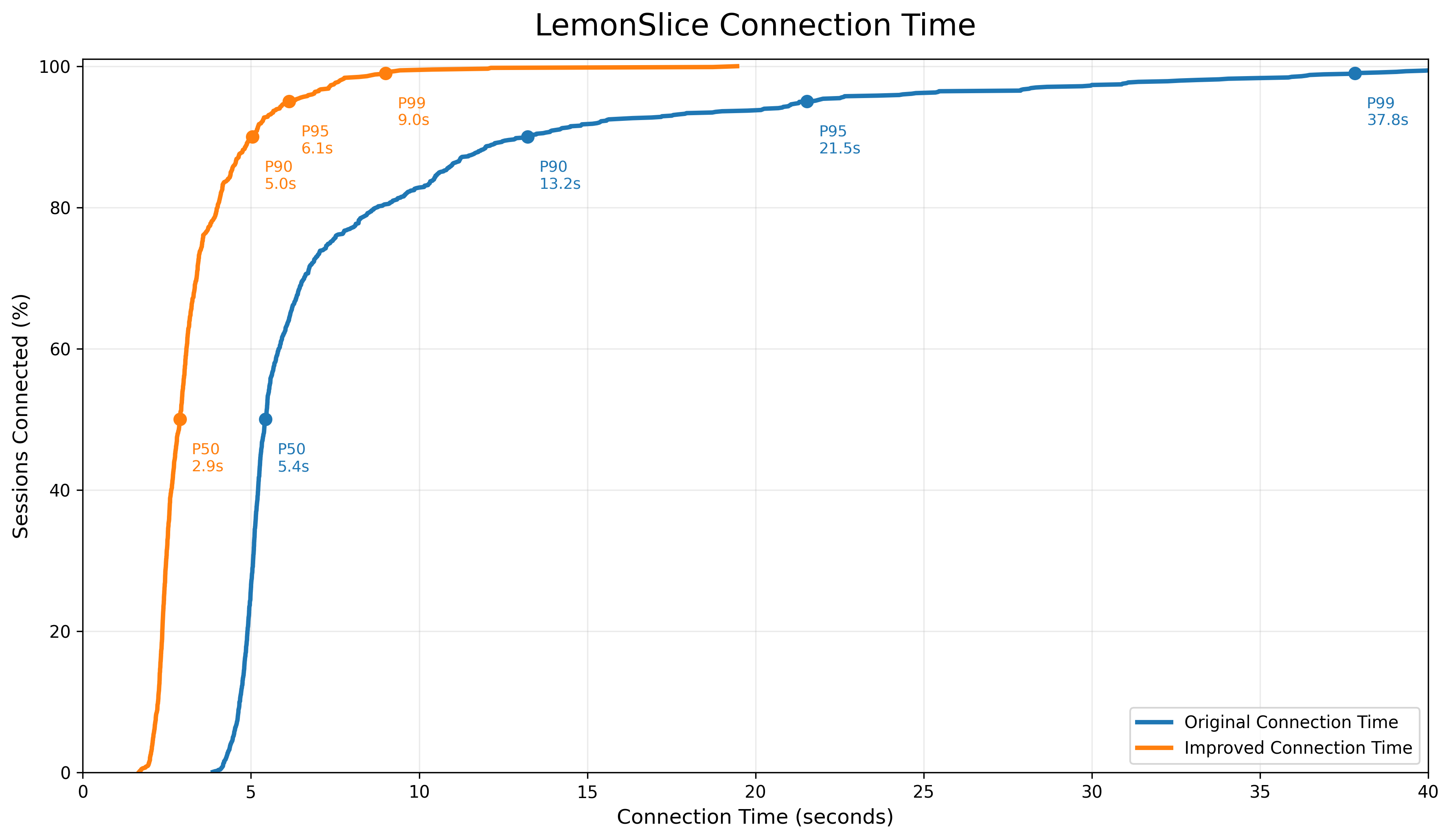
- Enable Real-Time Interaction: The system streams video, audio, and conversational state simultaneously with a 2-3 second average latency, low enough for natural turn-taking. Agents listen continuously and handle interruptions naturally, stopping mid-response to process new input and adjust their reply. This real-time video generation is what separates LemonSlice from scripted video playback or text-only chatbots.
- Deploy Instantly: Embed the agent with a single line of code. The widget integrates natively into your site as a lightweight, responsive interface element, without iframes, layout constraints, or performance issues.
- Go Live: Users click to start conversing. Avatars respond in real-time video format with synchronized lip movement, natural gestures, and context-aware dialogue that adapts dynamically based on what users say and how the conversation unfolds.
ChurnZero: Purpose-Built AI Agents for CS
ChurnZero offers native AI agents designed specifically for customer success workflows. Their marketplace includes specialized agents: Vibes surfaces changes in customer sentiment and engagement signals early, Harbinger detects relationship risk before churn conversations begin, and Beacon spots buying intent from key stakeholders to drive expansion.
What distinguishes ChurnZero is its embedded, CS-specific functionality. These are not generic AI tools retrofitted for customer work. They're built and tested within the platform to solve challenges CS teams face daily: supporting new customer onboarding, tracking feature adoption, managing renewal processes, and identifying upsell opportunities.
Gainsight: Eliminating Blind Spots with Integrated Intelligence
Gainsight unifies telemetry, sentiment analysis, and customer engagement data to remove blind spots that prevent a proactive strategy. By centralizing customer data from emails, support tickets, community posts, and calls, the platform creates comprehensive visibility into customer health.
AI extracts meaning from this data, identifying risks and opportunities that would require hours of manual analysis. For CS teams, this means operating with deeper customer insights and emotional intelligence, enabling data-driven decision-making rather than intuition-based guesses.
Salesforce Agentforce: AI Agents That Handle Complex Requests
Salesforce Agentforce provides always-on support for routine requests, freeing human agents for strategic conversations. OpenTable uses Agentforce to autonomously handle reservation changes and loyalty redemptions, allowing their support teams to focus on complex situations requiring human judgment.
For CS operations already integrated with Salesforce, Agentforce offers seamless connection to existing CRM data and workflows. The platform demonstrates enterprise-scale reliability while maintaining service quality across millions of customer interactions.
ChatGPT: The Everyday Productivity Multiplier
ChatGPT has become the CSM's everyday productivity tool. Practical applications span email drafting, meeting preparation, customer research, and content generation. CSMs use it to draft onboarding email templates, prepare QBR talking points, create success plans, and research industry trends.
The key to effective ChatGPT use lies in prompt engineering. Assigning the AI a role and providing specific context dramatically improves output quality. Many CSMs maintain prompt libraries for recurring tasks, from renewal reminder drafts to executive update summaries.
Conversation Intelligence Platforms (Gong, Chorus)
Gong and Chorus capture customer conversations, generate summaries, identify risks, and track competitor mentions without manual note-taking. CSMs use these tools to recap previous discussions, identify potential risks raised by customers, and detect competitor mentions across accounts.
The time savings are substantial. Instead of taking detailed notes during calls, CSMs remain present and engaged, knowing the AI will produce accurate action items and follow-up tasks automatically.
Real-World Use Cases Driving CS Impact
Theory matters less than practice. These applications represent tested implementations that CS teams can execute immediately, with measurable results on customer satisfaction, retention, and operational efficiency.
Effective AI implementation begins with specific, high-impact use cases that address real customer success challenges. The following scenarios demonstrate how organizations are using AI today to improve customer outcomes while freeing CS teams for strategic work.
Onboarding Automation That Accelerates Time-to-Value
AI personalizes onboarding paths based on customer characteristics, industry, and stated objectives. Systems recommend optimal sequences of learning activities and automatically identify roadblocks that slow customer progress. Interactive video guidance via conversational AI provides instant support during setup, answering questions without requiring CSM availability.
This acceleration improves activation rates and customer satisfaction from the first interaction, establishing momentum for long-term success.
Sentiment Analysis Across Every Touchpoint
AI reads emotion in emails, support tickets, community posts, and recorded calls to detect dissatisfaction before it becomes churn. Natural language processing identifies negative sentiment, urgency signals, and frustration indicators that human teams might miss in high-volume communication.
This visibility enables proactive intervention. When customer sentiment shifts negatively across multiple touchpoints, the system alerts the assigned CSM before the customer escalates or cancels.
QBR Preparation in Minutes, Not Hours
Quarterly business reviews traditionally require hours of preparation: pulling usage data, reviewing support history, synthesizing interaction notes, and creating presentation decks. AI compresses this to minutes.
Systems generate executive-ready summaries with health scores, usage trends, key wins, identified risks, and recommended talking points. CSMs review and refine rather than create from scratch, arriving at customer meetings better prepared with significantly less effort.
Self-Service Knowledge That Learns and Evolves
Dynamic knowledge bases powered by conversational AI for customer service empower customers to resolve issues independently, which in most cases is what they’d prefer. Unlike static FAQ pages, these systems understand natural language queries and provide contextual answers in real-time.
The result is reduced support ticket volume and faster resolution for customers. When self-service successfully addresses common questions, support teams can focus on complex issues requiring human expertise.
The API Advantage: Building Custom AI Workflows
For technical CS leaders and operations teams, APIs unlock the ability to integrate AI deeply into existing systems. Modern CS AI APIs enable real-time streaming data, LLM-agnostic integration, behavioral control, and autonomous action triggers.
Concrete developer use cases include: triggering playbooks automatically when sentiment analysis detects frustration, auto-generating success plans from CRM data and usage patterns, and connecting customer health scores to automated intervention sequences.
ChurnZero and Gainsight offer embedded API capabilities designed for CS workflows. ChatGPT and Salesforce provide flexible integration options that adapt to custom requirements. LemonSlice's API supports real-time video streaming with full behavioral control, enabling developers to build interactive customer guidance directly into customer portals and onboarding flows.
Implementing AI Without Losing the Human Touch
Maintaining the human touch while using AI is a legitimate concern for 81% of Customer Experience leaders. The solution lies in intentional design, treating AI as an assistant that enhances human capability rather than a replacement for human judgment.
When to Automate and When to Escalate
A clear framework helps distinguish appropriate use cases: automate routine tasks like data entry, status updates, and standard follow-up sequences. Escalate to humans for complex problem-solving, relationship building, and strategic conversations.
The test is whether the interaction requires empathy, nuanced judgment, or creative thinking. Resetting a password or answering routine questions? Automate. Discussing why a key stakeholder is frustrated or developing a strategic expansion strategy? Human required.
Training Your Team to Partner with AI
CS teams benefit from structured AI literacy development. The progression includes foundational understanding, hands-on practice, creative application, custom tool development, and scaled deployment. This five-stage approach builds confidence while enabling teams to discover valuable, sustainable use cases.
Measuring AI Impact on Customer Success Metrics
AI adoption must connect directly to measurable improvements in customer success KPIs. Without clear metrics, AI investments become costs rather than value drivers.
Key metrics AI improves include:
- Customer Satisfaction Score (CSAT) through faster, more personalized responses
- Net Promoter Score through proactive issue resolution.
- Customer Effort Score through streamlined self-service
- First Contact Resolution through AI-assisted agent responses
- Churn Rate through predictive intervention
- Customer Lifetime Value through expansion identification
AI also enhances measurement precision. Real-time data analysis replaces quarterly surveys with continuous sentiment tracking. Automated health scoring provides always-current views rather than point-in-time snapshots.
The Future of AI-Powered Customer Success
AI already functions as core infrastructure for modern CS operations. The question isn't whether to adopt AI, but how quickly and strategically.
From Reactive Support to Strategic Partnership
The vision is clear: CSMs operating as trusted advisors while AI handles research, data gathering, and pattern-spotting in the background. Instead of spending hours preparing for customer calls, CSMs spend that time having deeper conversations. Instead of manually tracking account health, they receive alerts when intervention is needed.
This elevates the CSM role from task coordinator to strategic partner. The work becomes more interesting, more impactful, and more valuable to organizations.
Generative AI and Conversational Avatars
Next-generation interfaces are already emerging. Conversational AI supports customer success stories by providing real-time, interactive guidance powered by company knowledge bases. Instead of reading documentation or waiting for human availability, customers engage with expressive video agents that answer questions naturally.
For customer success teams, this represents infrastructure for delivering support at scale. Video agents handle routine guidance and education while CSMs focus on strategic relationship development.
Your AI Roadmap for Customer Success
AI in customer success is the foundation for sustainable growth. The CS teams that master AI today will define the competitive landscape tomorrow.
For teams looking to enhance customer support with conversational AI that feels genuinely human, LemonSlice transforms any photo into a real-time interactive video agent.
Whether you're accelerating onboarding, delivering product guidance, or creating self-service experiences that reduce support load, LemonSlice brings expressive, intelligent avatars to your customer success strategy, enabling your team to focus on what matters most: building lasting customer relationships.
Create your first interactive AI avatar
Design your avatar, upload your knowledge base, and launch it on your website in minutes.


.avif)