
What is a real-time avatar?
.png)
A real-time avatar generated live from a single image as it speaks, one frame at a time.
A real-time avatar is an AI-generated character you can talk to live, on video, that answers the moment you stop speaking. Its face, lip-sync, expression, and gestures are all generated on the fly, frame by frame, in response to what you say, rather than played back from a pre-recorded clip.
That one word, real-time, is what separates these avatars from the talking-head videos that came before them. A real-time avatar is not rendered in advance and replayed. It is created in the moment, fast enough to hold a back-and-forth conversation that feels like a video call with a real person.
This guide covers what a real-time avatar is, how it differs from a pre-rendered one, how the technology works, why latency is the hard part, where real-time avatars are used, and how to build one with LemonSlice.
What is a real-time avatar?
A real-time avatar is a lifelike, AI-driven character that listens, thinks, and responds during a live conversation, with every frame of video produced as the conversation happens. You will also hear it called an interactive avatar, an AI avatar, or a conversational avatar. The common thread is that nothing is scripted ahead of time: the avatar reacts to you.
Two things have to be true for an avatar to count as real-time:
- It is generated live. The video is created frame by frame as you talk, not selected from pre-rendered footage.
- It responds fast enough to feel natural. The reply has to land in about a second, before the pause becomes awkward.
At LemonSlice, that is literal. Once a conversation begins, every pixel is generated from scratch at 20fps: the lip-sync, the face, the hand gestures, and even the background are all produced in real time in response to what a person says.
Real-time avatars vs. pre-rendered avatars
The clearest way to understand a real-time avatar is to compare it with the pre-rendered kind. Both put a face on the screen, but they are built in opposite ways:
A pre-rendered avatar is fine when you know the script in advance, like a training video. But it cannot hold a conversation, because it cannot react to something it has not seen. A real-time avatar can, which is why it is the format behind live AI agents.
Real-time avatars are also distinct from deepfakes. A deepfake is typically a pre-rendered video that swaps or mimics a face. We build ours on a Character World Model, which we consider a step beyond the deepfake and older generative technology behind traditional real-time avatars.
How real-time avatars work
A real-time avatar is not one model. It is a pipeline of AI systems running together, fast enough to feel like a live conversation. The loop has four steps:
- Perception. Speech-to-text, paired with voice-activity detection, turns what you say into text, and vision can read what you show on camera.
- Reasoning. A large language model decides what to say back. It can draw on your own documents so the answers are accurate.
- Speech. Text-to-speech turns the reply into natural audio.
- Rendering. A video model animates the character so its lips, expression, and gestures match the audio, and streams it into a live call.
The reasoning step runs on a large language model, one of the systems built on the transformer architecture from the 2017 paper Attention Is All You Need. The rendering step is the one that makes an avatar real-time, and it is the hardest to pull off, because the video has to be generated continuously rather than rendered once and saved.
We at LemonSlice build our avatars on a Character World Model. Our LemonSlice-2 model is a 20-billion-parameter real-time avatar model that runs on a single GPU, generating video from a single image with no per-avatar training or fine-tuning, and it can produce infinite-length video without the quality drifting over time. You can go from one photo to a live video call with that character.
Everything is generated live at 20fps, down to the moving background, rather than pulled from a pre-recorded clip.
Why latency is the hard part
What makes a real-time avatar difficult is not drawing a convincing face. It is drawing one fast enough. If the character lags before every answer, the conversation stops feeling real. Decades of interface research point to the same thresholds: about one second is the limit for a response to feel immediate, and past ten seconds people give up. A real-time avatar has to clear that bar on every single turn.
There are really two clocks to beat. The first is response latency: how long after you stop talking before the avatar starts to reply. The second is connection time, the wait before the call even begins, a bit like the ringing on a phone.
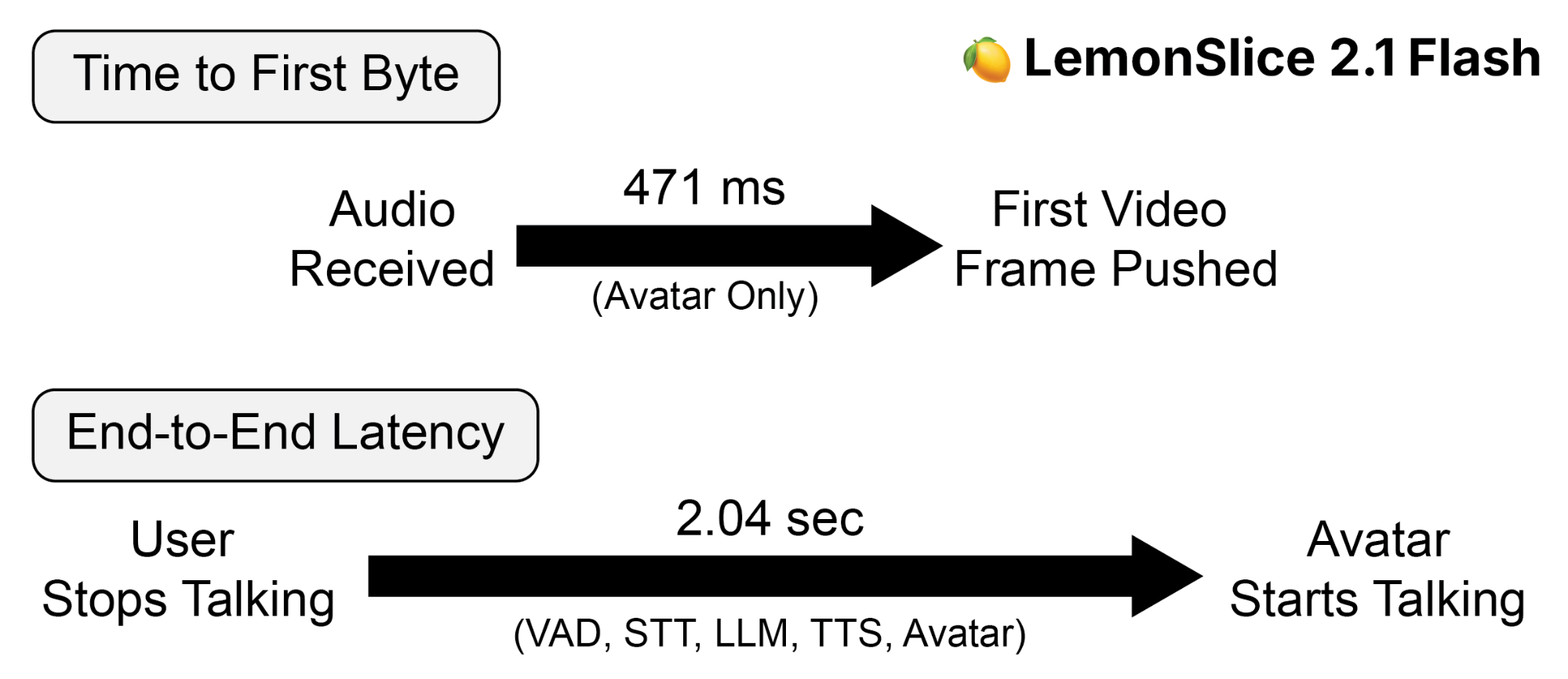
Both are measurable, and we publish ours. LemonSlice 2.1 Flash reports an average time-to-first-byte of 471ms, about the blink of an eye, and an average end-to-end response latency of 2.04s when paired with third-party speech and language models. In our benchmarks it is the fastest avatar model at the p75, p90, p95, and p99 percentiles, and faster than Tavus Phoenix-4 and Anam Cara-3, with latency comparable to LiveAvatar and Simli. On connection time, we cut the wait by 76%: our median is now under three seconds.
Our end-to-end response-latency benchmarks: LemonSlice 2.1 Flash against other real-time avatar models (LiveKit tests, April 2026).
What real-time avatars are used for
Because a real-time avatar can hold an actual conversation, it fits almost anywhere a business already runs a chatbot or a voice agent, adding a face that people can talk to. The most common applications include:
- Customer support. Turn text-based help into a face-to-face conversation with an on-brand agent that answers instantly, draws on your documents, and escalates to a human when needed.
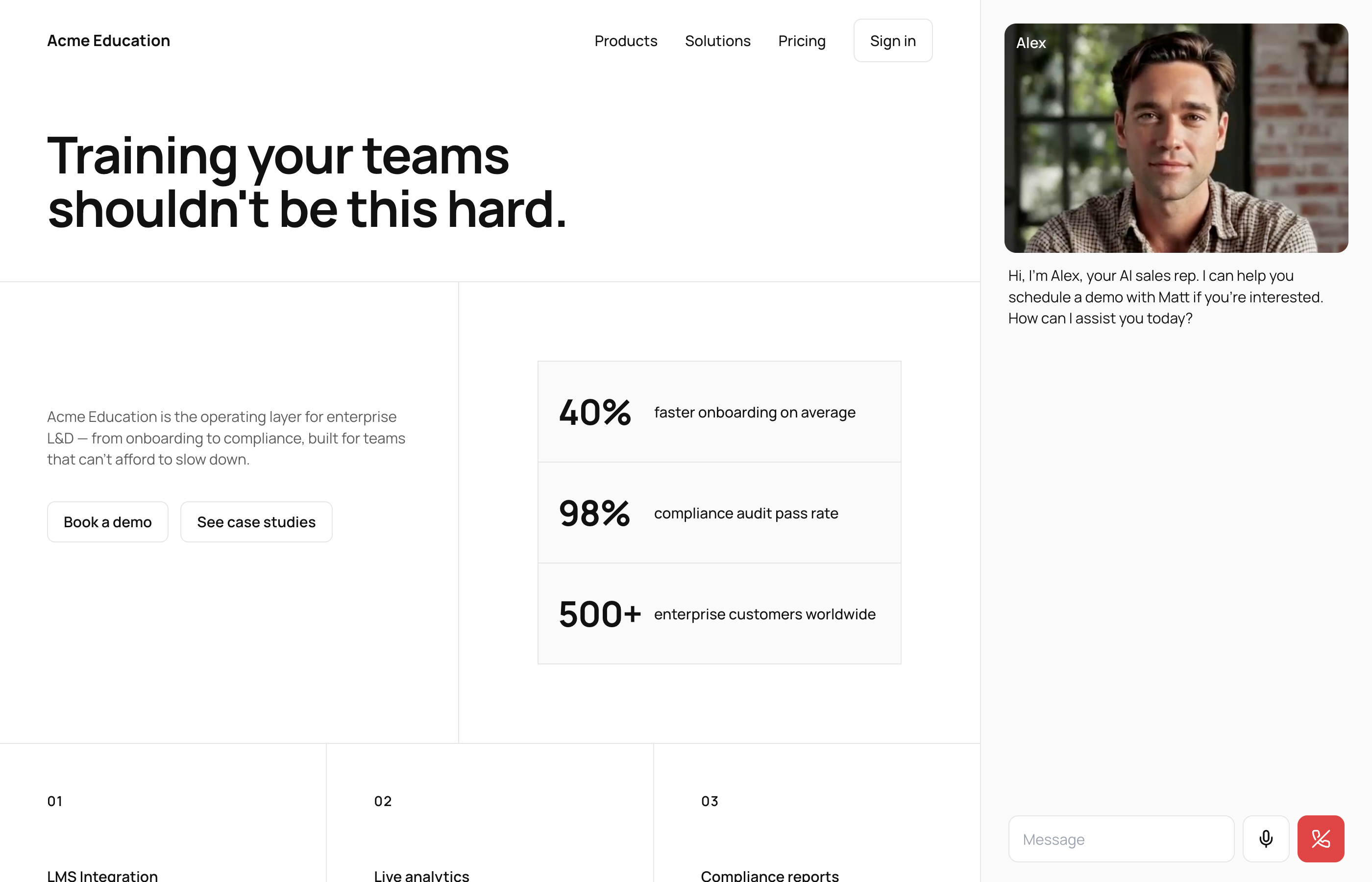
- Sales. A real-time avatar can greet an inbound lead the moment it lands, run a personalized demo, and follow up around the clock in the visitor's language.
- Training and coaching. Teams rehearse hard conversations, from sales objections to clinician bedside manner, with a patient partner who never tires of another take.
- Education and language learning. Always-available tutors let learners practise out loud, and animated characters hold a young student's attention.
- Entertainment and companions. Interactive characters and virtual companions give audiences someone to talk to, from game characters to a brand mascot that answers fans directly.
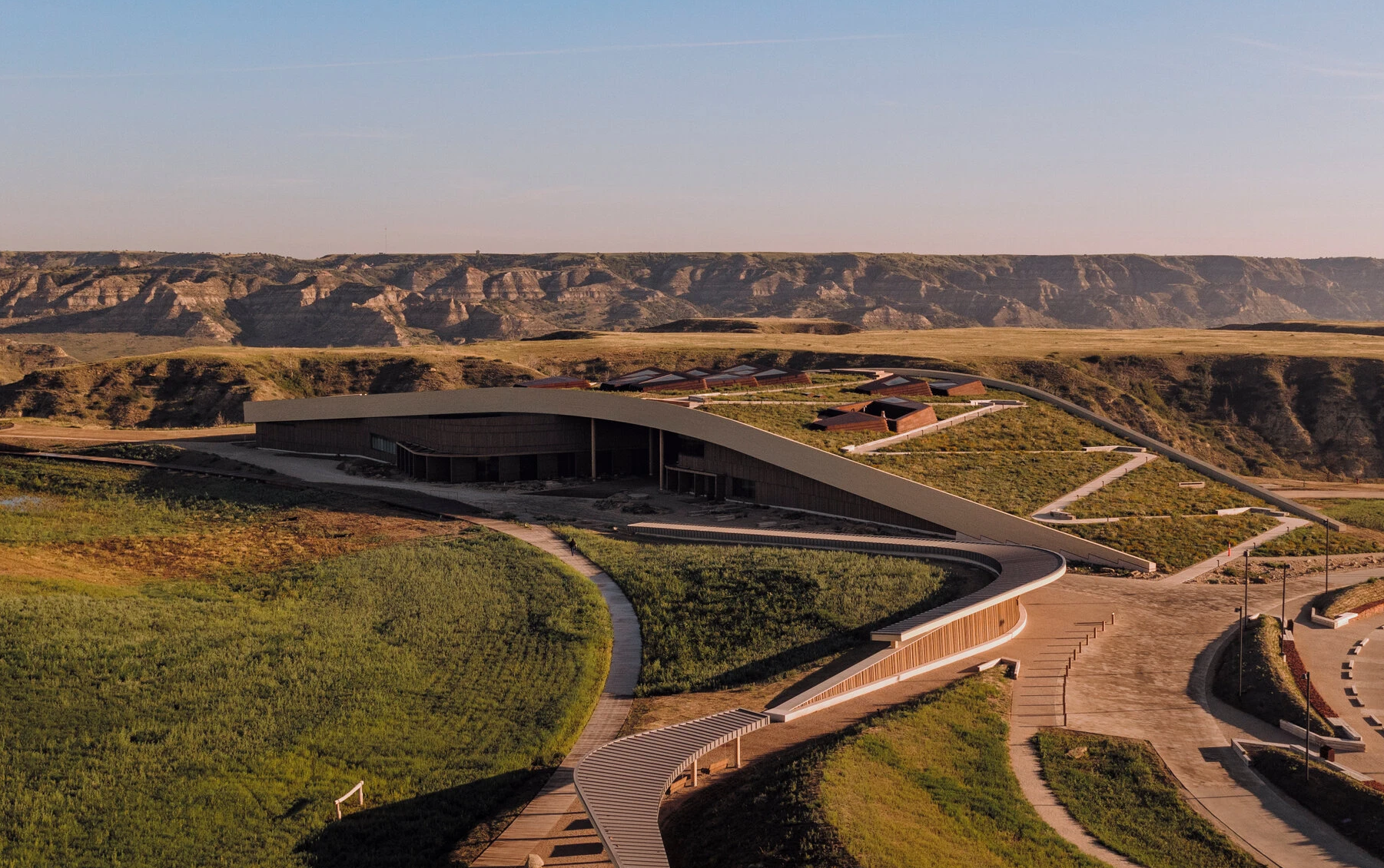
- Physical installations. Life-size avatars can hold real conversations in museums and lobbies. We powered a life-size, real-time Theodore Roosevelt avatar at the opening of his presidential library, alongside the White House and Microsoft, so visitors could ask him questions and hear him answer in character.
Caption: The same real-time avatar dropped into a new setting, generated on the fly for whatever a use case calls for.
How to build a real-time avatar
Building a real-time avatar used to mean a motion-capture studio and a team of 3D artists. Now it comes down to an image, a voice, and an API. The steps are straightforward:
- Choose a character. Upload a photo, generate one, or pick from a library. We turn a single image into an avatar instantly, with no training or rigs.
- Give it a voice. Pick a text-to-speech voice or clone one from a 15-second sample.
- Give it a brain. Connect any large language model and, if you like, upload documents so it answers from your own information. You can bring your own LLM and voice model.
- Deploy it. Drop in a no-code widget that installs in two lines of code, use a hosted pipeline, or run a fully self-managed pipeline through our API. LemonSlice works as a face layer on top of the voice-agent stack you already use.
With LemonSlice, building a real-time avatar comes down to three choices: pick an image, select a voice, and write a prompt. Plans start at $8 a month, so a first avatar is inexpensive to try.

From a single image to a live avatar inside your product, through the LemonSlice API.
Where real-time avatars are going
Real-time avatars are moving from novelty to interface. As the models get faster and more expressive, the line between a video call with a person and a video call with an avatar keeps thinning. The direction has a long lineage: Alan Turing's 1950 imitation game asked whether a machine could pass for human in text. Language models have largely answered that in text, voice models are closing the gap on the phone, and the real-time video call is the next threshold.
That is what we are building toward: any character, in any language, responding fast enough and looking real enough to be indistinguishable from a person on a video call.
You do not have to wait for it. You can build your first real-time avatar from a single photo today: pick a face, choose a voice, add a prompt, and start a live conversation in minutes. It is free to try, and plans start at $8 a month.
Frequently Asked Questions
What is a real-time avatar?
A real-time avatar is an AI-generated character you can talk to live on video, whose face and voice are produced frame by frame as the conversation happens, so it can answer the moment you finish speaking rather than replaying a pre-recorded clip.
How do real-time avatars work?
They run a pipeline of AI models in real time: speech-to-text hears you, a language model decides what to say, text-to-speech turns it into audio, and a video model animates a character to match and streams it into a live call.
What is the difference between a real-time avatar and a deepfake?
A deepfake is usually a pre-rendered video that swaps or mimics a face. A real-time avatar is generated live and responds to you in the moment. We build ours on a Character World Model, a step beyond the deepfake and older generative technology behind traditional avatars.
How fast does a real-time avatar need to be?
Roughly one second per reply feels immediate; past ten seconds people disengage. LemonSlice 2.1 Flash reports a 471ms time-to-first-byte and about a 2.04s end-to-end response with third-party speech and language models.
What are real-time avatars used for?
Customer support, sales, training and coaching, education and language learning, entertainment and companions, and live physical installations, anywhere a chatbot or voice agent can benefit from a face.
How do I build a real-time avatar?
Choose a character image, give it a voice, connect a language model, and deploy it through an API or a no-code widget. With LemonSlice that is three steps: pick an image, select a voice, and write a prompt.
How much does a real-time avatar cost?
It depends on the platform and usage. LemonSlice plans start at $8 a month, with usage priced by the minute.
Answer