
Articles · Sep 5, 2026
Best Digital Humans in 2026
Six digital human platforms compared for 2026, from enterprise digital workers to expressive any-character avatars, with verified pricing and verdicts.
A digital human is an AI character you can see and talk to, face to face, on a live video call. It listens while you speak and answers with a face that reacts in real time.
Most of the teams searching for one are enterprises putting it in front of customers, as a service agent, a brand ambassador, or a kiosk concierge. Gartner tracks digital humans as a software category of its own.
This guide ranks six digital human platforms for 2026, with pros, cons, and a verdict on each.
What is a digital human
A digital human is an interactive, human-like AI character that holds a live conversation. Two qualities separate it from an ordinary animated character. It reacts to you in real time instead of playing a fixed script, and it has a face, a voice, and expressions.
Some vendors sell a different product under the same name. They generate a presenter video from a script ahead of time, and every viewer watches the same clip. That job is video production, and this list doesn't rank it.
| Digital human | Pre-rendered avatar video | |
|---|---|---|
| What it is | A live character generated during the conversation itself | A finished clip rendered from a script before anyone watches it |
| How you interact | Two-way, it answers you like a video call | Playback only, the same clip for every viewer |
| Typical uses | Customer service, sales demos, tutoring, kiosks | Training courses, explainers, marketing video |
The hardest test for a live digital human is the uncanny valley, the point where an almost-human face starts to feel unsettling. Getting past it takes the look, the lip sync, and the timing landing together.
How we picked these platforms
The six platforms below all ship a live conversational digital human, but they serve different buyers. LemonSlice, Tavus, Anam, and D-ID sell self-serve plans. Soul Machines and Ravatar lean enterprise, with studio tools at the entry level and managed deployments above them.
To make the cut, a platform had to be actively maintained, publicly priced, and selling a digital human you can actually deploy. That bar excludes two well-known names.
UneeQ prices its Digital Human OS only through a sales conversation. NVIDIA ships digital human technologies as building blocks for developers, and its partners sell the finished products.
Here's how the six compare at a glance:
| Platform | Best for | Build path | Paid plans from |
|---|---|---|---|
| LemonSlice | Expressive digital humans in any character style | No-code widget or API | $8/month |
| Soul Machines | Templated digital workers in enterprise roles | No-code studio | $12.99/month |
| Tavus | A complete conversational pipeline through one API | Low-code API | $22/month |
| Anam | Fast photorealistic humans on the web | Widget or API | $22/month |
| D-ID | No-code visual agents embedded on a site | No-code studio or API | $4.7/month billed annually |
| Ravatar | Digital humans on holographic displays and kiosks | Studio plus managed builds | $19/month |
Product and pricing information: vendor product and pricing pages, August 2026.
The best digital humans in 2026
The profiles below cover what each platform animates, how custom characters get made, and how the pricing behaves as usage grows. Free options are flagged in each one.
Media: One image inside this section with a one-line caption.
LemonSlice
LemonSlice builds interactive avatars, digital characters that listen, talk, and respond face to face inside your product or website. If you already run a chatbot or voice agent, you can add a talking, listening face to it the same day.
Characters are created from a single photo, instantly. There's no training to wait on and no per-avatar fee, and every plan includes unlimited avatars. If it has a face, LemonSlice can animate it, so cartoons, animals, and mascots work as well as photorealistic humans.
The character has a body and an environment. Hand gestures and natural body language emerge as part of the performance. You can trigger emotions like happiness, sadness, and anger through the Action Engine, and an image update changes the clothing or scene mid-conversation.
Teams use them to turn automated support into face-to-face conversations, run sales demos that respond to prospects, build tutors and onboarding guides, and power concierges on physical kiosks. LemonSlice offers the widget as a no-code way to add an interactive avatar into your site with two lines of code. You can chat with featured avatars in the library for free, then start building your own for only $8/month.
Underneath is a Character World Model, an end-to-end video diffusion transformer in the same class as Veo 3 or Sora, except it runs in real time on a single GPU. Nothing is composited or pre-recorded. Every pixel is generated from scratch at 20fps, which is what enables the models to animate not just the face and lips, but also the entire body, backgrounds, and non-humanoids.
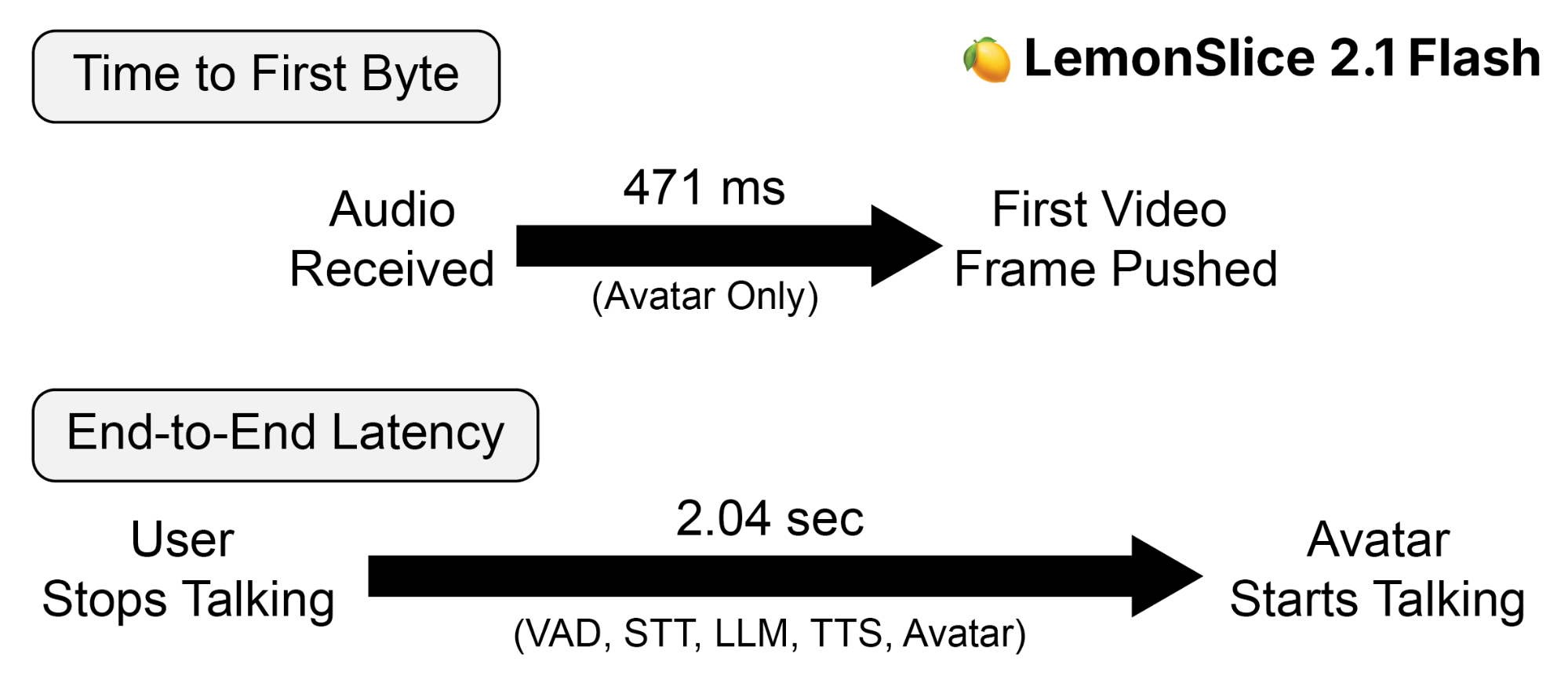
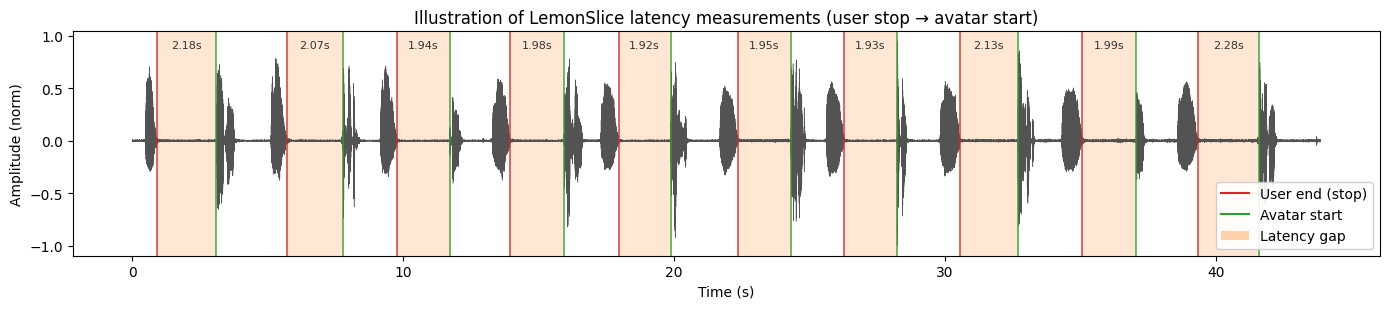
It's also fast. LemonSlice 2.1 Flash responds in 471ms on average, making it the fastest model among major avatar providers in published benchmarks.
For developers who want to build interactive avatars into their own applications or products, LemonSlice also offers an API. It allows you to use LemonSlice with any LLM or voice provider. Integrations are also available for LiveKit, Pipecat, Agora, and WebSockets. The API supports 1000+ concurrent calls on Enterprise plans and is powered by a global fleet of GPUs, making it a robust choice for large-scale corporations.
Pros:
- Any character, including mascots, animals, and non-humanoids
- Highly expressive and attention-grabbing characters
- Full lip sync, facial animation, hand gestures, whole body movements, and even moving backgrounds
- Instant characters from one photo, with unlimited avatars on every plan
- The only provider with an action engine and emotion engine
- API-first, works with any LLM or voice provider
Cons:
- Calls on self-serve subscriptions are limited to 30 minutes (24 hrs available on Enterprise)
Bottom line: Choose LemonSlice when you need an interactive avatar that builds trust or holds a user's attention. LemonSlice avatars are consistently rated more expressive and natural, due to their novel Character World Model approach. Also choose LemonSlice when you want animals, cartoons, or non-human avatars. Or when you want hand gestures and whole-body actions.
Soul Machines
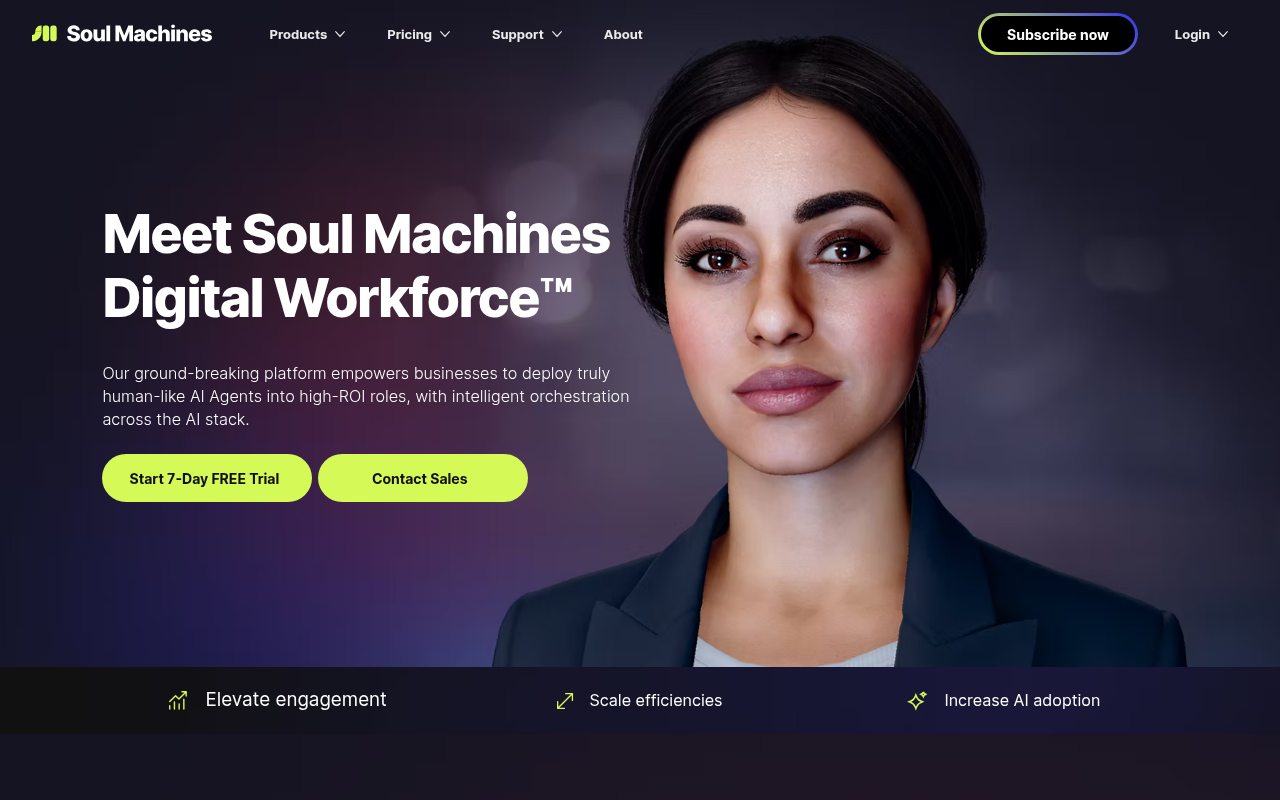
Soul Machines builds digital workers, AI agents with a human face that businesses deploy into customer service, HR, and healthcare roles. Its patented Experiential AI combines cognitive modeling with embodied cognition, so agents react with human-like emotion.
The Digital Workforce platform ships templates for the most requested roles, from customer service agents to HR benefits guides and clinical trial onboarding. Workforce Connect then places those workers inside tools you already run, including ServiceNow and Zapier.
Soul Machines Studio is the build-it-yourself path.
You configure the avatar's look, gestures, behavior, and voice in a browser, and custom LLM integration opens up from the Plus plan.
A free plan covers building without live minutes. Basic is $12.99 per month with 40 interactive minutes and one deployed assistant.
Pros:
- Templated digital workers for customer service, HR, and healthcare roles
- Workforce Connect places agents inside ServiceNow and Zapier
- Gesture, behavior, and voice configuration in a browser-based Studio
Cons:
- Interactive minutes are metered, and Basic includes just 40 a month
- Custom LLM integration starts on the Plus plan
- The next capacity step above Plus is a 10,000-minute Pro tier sized for enterprise budgets
Bottom line: Choose Soul Machines if you want digital workers with prebuilt roles that live inside your existing enterprise tools. Its agents are built to react with human-like emotion, which suits long customer-facing conversations. Check the minute caps against your traffic first.
Tavus
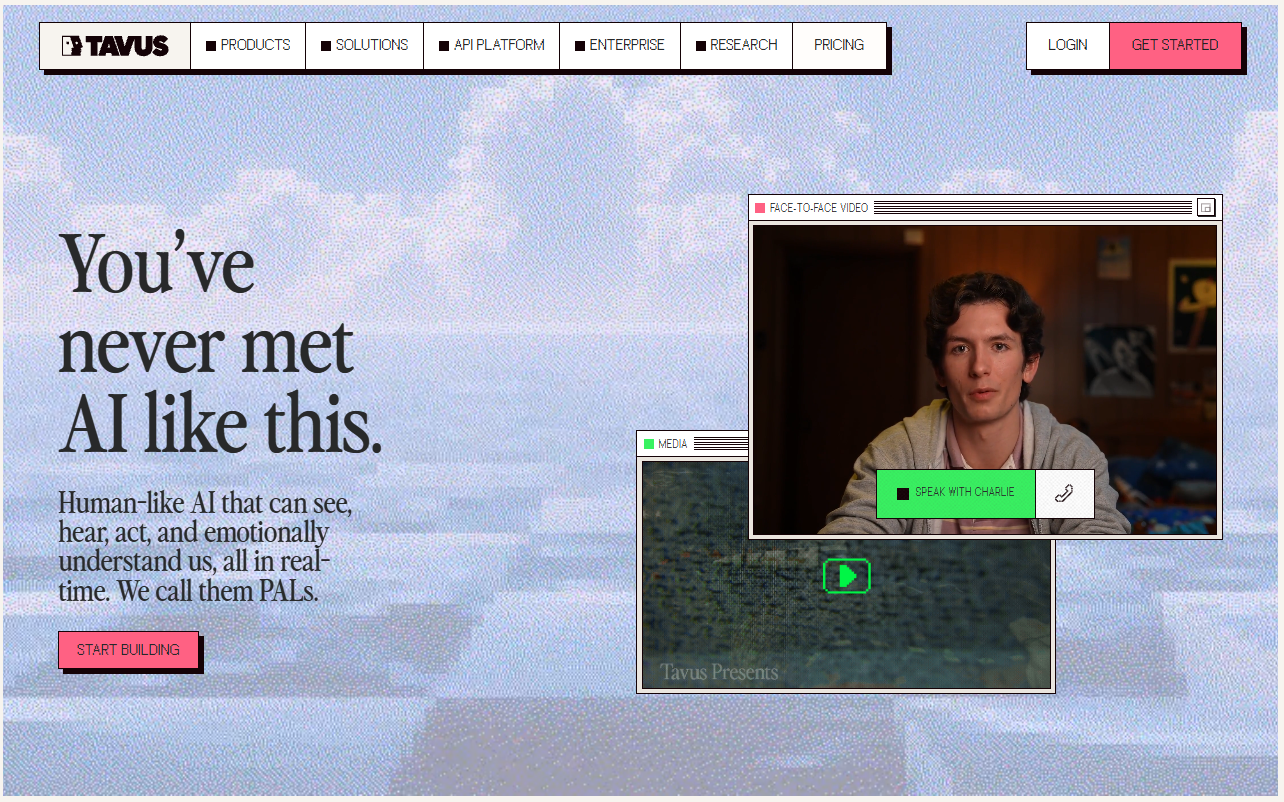
Tavus sells a complete conversational stack you build through one API. The Conversational Video Interface is its flagship product, and three of its own models power it. Phoenix renders the avatar, Raven handles perception, and Sparrow manages turn-taking.
The pipeline prices the LLM, text to speech, and WebRTC steps together, and it renders at 1080p. Knowledge base retrieval, memories, guardrails, and Pipecat and LiveKit integrations are built in.
Custom avatars, called Replicas, take more planning here. Tavus trains a custom model for each one, which takes 2-6 hours, and each tier allows a fixed number of Replica slots.
A free tier includes 20 conversational minutes, and the Starter plan is $22/month.
Pros:
- A complete conversation stack, with perception and turn-taking models included
- 1080p output with the LLM, speech, and transport steps priced together
- Knowledge base and memory features for grounded agents
Cons:
- Custom Replicas occupy limited per-plan slots
- Each new Replica requires a 2-6 hour training step
- Animates humans from the torso up, with expression concentrated in the face
Bottom line: Choose Tavus if you want one vendor to own the entire conversational stack, perception and turn-taking included. Tavus trains its models in-house, and it's a good choice if you want a low-code way to ship a digital human experience. If your product creates characters on the fly, plan around the multi-hour per-avatar training step.
Anam
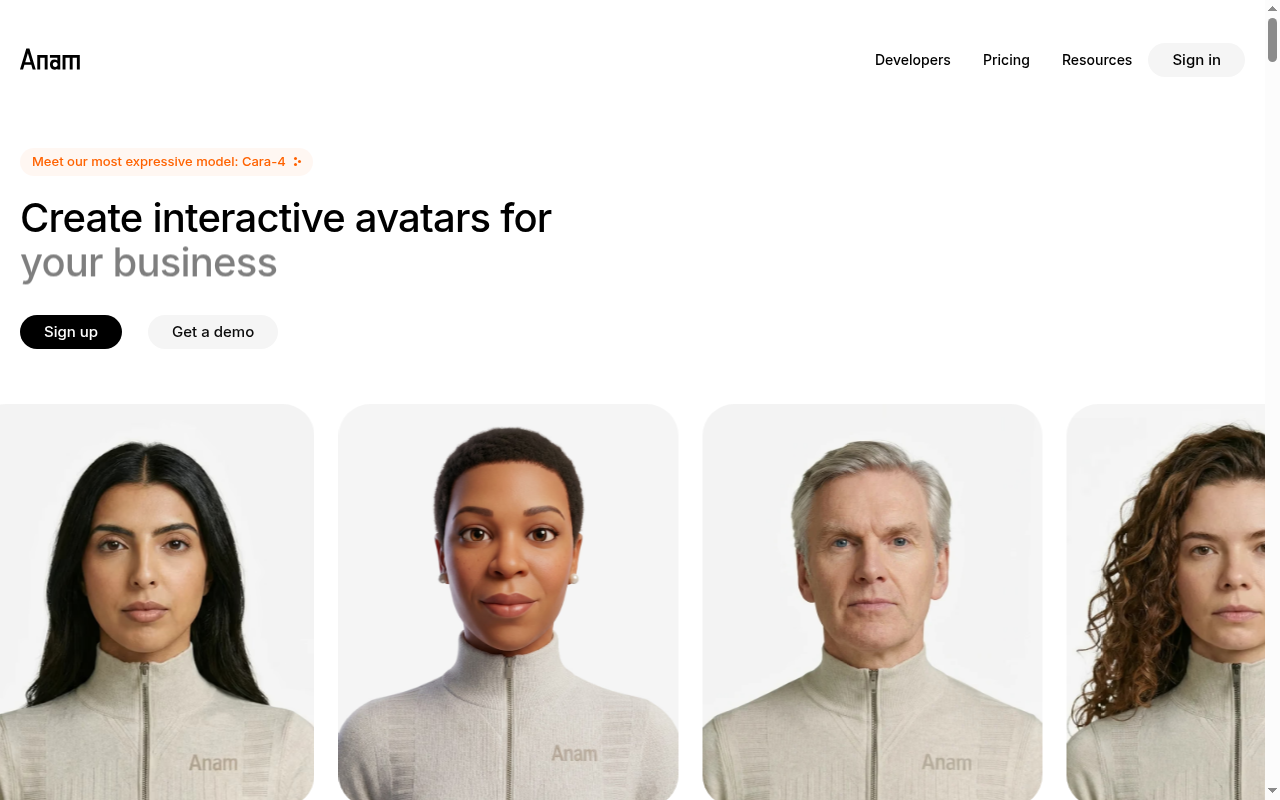
Anam animates human characters across photorealistic and stylized looks. The company quotes 180ms latency for its models, and billing runs by the second.
You can deploy it two ways, through an embeddable widget or an API.
Custom avatars generate in under two minutes from an uploaded image or a text prompt. Speech covers 70+ languages. Sessions scale to thousands of simultaneous conversations.
A free tier includes 30 monthly minutes with a three-minute conversation cap. Paid plans lift the caps gradually, with two-hour conversations arriving on the Growth tier, and the entry paid plan is $22/month.
Pros:
- Natural motion on photorealistic faces
- Widget for quick embeds, API for custom builds
- Custom avatars generate in under two minutes
Cons:
- Conversation length caps at 5 minutes on the entry paid plan
- Custom avatars are capped per plan, with two allowed on Starter
- The focus on humans narrows the range of characters you can make
Bottom line: Choose Anam for customer-facing web deployments where you only need a believable human face. The widget is the quickest way to put one on your site. If your product needs stylized or non-human characters, LemonSlice above is the better fit.
D-ID
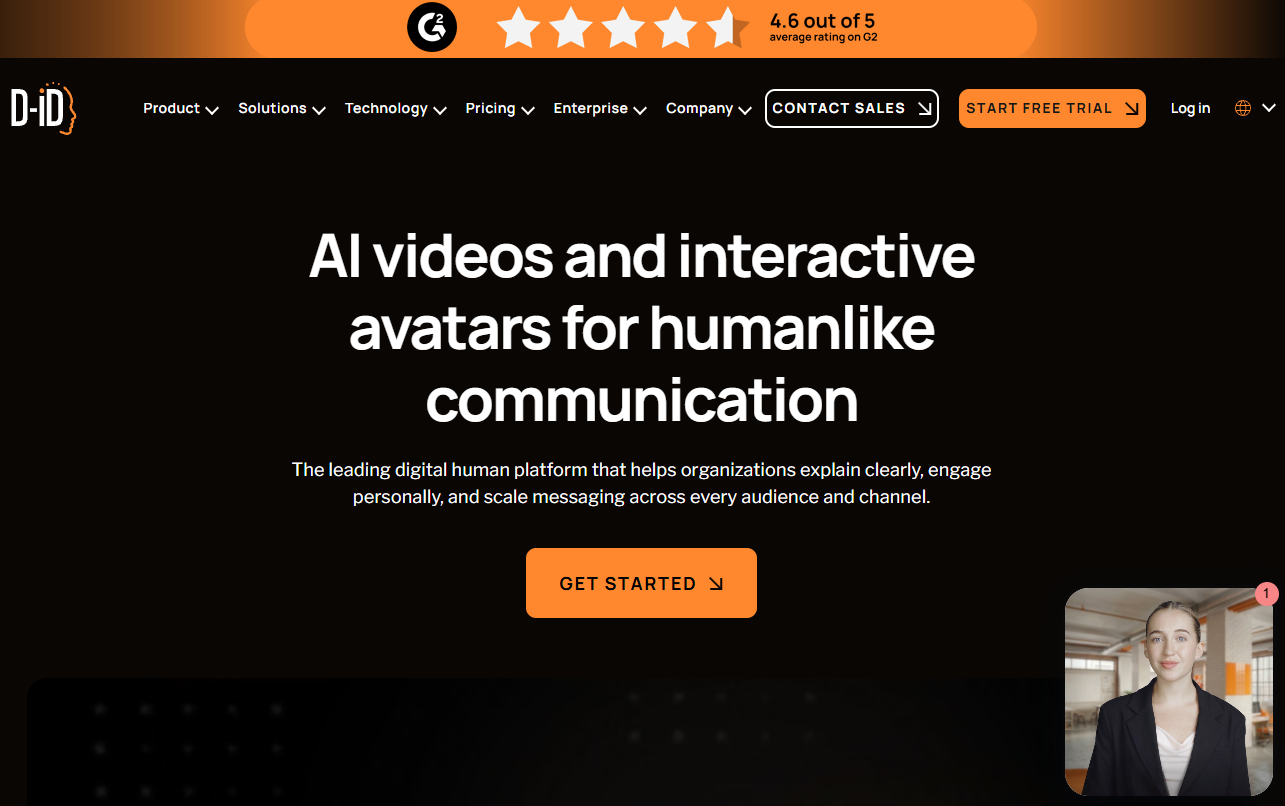
D-ID pairs language models with expressive real-time avatars it calls Visual Agents. You define an agent's face, voice, personality, and knowledge, then embed it on a website, an app, a learning system, or a kiosk.
The setup is no-code in D-ID Studio, and an API covers custom builds. Agents connect to any LLM you choose and answer from the documents you upload to their knowledge base.
D-ID quotes over 90% answer accuracy in under two seconds.
Minutes are metered and run small, with 15 a month on the Pro plan, the cheapest tier with a commercial license at $16/month billed annually. Custom avatars of real people are capped per plan.
Pros:
- No-code agent builder plus an API for custom deployments
- Embeds across websites, apps, learning systems, and kiosks
- Connects any LLM and answers from your own documents
Cons:
- Metered minutes run small, with 15 a month on Pro
- Commercial use starts on Pro, above the cheapest paid tier
- Personal avatars are capped at three on the Pro plan
Bottom line: Choose D-ID when you want a photorealistic agent on your website without writing code. SIU School of Medicine and PepsiCo run them in production. Watch the minute caps closely if you expect steady traffic, because sustained usage climbs the tiers quickly.
Ravatar
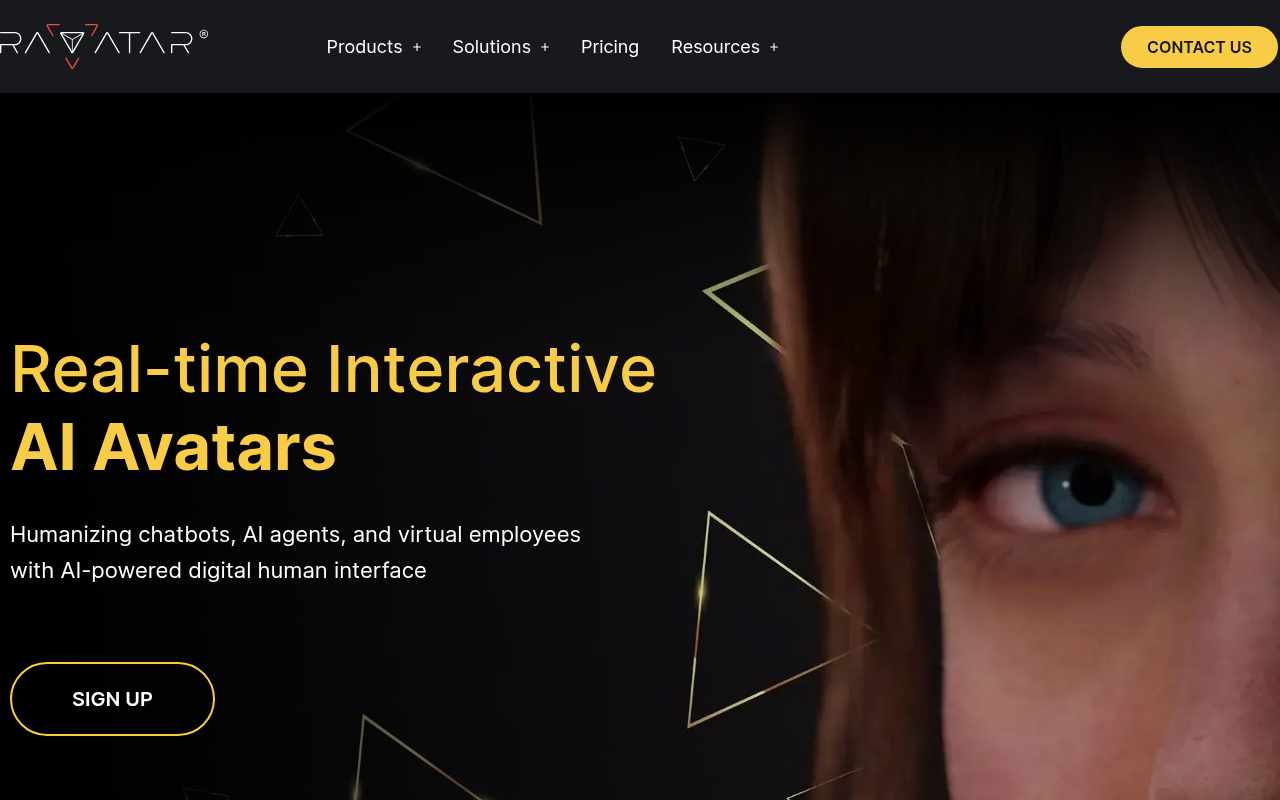
Ravatar puts digital humans into physical space. The platform runs real-time AI avatars on the web, in mobile apps, on kiosks, and on 4K holographic displays like its RAVABOX holobox.
Its Genesis AI Avatar Studio covers the self-serve side, with stock avatars, LLM and voice integrations, and a website widget. Custom avatars are an add-on that Ravatar's team crafts to your specification.
The company built AMD's holographic digital twin for GITEX and an AI receptionist for a Best Western hotel.
On-premise deployment is available for organizations that need to keep data inside their own infrastructure. The Starter plan is $19/month with 150 conversation minutes.
Pros:
- Runs on holographic displays and kiosks as well as the web
- On-premise deployment for organizations that keep data in-house
- Stock avatars deploy immediately through the Genesis studio
Cons:
- Custom avatars require Ravatar's team to build them
- Holographic streaming starts on the Basic tier, above Starter
- Knowledge-base retrieval is reserved for higher tiers
Bottom line: Choose Ravatar if the digital human's home is a lobby, an event stage, or a museum floor. Its holographic display pairings go deeper than anything else here. If you only need an avatar on a website, the API-first platforms above ship faster.
Choosing the right digital human
The quickest way to choose is to start from how you want to work.
If your digital human only needs to be a photorealistic person. Tavus and Anam both build for exactly that job through developer APIs, and Tavus bundles perception and turn-taking while Anam deploys through a widget or API. D-ID plays the same role for teams that want a no-code studio instead of an API.
If you want a vendor team to build it for you. Soul Machines ships its templated digital workers straight into the enterprise workflow tools you already run, like ServiceNow. Ravatar does the same for physical spaces, pairing its team-built avatars with holographic displays.
If the goal is an expressive digital human that holds attention. That's exactly what LemonSlice was designed for. The avatar can be any type of character, from humans to animals. And it's the only interactive avatar provider that has dynamic hand gestures, whole body motions, and an emotion engine.
Every plan includes unlimited avatars and API access, and you can chat with a library of avatars for free to experience it firsthand.