
Articles · Sep 5, 2026
The 6 Best D-ID Alternatives in 2026
Six D-ID alternatives compared across both jobs D-ID does, prerendered avatar videos and live interactive avatars, with pros, cons, and a verdict for each.
D-ID helped bring AI avatars into the mainstream, and the platform now spans two different jobs. Creative Reality Studio turns scripts and photos into prerendered avatar videos. Visual AI Agents hold real-time conversations.
A search for a D-ID alternative usually means one of those two jobs is falling short. Maybe you need more realistic prerendered video at higher volume. Maybe you want a live avatar with hands, a body, and a real sense of presence.
This guide walks through six alternatives, three for each lane, with pros, cons, and a verdict on every tool.
How we picked these tools
The list spans the two lanes D-ID itself plays in. Prerendered tools make finished clips. Live tools stream an avatar into a two-way conversation, where latency and expressiveness decide the experience.
| Prerendered avatar videos | Live interactive avatars | |
|---|---|---|
| What it is | A finished avatar clip generated from a script | A character that holds a conversation in real time |
| Production and delivery | Rendered once, then published and replayed | Every frame generated live during the call |
| Latency and interaction | None, viewers watch a fixed clip | Answers as fast as people speak |
| Typical uses | Training, marketing, and support videos | Support characters, sales conversations, kiosks and installations |
To make the cut, a tool had to be actively maintained, publicly priced, and independent of D-ID itself.
| Tool | Best for | Live avatar | Paid plans from |
|---|---|---|---|
| HeyGen | Prerendered avatar videos at volume | Yes, via LiveAvatar | $29/month |
| Synthesia | Enterprise video with compliance needs | Beta | $18/month billed yearly |
| Colossyan | Training courses inside an LMS | Yes, in-course | $27/month |
| Tavus | Full conversational pipeline through one API | Yes, core product | $22/month |
| Anam | Usage-priced live avatars | Yes, core product | Monthly plans plus per-minute usage |
| LemonSlice | Live conversations with any character | Yes, core product | $8/month |
Product and pricing information: vendor product and pricing pages, August 2026.
Prerendered avatar videos
A prerendered avatar video is generated once and watched many times. You write a script, pick a presenter, and the platform renders a finished clip for training, marketing, or support.
This is the job D-ID's Creative Reality Studio does, turning text, audio, or still images into avatar videos. Output caps at five minutes, and Trial and Lite clips carry a watermark. The tools below compete for that scripted-video work.
HeyGenHeyGen is the volume play for prerendered video. Its Avatar V model holds a single, coherent identity across every video you create, which starts to matter once you ship clips weekly.
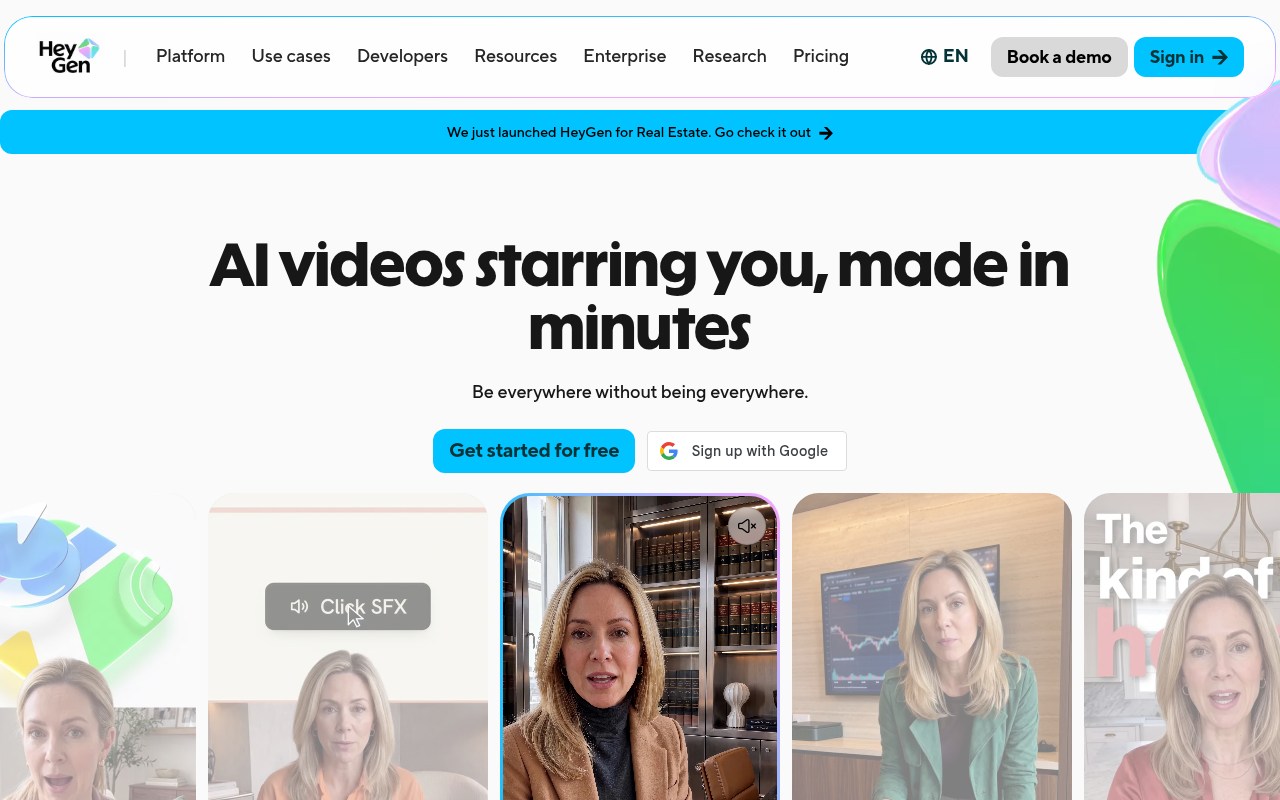
Generation runs from a script or a prompt. The Video Agent turns an idea into a share-ready video, and every element stays editable afterward. AI Studio then directs tone, gestures, and emotion straight from the script.
Language coverage reaches 175+ languages and dialects. HeyGen also reports that 85% of the Fortune 100 use it. Stock coverage runs deep as well, with 500+ digital twins listed on the free tier alone.
Real-time work now lives in LiveAvatar, a separate API where custom live avatars are built from two minutes of footage. A ready-made avatar library covers day one.
The free plan includes three one-minute videos a month. Paid plans start at $29/month.
Pros:
- Avatar V keeps one identity consistent across every clip
- Prompt-to-video generation with a full editor behind it
- 175+ languages and dialects for localization
Cons:
- Live avatars sit in LiveAvatar, a separate product with its own integration
- Free-plan videos cap at one minute
- Custom avatars for live use need recorded footage
Bottom line: HeyGen is the closest like-for-like upgrade from D-ID's Studio. Identity consistency at volume is the difference you actually see in a content calendar. Evaluate LiveAvatar separately, because that is how HeyGen sells it.
SynthesiaSecurity teams tend to already know Synthesia. It reports 50,000+ teams creating video on the platform, with SOC 2 Type II, ISO 42001, and GDPR compliance behind it.
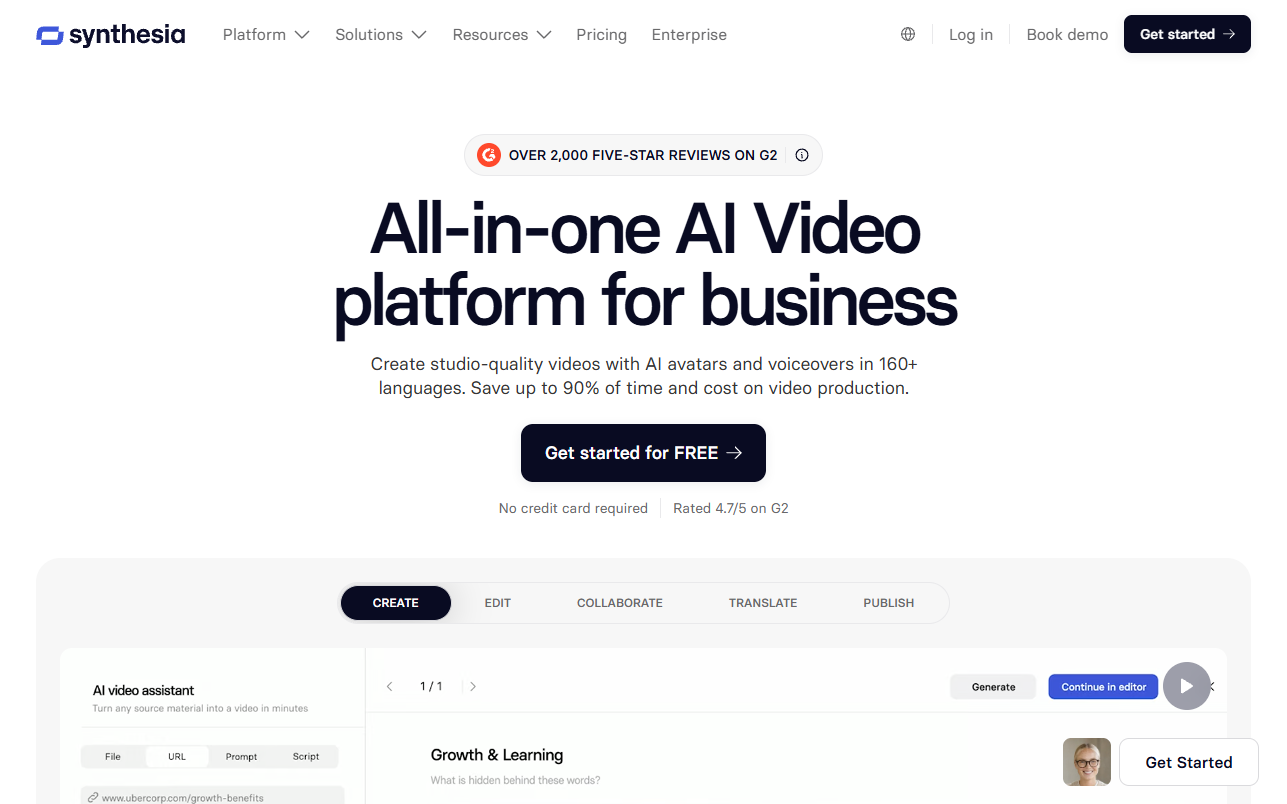
The library spans 240+ stock avatars and 1,000+ voices. Custom on-brand avatars are available from the Starter tier upward, without an enterprise contract. Enterprise plans add unlimited video minutes, one-click translations into 80+ languages, SAML SSO, and SCORM export for learning systems.
Interactive Avatars exist in beta, and Roleplay Sessions let staff practice real conversations with AI avatars. Scripted video remains the core. Localization is the other pillar, with AI dubbing and a video translator carrying one recording into more languages without another shoot.
A free Basic plan is there for experimentation, with about ten minutes of video a month included. Paid tiers begin at $18/month billed yearly.
Pros:
- Compliance certifications that clear enterprise review
- 240+ stock avatars and 1,000+ voices
- Enterprise tier brings unlimited minutes and SCORM export
Cons:
- Live interactive avatars are still in beta
- The strongest capabilities sit behind the enterprise tier
- Built for business video, so character and creative work fall outside its range
Bottom line: Synthesia is the safe enterprise pick in the prerendered lane. It exists to pass security review. A production live-avatar workload is the one job it cannot take on yet.
ColossyanColossyan aims at workplace learning first. Videos and courses live in one platform, so a training team can build a lesson, add a quiz, and publish without switching tools. Paramount and Sonesta are among the customer stories on its site.
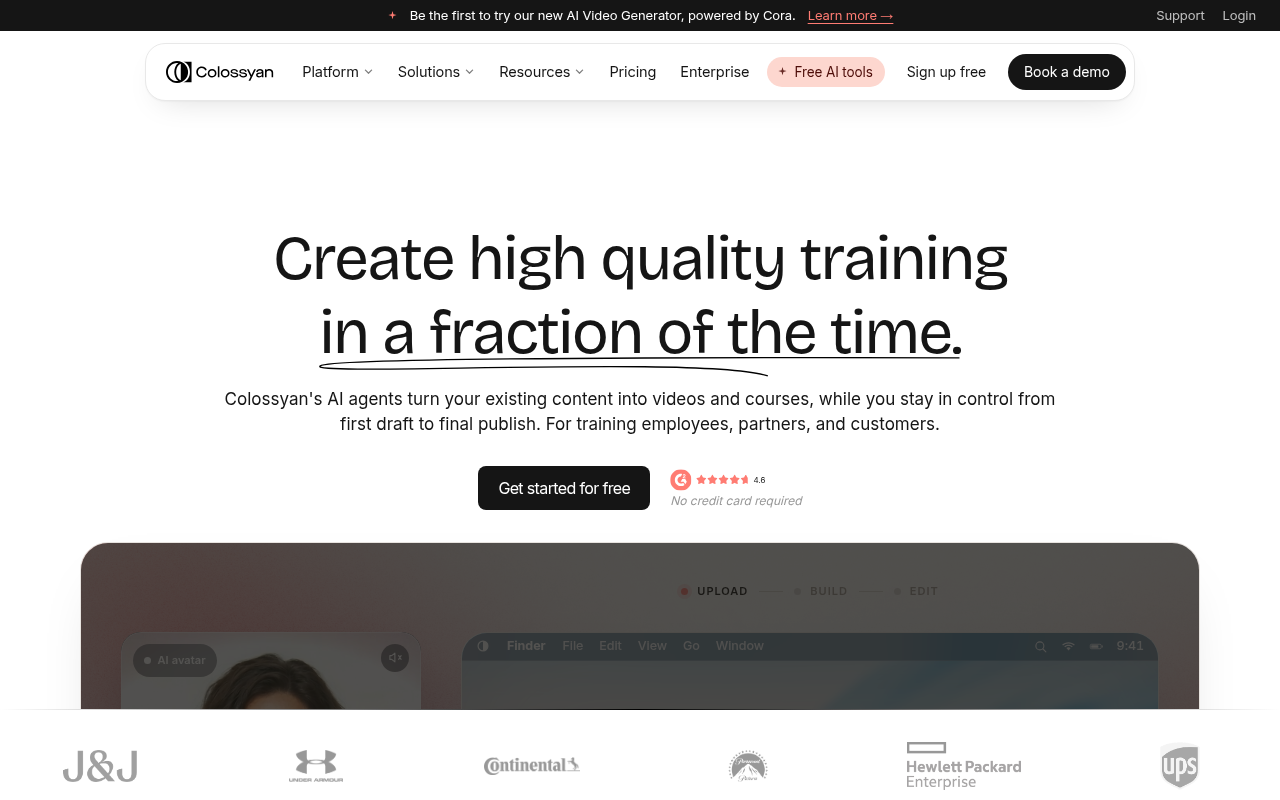
The LMS plumbing is the draw. Courses export as SCORM packages, a converter turns slide decks into LMS-ready packages, and branching plus assessments make the videos interactive. Delivery works for both streaming and self-contained packages.
Conversational avatars add live practice. Security covers SOC 2 Type II, GDPR, and SAML SSO. A new AI agent named Cora now sits over the video generator, and free tools generate quizzes and course outlines.
You choose from 300+ stock avatars. A free option exists on the Starter tier, with paid plans from $27/month. Even Starter includes custom avatars and cloned voices.
Pros:
- Courses, quizzes, and video share one workflow
- SCORM export and slide-deck conversion feed any LMS
- Conversational avatars add live practice inside courses
Cons:
- Outside of training work, stronger general-purpose tools exist
- Video minutes are metered by plan
- Recent product energy concentrates on courses over standalone video
Bottom line: Colossyan makes sense when the deliverable is a course, and its LMS pipeline is the most complete on this list. Video realism serves that goal. Training teams should shortlist it before anything else on this page.
Live interactive avatars
A live interactive avatar is a different product from a rendered clip. The avatar listens, thinks, and answers during the conversation, so the model has to generate video as fast as people speak.
LemonSlice pioneered this category with Character World Models, models trained from scratch to listen, talk, and act in real time. Our goal is breaking the avatar Turing Test. That means a video call where you cannot tell the character is generated.
D-ID competes here as well through its Visual AI Agents, which engage users face to face. For the three platforms below, live conversation is the whole product.
LemonSlice
LemonSlice builds interactive avatars, digital characters that listen, talk, and respond face to face inside your product or website. If you already run a chatbot or voice agent, you can add a talking, listening face to it the same day.
Characters are created from a single photo, instantly. There's no training to wait on and no per-avatar fee, and every plan includes unlimited avatars. If it has a face, LemonSlice can animate it, so cartoons, animals, and mascots work as well as photorealistic humans.
The character has a body and an environment. Hand gestures and natural body language emerge as part of the performance. You can trigger emotions like happiness, sadness, and anger through the Action Engine, and an image update changes the clothing or scene mid-conversation.
Teams use them to turn automated support into face-to-face conversations, run sales demos that respond to prospects, build tutors and onboarding guides, and power concierges on physical kiosks. LemonSlice offers the widget as a no-code way to add an interactive avatar into your site with two lines of code. You can chat with featured avatars in the library for free, then start building your own for only $8/month.
Underneath is a Character World Model, an end-to-end video diffusion transformer in the same class as Veo 3 or Sora, except it runs in real time on a single GPU. Nothing is composited or pre-recorded. Every pixel is generated from scratch at 20fps, which is what enables the models to animate not just the face and lips, but also the entire body, backgrounds, and non-humanoids.
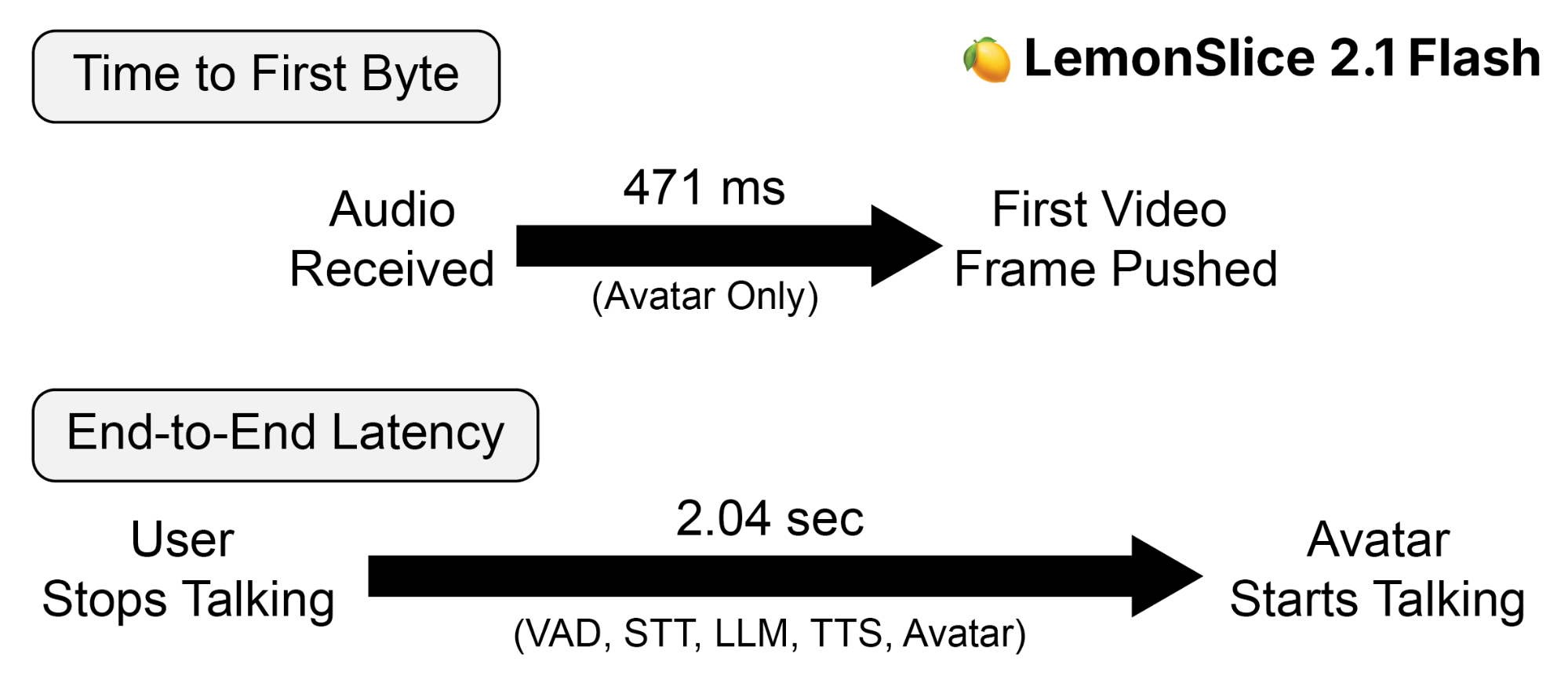
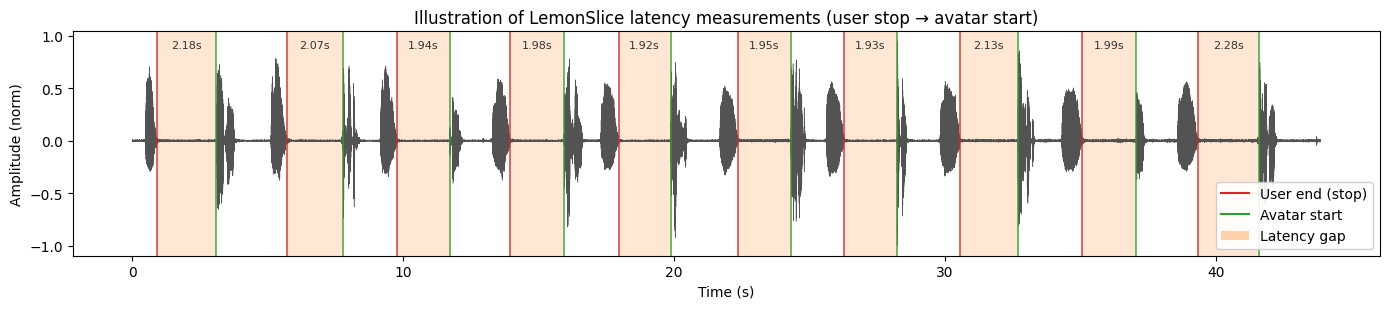
It's also fast. LemonSlice 2.1 Flash responds in 471ms on average, making it the fastest model among major avatar providers in published benchmarks.
For developers who want to build interactive avatars into their own applications or products, LemonSlice also offers an API. It allows you to use LemonSlice with any LLM or voice provider. Integrations are also available for LiveKit, Pipecat, Agora, and WebSockets. The API supports 1000+ concurrent calls on Enterprise plans and is powered by a global fleet of GPUs, making it a robust choice for large-scale corporations.
Pros:
- Any character, including mascots, animals, and non-humanoids
- Highly expressive and attention-grabbing characters
- Full lip sync, facial animation, hand gestures, whole body movements, and even moving backgrounds
- Instant characters from one photo, with unlimited avatars on every plan
- The only provider with an action engine and emotion engine
- API-first, works with any LLM or voice provider
Cons:
- Calls on self-serve subscriptions are limited to 30 minutes (24 hrs available on Enterprise)
Bottom line: Choose LemonSlice when you need an interactive avatar that builds trust or holds a user's attention. LemonSlice avatars are consistently rated more expressive and natural, due to their novel Character World Model approach. Also choose LemonSlice when you want animals, cartoons, or non-human avatars. Or when you want hand gestures and whole-body actions.
TavusTavus sells the whole conversation. Its Conversational Video Interface bundles vision, turn-taking, and rendering models with TTS, LLM, STT, ASR, and WebRTC in one optimized pipeline. Tavus calls this direction human computing.
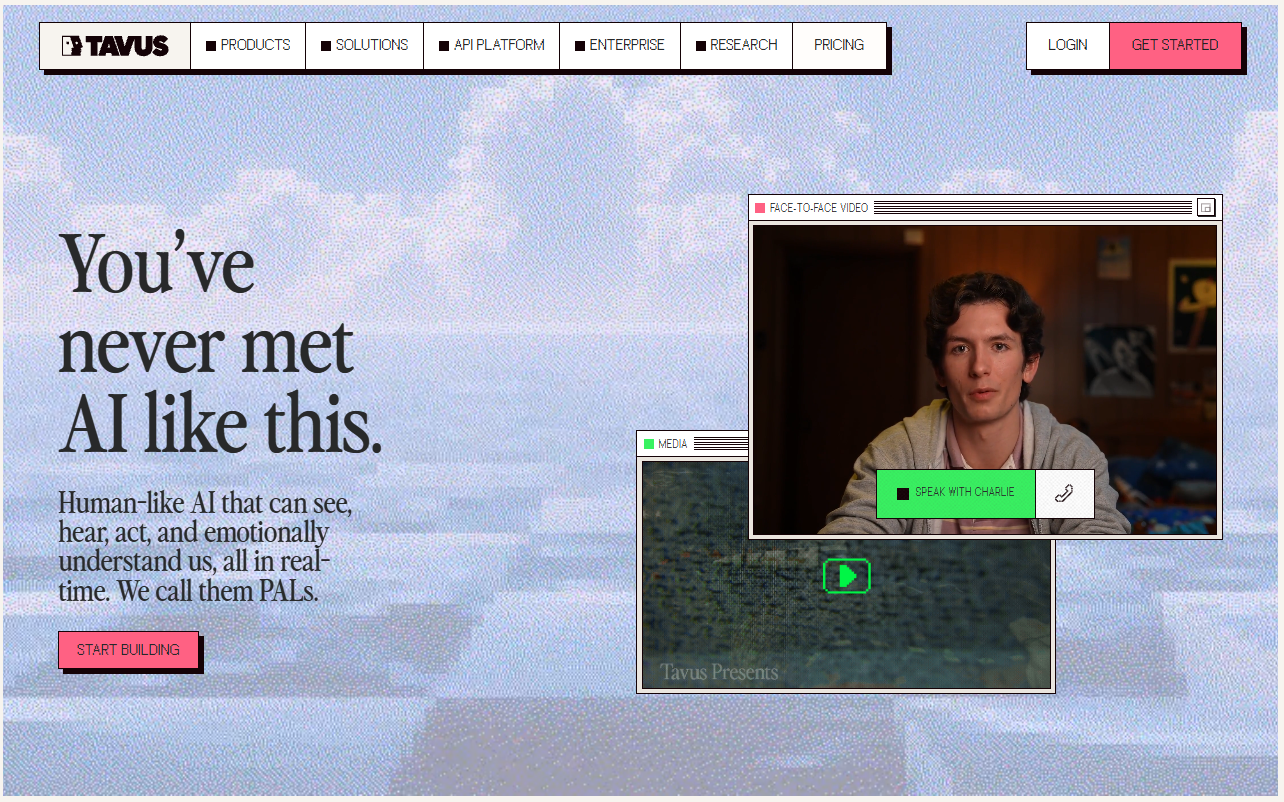
Three in-house models divide the work. Phoenix-4 renders the avatar, Raven-1 handles perception, and Sparrow-2 manages turn-taking. Raven also reads gaze, tone, and environmental context from the user's camera to keep responses aware.
Custom replicas train from a two-minute video and include a custom voice model. Starter includes one custom Replica slot. Stock replicas cover testing before you commit to a custom one.
PAL Maker adds a no-code path for building and deploying an agent without touching the API.
A free plan covers 20 minutes of real-time conversational video. Paid developer plans start at $22/month.
Pros:
- End-to-end pipeline, so you ship without assembling a stack
- Dedicated perception and turn-taking models alongside rendering
- Replica training includes a matching custom voice
Cons:
- Every custom avatar needs recorded footage and a training step
- Entry pricing is the highest in this lane
- Full white-label treatment waits for the enterprise tier
Bottom line: Tavus is the strongest choice when you want one vendor to own the entire conversational stack. The three-model split gives it real depth in perception and turn-taking. In return, you accept recorded footage, per-avatar training, and the highest entry price in this lane.
AnamWhere Tavus bundles everything, Anam keeps live avatars simple. The product is an API for photorealistic faces animated with natural motion and micro-expressions, powered by its Cara-4 model.
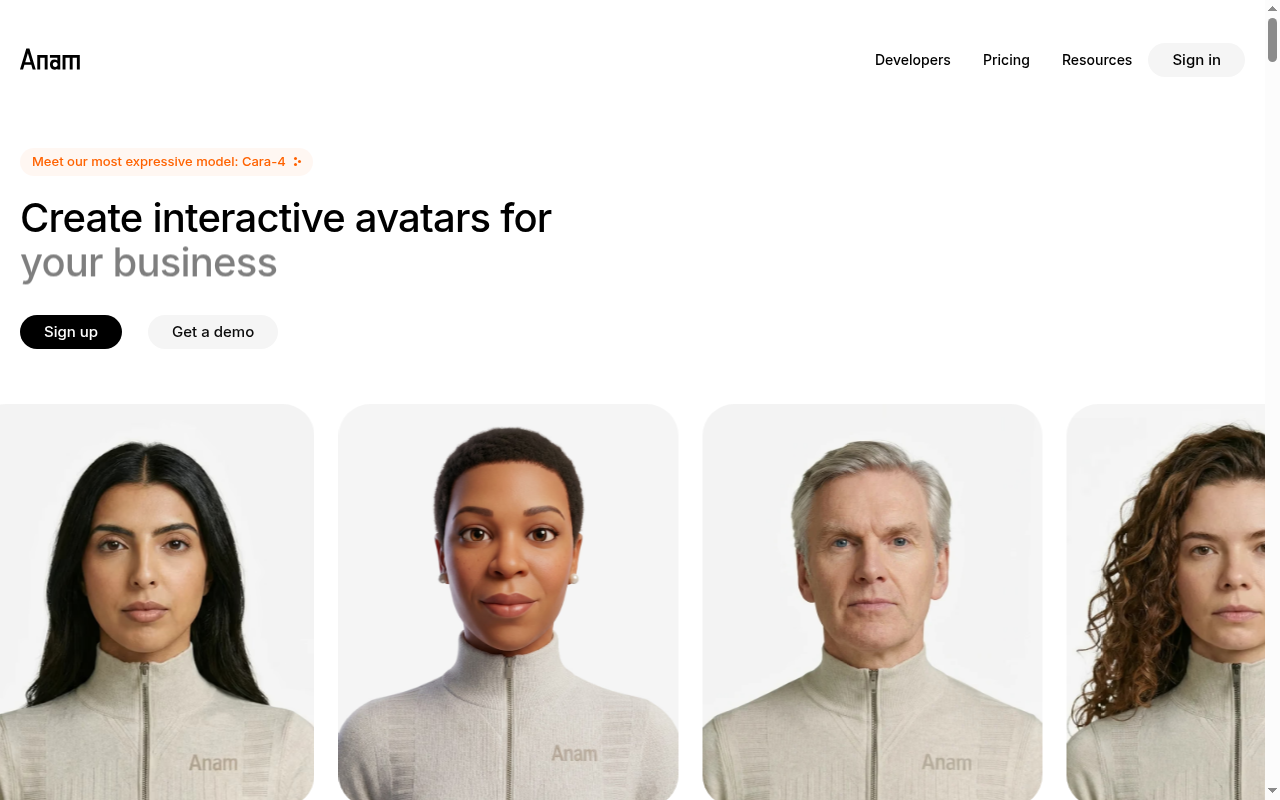
More than 8,000 builders use the platform. Personas can join Google Meet, Zoom, or Microsoft Teams calls as participants, and you can connect your own language model. A knowledge base adds retrieval over your documents.
Persona design covers the rest. A persona combines the avatar, a voice, a language model, and a prompt, and Director Notes cue how Cara-4 performs a conversation.
Billing follows usage. Monthly plans bundle included minutes, and extra minutes cost $0.16 on the Starter tier, with the rate falling as tiers rise.
The free plan includes 30 minutes a month, one custom avatar, and API access. Enterprise adds zero data retention and custom session scale.
Pros:
- Free tier with enough minutes for real prototyping
- Personas join Meet, Zoom, and Teams calls directly
- Per-minute billing keeps spend proportional to usage
Cons:
- Conversation length is capped below the top tiers
- Custom avatar slots are metered per tier
- Embedded avatars carry a watermark until the Explorer tier
Bottom line: Anam is the low-commitment way into live avatars. A free tier plus usage billing lets a small team validate an idea before real spend begins. Watch the session caps and avatar slots as you scale.
Choosing the right alternative
The quickest way to choose is to start from how you want to work.
If you produce prerendered video at scale. HeyGen keeps one identity consistent across every clip, and the prompt-to-video path shortens production. Colossyan plays the same role for training teams, with courses, quizzes, and SCORM export landing the videos inside your LMS.
If enterprise security review sets the pace. SOC 2 Type II, ISO 42001, and SAML SSO make Synthesia the easiest yes a security team will give you. Its enterprise tier then scales localization across 80+ languages.
If you want an API-first live avatar builder. Tavus hands developers the whole conversational pipeline through one API, from perception to rendering, when one vendor should own the loop. Anam serves the same builders with less commitment. Its free tier and usage billing keep early spend proportional to actual use.
If the job is a live, face-to-face conversation with your customers. That is a different objective from generating videos, and it is the job we built LemonSlice for. One photo becomes an avatar that listens, talks, and gestures back.
It runs on the LLM and voice stack you already use, and every plan includes unlimited avatars. Chat with a featured avatar for free to see it firsthand.