
Articles · Nov 3, 2026
Best Retell AI Alternatives in 2026
Eight Retell AI alternatives for 2026, grouped by why teams switch: more developer control, simpler setup, or enterprise scale, with pricing and verdicts.
Retell AI hosts the phone line, speech, and model stack for AI phone agents, so a team sets up an agent instead of wiring providers together. It gives operations staff a drag-and-drop builder, gives developers an API, syncs calls to Salesforce and HubSpot, and handles batch calling. It bills $0.07 to $0.31 a minute on a pay-as-you-go model with no annual contract.
Teams look at Retell AI alternatives for three reasons. Developers want more control over every model and the code around it. Small businesses want something simpler than a call-flow canvas. And large contact centers need scale, EU operations, or on-premises options that Retell doesn't fit, since Retell has no EU operations today. The eight tools below are grouped by those reasons.
How we picked these Retell AI alternatives
Every tool here can run AI voice agents that answer or place real phone calls today, and each one publishes a price or a clear way to buy. We left out tools that only produce text-to-speech voices, since Retell buyers need the whole conversational AI stack for a call. Each profile names the build path and one starting price, plus the limits worth knowing before you migrate.
| Tool | Best for | Build path | Pricing from |
|---|---|---|---|
| Vapi | Developers who want every model under their control | API and config in git | $0.05/min plus models |
| LiveKit | Teams that want to own the code and host it | Open-source framework | Free cloud plan, then $50/month |
| Bland AI | Regulated calls with strict compliance needs | API and Conversational Pathways | $0.14/min, no platform fee |
| Goodcall | An AI receptionist for a small business | No-code, built by an AI assistant | $79/month |
| Voiceflow | CX teams that own the agent day to day | Playbooks and a CLI | Pricing on request |
| PolyAI | Enterprise service lines that must resolve calls | No-code to full code | 2¢/min plus text tokens for its model API |
| Cognigy | Contact centers keeping their current systems | Low-code flow editor | Not published |
| Synthflow | Enterprise rollouts on your own carrier | Visual builder with engineers on hand | Annual enterprise agreement, scoped to volume |
Product and pricing information: vendor product, docs, and pricing pages, October 26, 2026.
Retell AI alternatives for developers
These three suit teams that write code for their AI voice agents and want more control over the models, the hosting, or the compliance setup than Retell gives. Compare them on how much of the call you have to run yourself. Vapi, LiveKit, and Bland AI fill this group.
Vapi
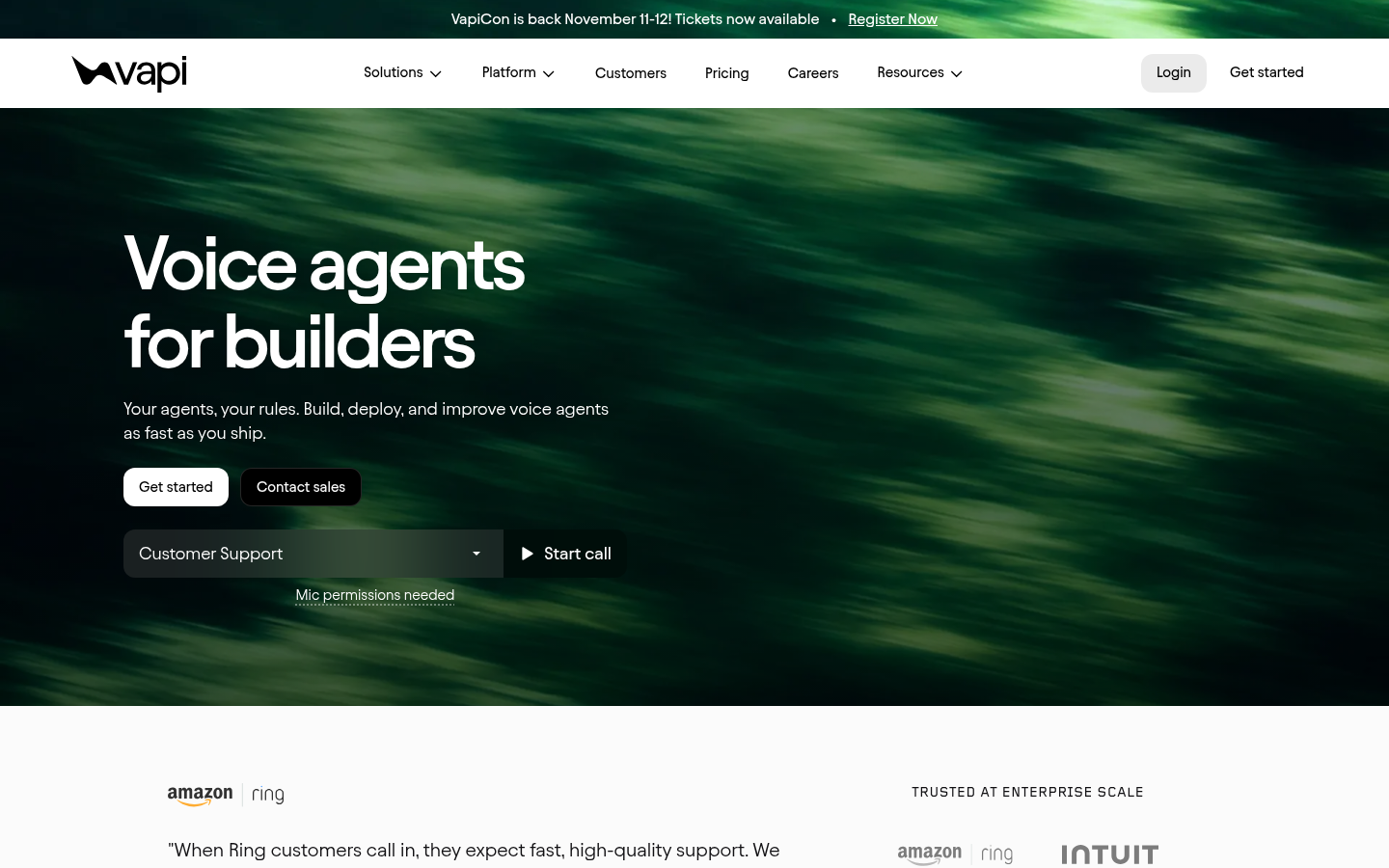
Vapi is built for engineers shipping voice AI agents, and a natural Retell alternative for teams that live in code. It orchestrates a transcriber, a model, and a voice that you pick from dozens of providers, including OpenAI, Deepgram, and ElevenLabs, and it passes each model's cost through without markup. It works with any SIP provider, and its pricing page lists carrier rates for Twilio, Vonage, and Telnyx.
Assistants, tools, and tests live as files in git, and Squads pass a call between specialized assistants without losing context. Vapi retired its visual Workflows builder in August 2026, so this is a code-first platform now. Hosting costs $0.05 a minute, and new accounts get $5 in credit.
Pros:
- Any provider at every step, billed at cost
- Agents reviewed and versioned in git
- Squads for multi-step calls
Cons:
- The base plan allows 4 concurrent calls
- HIPAA is a $2,000 a month add-on
Bottom line: choose Vapi if your engineers want Retell's speed without its builder, because Vapi gives them every provider at cost and keeps the agent in their own codebase.
LiveKit
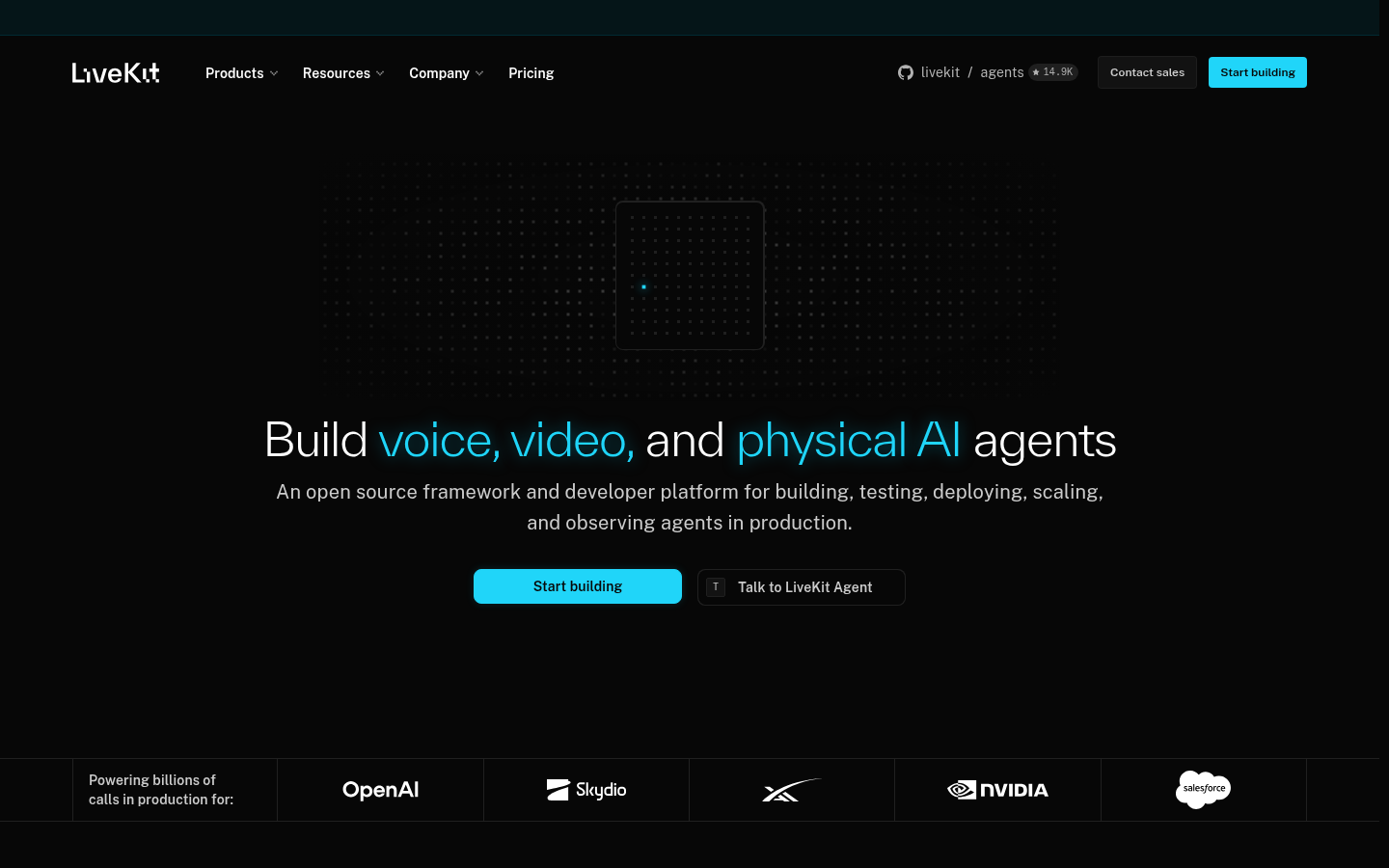
LiveKit gives you the code that a hosted platform like Retell keeps behind its dashboard. Its Agents SDK runs in Python and Node.js on top of one of the most widely used WebRTC media servers, and the whole stack behind its voice AI agents is open source.
Unlike a hosted platform, it hands you the code. You write the agent, pick each model, and run it on your own servers or on its managed cloud with the same APIs. Its phone number service sells US numbers, and you can bring a third-party SIP trunk for calls in and out. It is also a common Vapi alternative for teams that outgrow a hosted platform.
The free cloud plan includes 1,000 agent session minutes a month with no credit card.
Pros:
- Open source under Apache 2.0
- Self-host or use the managed cloud with the same APIs
- Phone numbers and SIP in one stack
Cons:
- The free cloud plan allows 5 concurrent sessions
- Self-hosted deployments need a separate SIP service
Bottom line: choose LiveKit if you want to own the whole agent and host it anywhere, because the framework is open source and runs the same on your servers or its cloud.
Bland AI
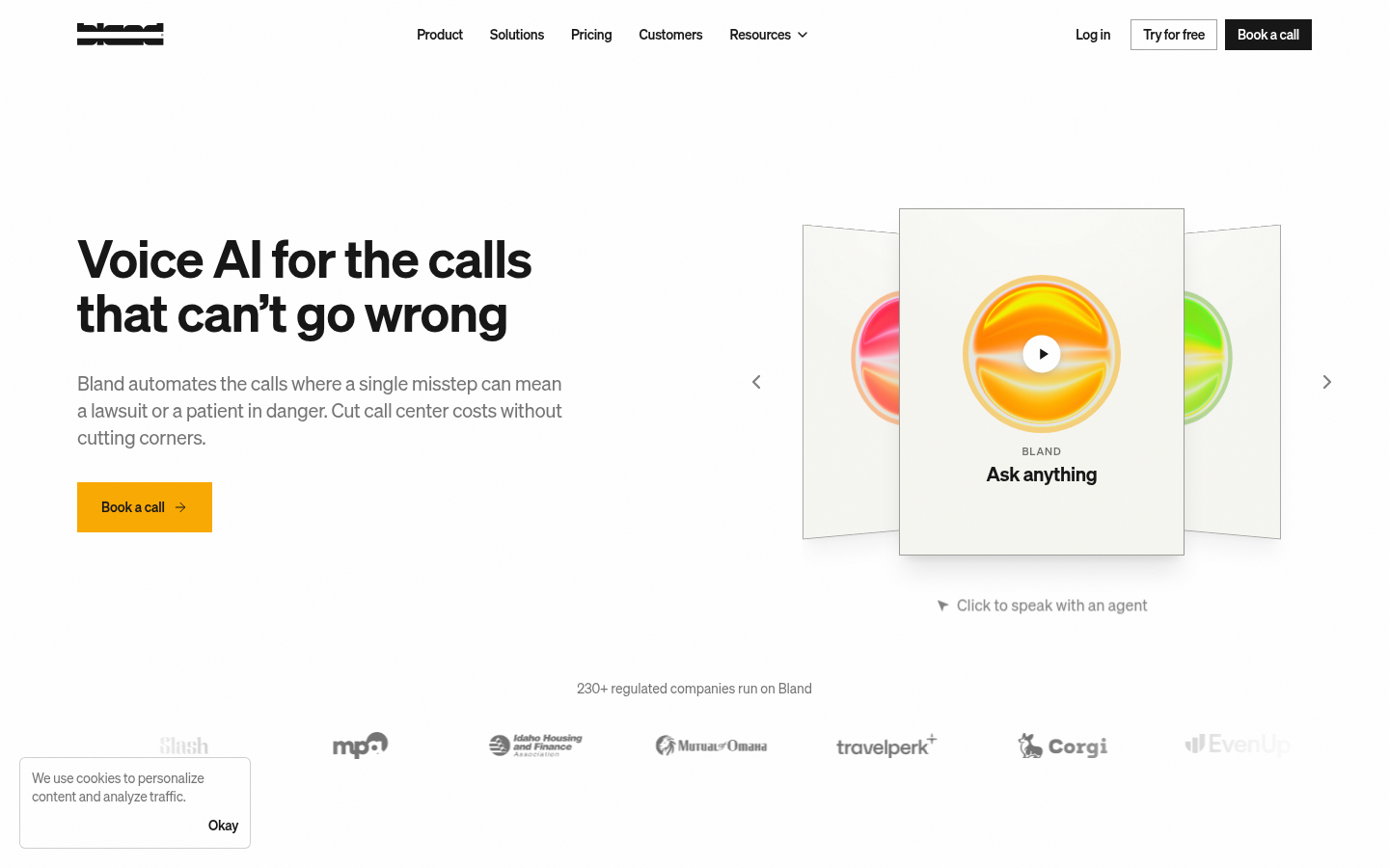
Bland AI automates the calls where a single misstep can mean a lawsuit or a patient in danger, and 230+ regulated companies run on it. Agents work on phone, SMS, and web, and you script call logic with Conversational Pathways.
Bland is FedRAMP 20x Class A and ISO 27001 certified. It works with your existing Twilio account or trunks from any carrier, and teams that bring their own carrier pay no transfer fees. Its rate bundles every model, with no token charges or provider pass-throughs. Voice cloning works per language, with custom clones trained for each one.
The Start plan gives you two credits and an inbound number with no card required, and most teams deploy a first agent within a day.
Pros:
- FedRAMP 20x Class A and ISO 27001
- No transfer fees with your own carrier
- Voice cloning in each supported language
Cons:
- Production agents take two to six weeks to go live
- The Start plan includes only two credits
Bottom line: choose Bland if a regulator will audit your calls, because it holds FedRAMP 20x Class A and ISO 27001 certification and bundles every model into one rate.
Retell AI alternatives with a simpler setup
These two suit teams that want an agent running without drawing a call flow or calling an API. Compare them on ease of use, who builds the agent, and how you pay. Goodcall and Voiceflow fill this group.
Goodcall
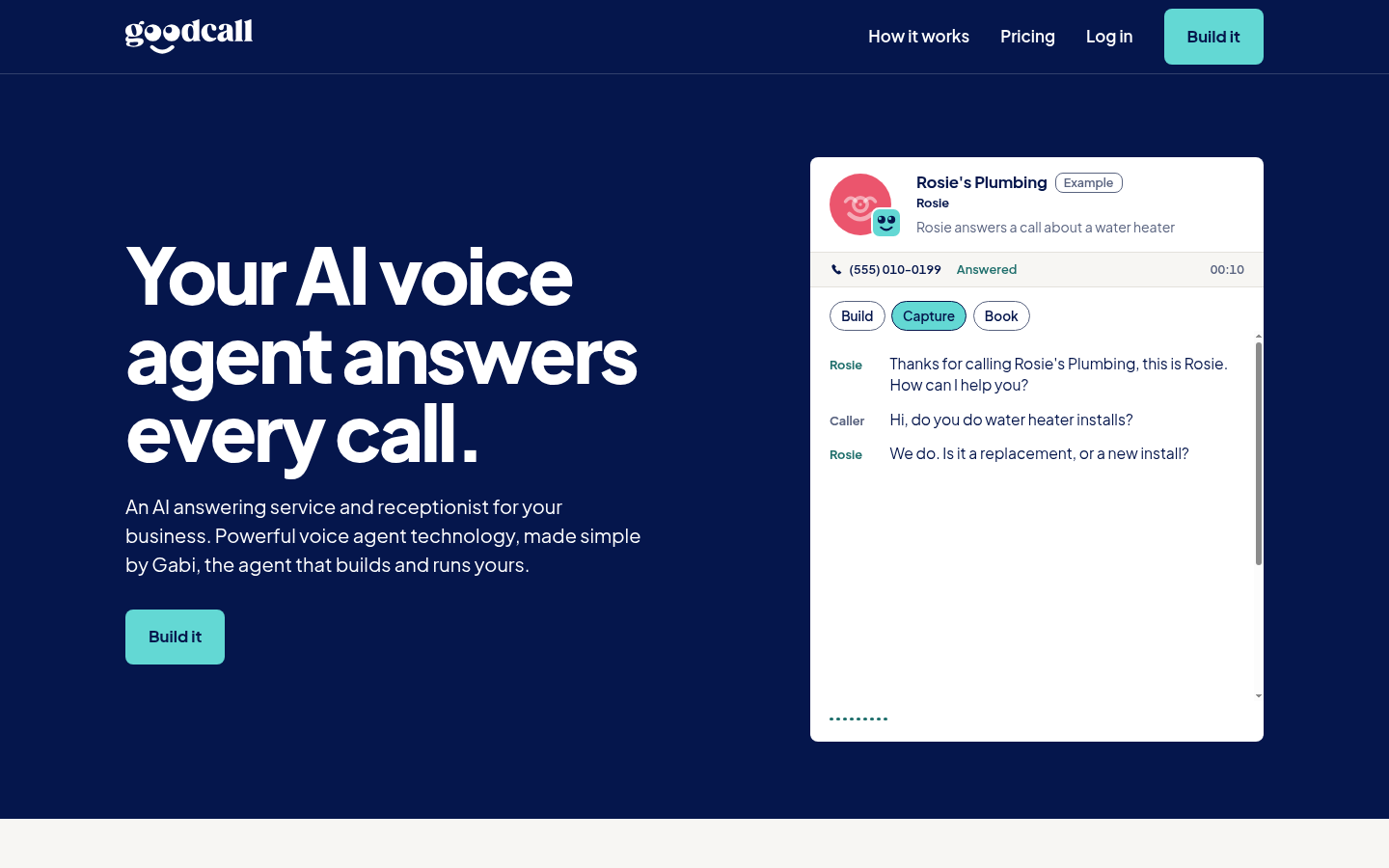
Goodcall is an AI answering service and receptionist for small businesses, and it began inside Google in 2017. There's no code to write. You tell Gabi, its own AI agent, what you want in plain words, and Gabi builds the phone agent, then runs practice calls on tricky cases like an emergency at midnight.
The agent handles appointment scheduling by checking your calendar before it offers a time, and it handles lead qualification, sending each new lead by text and email when the call ends. Native integrations are Google Calendar, Google Sheets, and HighLevel. Callers hear that they're speaking with an AI assistant.
Pricing counts unique customers, not minutes. Starter costs $79 a month for 100 customers, and you can build and test a demo agent free before you connect a number.
Pros:
- No-code setup by an AI assistant
- Billed per unique caller
- Free demo agent before you pay
Cons:
- Numbers are local US numbers only
- Numbers send texts but can't receive replies
Bottom line: choose Goodcall if you run a small business and want an AI receptionist this week, because Gabi builds the agent from plain instructions and billing follows callers.
Voiceflow
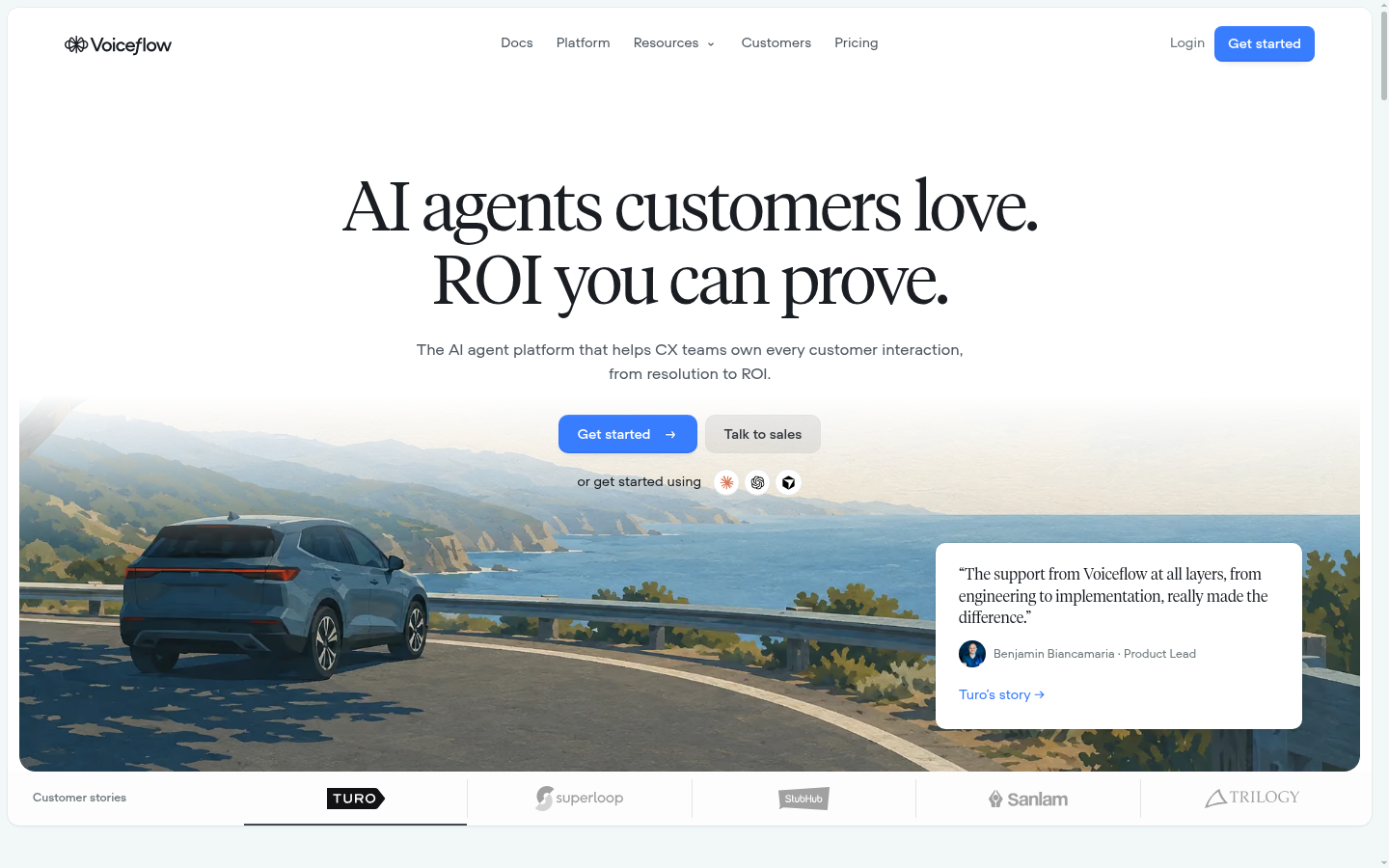
Voiceflow is an AI agent platform that helps CX teams own every customer interaction. Teams turn support policies into playbooks, then use Atlas, Voiceflow's analysis assistant, to investigate conversations and refine those playbooks.
Split testing lets you try a change on live traffic before you roll it out, and separate environments carry an agent through development, staging, and production. You can choose a major LLM provider or bring your own model. StubHub says Voiceflow let it iterate on conversation flows and reduce its dependency on engineers.
Agencies get a free trial with no credit card and white-labeling for client work. Business pricing is on request.
Pros:
- Playbooks refined with Atlas
- Split testing on live traffic
- Bring your own model
Cons:
- No published price for businesses
- The free trial is for agencies
Bottom line: choose Voiceflow if a CX team will own the agent day to day, because playbooks, Atlas, and split testing let non-engineers improve it safely.
Retell AI alternatives for enterprise contact centers
These three sell voice automation to contact centers with high call volume that run AI voice agents next to existing phone systems. Compare them on how they connect to the systems you already own. PolyAI, Cognigy, and Synthflow fill this group.
PolyAI
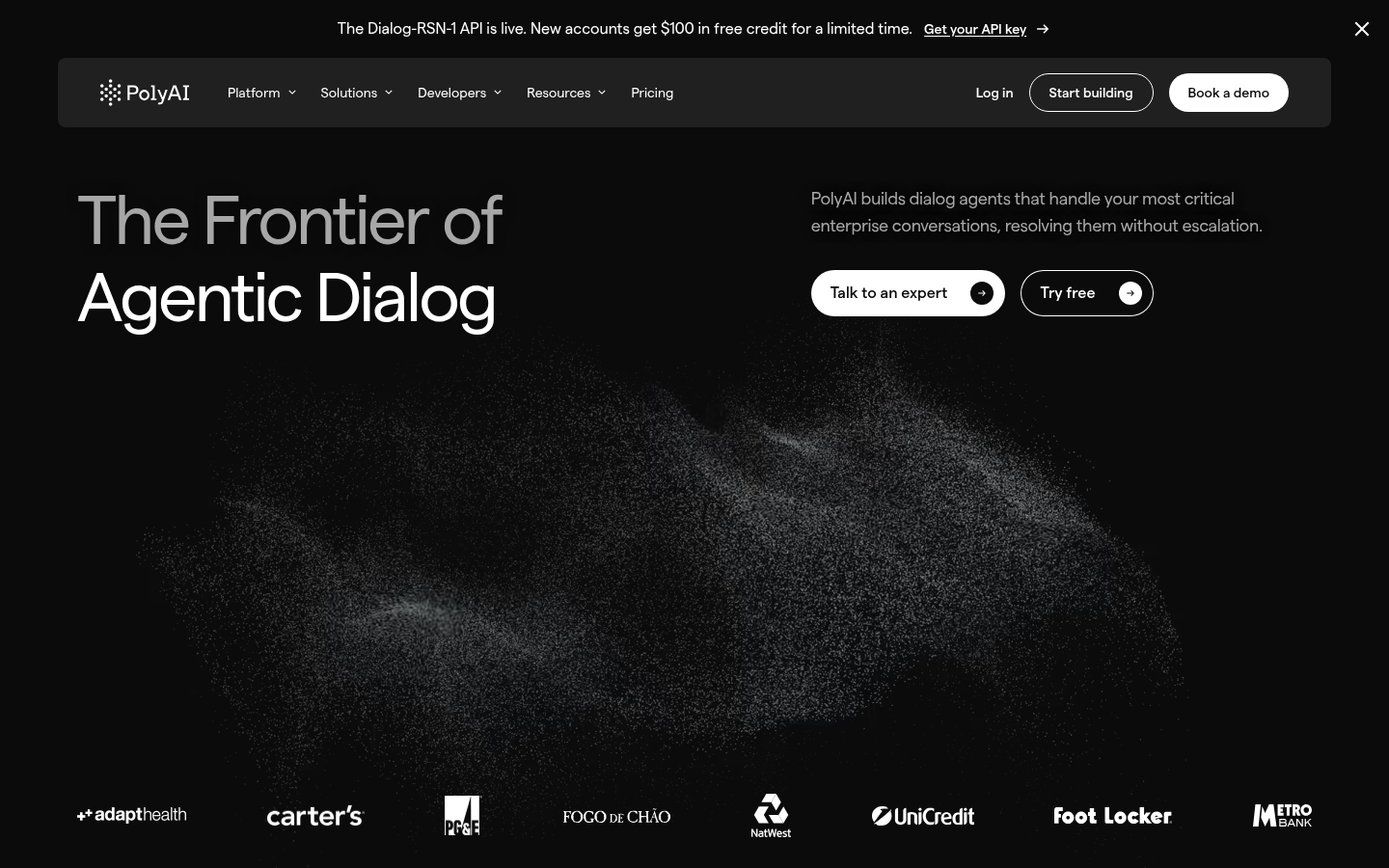
PolyAI builds dialog agents that handle critical enterprise conversations and resolve them without escalation. Teams build on one platform with no-code tools or full code, and PolyAI publishes 99.994% uptime and 10,000 concurrent calls. It holds SOC 2 Type 2, ISO 27001, PCI DSS, and GDPR, supports SSO and role-based access, and never trains on customer data without opt-in.
Hawksmoor turned 42,000 missed calls into bookings with PolyAI. The full platform is sold through sales with per-minute pricing, and your own carrier connects over SIP at no charge. PolyAI also sells a self-serve model API, Dialog-RSN-1, for teams with their own voice stack. It costs 2¢ per connected minute plus text tokens.
Pros:
- 99.994% uptime and 10,000 concurrent calls
- Own carrier over SIP at no charge
- Self-serve model API at 2¢ a minute plus text tokens
Cons:
- The model API excludes telephony and orchestration
- API accounts get 2 concurrent calls until you add a card
Bottom line: choose PolyAI if you run a large service line where unresolved calls cost money, because it builds agents to resolve without escalation and publishes the uptime to back them.
Cognigy
Cognigy deploys conversational AI agents in contact centers and connects to the systems already there without replacing them. Its Voice Gateway plugs into the CCaaS and CPaaS platform you run and handles tens of thousands of concurrent live calls.
Designers build in a low-code flow editor, and you can mix the STT and TTS services you prefer. Outbound calls include answering machine detection. Lufthansa runs 16M+ automated conversations a year on Cognigy for rebookings and refunds, and Toyota reports a 95% acceptance rate for appointment scheduling done by its AI. The voice infrastructure is GDPR-compliant.
Cognigy doesn't list prices on its site, so plan a sales conversation before you budget.
Pros:
- Connects to your current contact center without rip-and-replace
- Tens of thousands of concurrent calls
- Mix your own STT and TTS
Cons:
- No public pricing
- Built for contact centers, not small teams
Bottom line: choose Cognigy if you run a large contact center and can't replace its phone stack, because its Voice Gateway connects agents to the platform you already own.
Synthflow
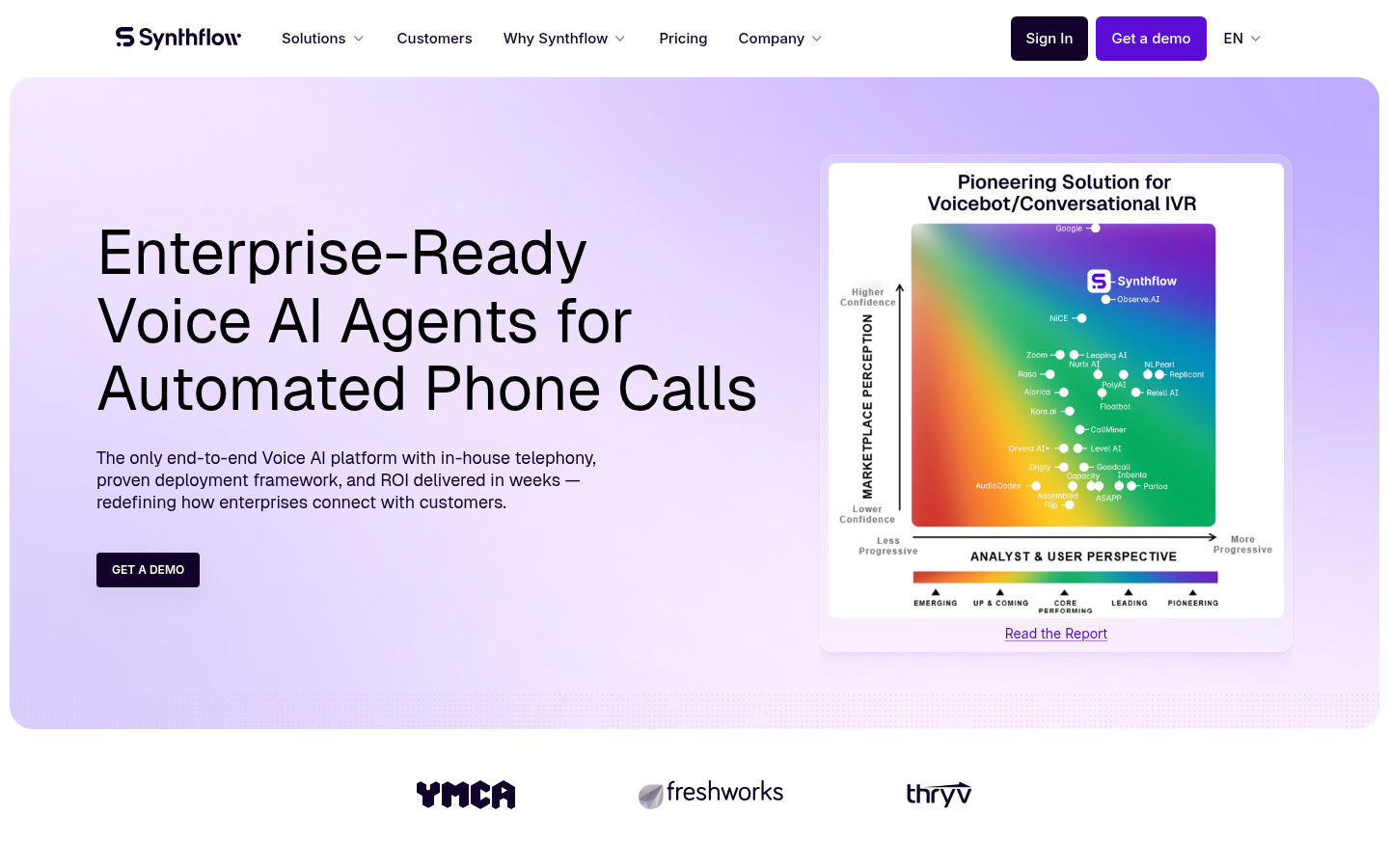
Synthflow AI connects every stage of an agent's life, build, evaluate, launch, and learn, into one repeatable process. Subflows act as specialized agents that handle tasks on their own inside a call, and forward-deployed engineers launch agents in weeks with measurable ROI in the first 60 days.
Synthflow lets you bring your own carriers or SIP trunks, and it connects directly to Cisco, Avaya, Genesys, and RingCentral. Its infrastructure is certified for SOC 2, HIPAA, PCI DSS, and GDPR, and Synthflow powers 65M+ voice calls a month in 30+ countries.
Pricing is scoped around call volume, concurrency, telephony, integrations, and security needs.
Pros:
- Your own carriers
- Direct links to Cisco, Avaya, Genesys, and RingCentral
- Engineers who launch the agent with you
Cons:
- No published rate; sold as an annual enterprise agreement
Bottom line: choose Synthflow if you want an enterprise rollout run with you on your own carrier, because its engineers launch the agent and it connects to the phone systems you already run.
A face that stays when you switch platforms
LemonSlice, a real-time interactive avatar platform, adds a face to the voice agent you run today and works with any LLM and any voice, such as ElevenLabs or Cartesia, so the avatar doesn't need rebuilding if you switch platforms again next year.
Whichever platform you land on, here's what comes with it:
- Any character from one photo: you can animate non-humans as easily as humans, so a mascot or a cartoon trainer works as well as a photo of your staff, and you can change outfits or scenes mid-call with real-time image updates.
- Response speed: LemonSlice responds with ultra low latency, and its global fleet of GPUs runs each session from a region close to your users, so the face is never the slow part of the session.
- Privacy controls: zero-data-retention mode keeps media and transcripts off disk after a hosted session.
- Let your coding agent add it: install the LemonSlice skill, then ask Cursor, Claude, or Copilot to add a video avatar to your voice app. The skill scaffolds a starter app with keys, the voice cascade, an image, and a ringing UI.
- Wire any stack: LemonSlice's WebSocket integration drives the avatar from any audio stack, which suits the code-first tools above and helps during a migration: you can run the same avatar in front of your old agent and your new one, compare them on real visitors, and keep the face your customers already know when you cut over. The LemonSlice docs walk through the full flow.
The WebSocket connection is the whole integration:
const socket = new WebSocket(websocketAddress);

{
  "command": "audio",
  "audio": "<base64_pcm16_mono>",
  "sampleRate": 16000,
  "encoding": "PCM16"
}
Code sample from lemonslice.com/docs/websocket
Sessions stay live for up to 24 hours on Enterprise plans, long enough for an interactive museum exhibit. Developers can start with as little as $8 a month, and every plan includes unlimited avatars and API access. Add your first interactive AI avatar to whichever platform you choose.
How to choose a Retell AI alternative
Start from the reason you're leaving your current voice AI platform, then shortlist two tools and test them on real calls.
| If you're leaving because | Shortlist | Why |
|---|---|---|
| You want developer control and every model at cost | Vapi, LiveKit | API config in git, or an open-source framework you host |
| You need strict compliance on regulated calls | Bland AI | FedRAMP 20x Class A and ISO 27001 |
| You want a receptionist without learning a no-code builder | Goodcall | Gabi builds the agent from plain instructions |
| A CX team will own the agent | Voiceflow | Playbooks, Atlas, and split testing |
| You run a large contact center | PolyAI, Cognigy, Synthflow | Enterprise uptime, existing phone systems, your own carrier |
Check three things on every shortlist. Confirm the platform accepts your SIP trunking and telephony providers so your numbers move with you, and that warm transfer works on your carrier. Confirm its HIPAA or SOC 2 terms match yours. And compare the full cost per call, since some tools bill by the minute, one by the caller, and Synthflow by annual contract.
Whichever tool wins, a LemonSlice avatar can sit in front of it on your site.
Pilot two alternatives on live calls
The best Retell AI alternative depends on why you're leaving. Vapi and LiveKit hand developers more control, Bland AI adds compliance for regulated calls, Goodcall and Voiceflow simplify the build, and PolyAI, Cognigy, and Synthflow serve large contact centers. Move one call type to your top two picks, run them side by side for a week, and compare resolution rate and cost per call.
Before you migrate, put a face on the agent you keep, and the same avatar moves with you if you switch again. Build your first interactive AI avatar with LemonSlice.