
Articles · Nov 3, 2026
Best Voice Agent API Options in 2026
Compare the best voice agent API options for 2026, from AssemblyAI and Deepgram to OpenAI, Grok, and Vapi, with latency, pricing, and a verdict for each.
A voice agent API lets your app run an AI voice agent through one integration. You stream the user's audio in, and the API sends a spoken reply back, usually within a second or two.
The APIs differ in how much they run for you. AssemblyAI and Deepgram chain transcription, reasoning, and voice behind one connection. OpenAI and Grok use single models that hear and speak audio directly. Vapi orchestrates models you pick from other vendors.
How a voice agent API works
Developers use voice agent APIs for phone agents, customer support, and voice assistants inside apps. Every API handles the same steps on each turn. Voice activity detection notices when the user starts and stops talking. STT turns the words into text. An LLM decides the reply from your system prompt and the tools it can call, and TTS speaks the answer back.

Speech-to-speech models fold those steps into one model that hears audio and answers with audio. You remove the hand-offs between services, and you give up some control over each step.
Most APIs connect from your server over a WebSocket. Browser apps can use WebRTC, which streams audio straight from the user's microphone. You configure the session with an event such as session.update, which sets the instructions, the voice, and the tools.
Three behaviors decide how natural real-time voice agents feel. Time-to-first-audio is the delay before the first sound of a reply. Turn detection decides when the user has finished speaking. Interruption handling stops the agent when the user cuts in. Tool calling, also called function calling, lets the agent look up an order or book a meeting mid-call, and some APIs also connect to MCP servers.
How we picked these APIs
Every API here streams a full conversation today, publishes a price, and documents its connection method for developers. We grouped them by how much of the voice pipeline runs inside one model. We also noted which vendors document tool use and interruptions, since an agent needs both to finish a real task.
| API | Approach | Published latency | Pricing from |
|---|---|---|---|
| AssemblyAI | Transcription, reasoning, and voice on one connection | About 1 second end to end | $4.50/hr |
| Deepgram | Own speech models with orchestration built in | Voices as low as 80ms | $0.075/min |
| OpenAI Realtime API | Single audio model | No figure published | $32 per 1M audio input tokens |
| Grok | Single audio model | Sub-second | $0.08/min |
| Vapi | Orchestration of models you pick | Under 500ms average | $0.05/min plus models |
Product and pricing information: vendor product, docs, and pricing pages, October 22, 2026. Each latency figure comes from the vendor itself and measures a different part of the pipeline.
APIs that run the full pipeline
These APIs run transcription, reasoning, and voice behind a single connection, so you send audio and get audio back. Compare them on latency, languages, and deployment options. AssemblyAI and Deepgram work this way.
AssemblyAI
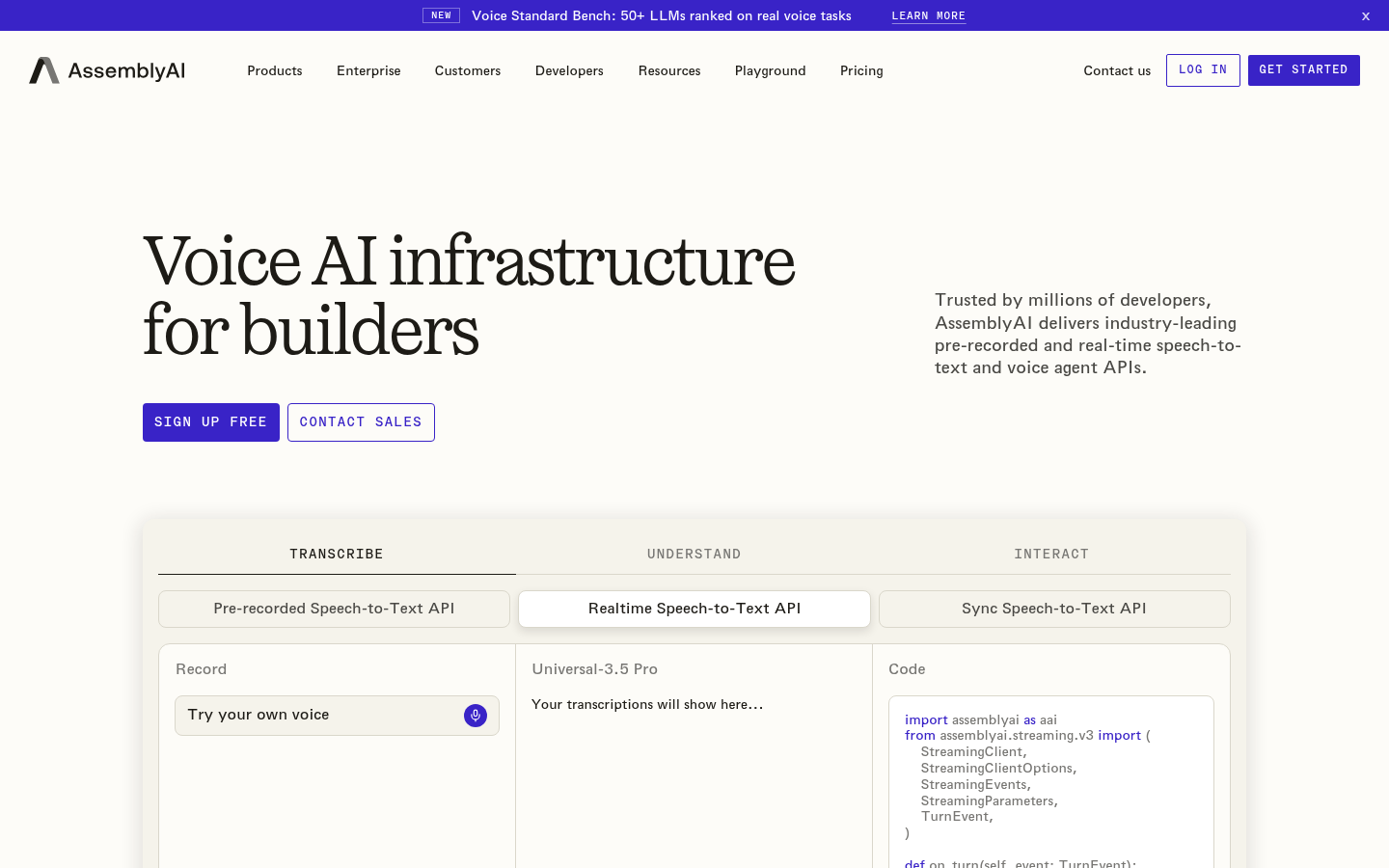
AssemblyAI built its Voice Agent API as a single connection that handles speech-to-text, LLM routing, and voice generation. It runs on the company's own Universal-3.6 Pro Realtime ASR, a streaming speech recognition model.
The company quotes about 1 second from the moment the user finishes a turn to the agent's first word. The API includes speech-aware VAD turn detection and JSON Schema tool calling. If the connection drops, you have 30 seconds to reconnect, and the agent picks up where it left off.
It supports English, Spanish, French, German, Italian, and Portuguese, and it works with Twilio, LiveKit, and any telephony provider. Billing is a flat $4.50 per hour, and new accounts get free API credit with no credit card.
Pros:
- One connection for transcription, reasoning, and voice
- Flat hourly billing
- A 30-second reconnect window keeps calls alive
Cons:
- Supports 6 languages
- Quotes about 1 second end to end, so test it against your own latency target
Bottom line: choose AssemblyAI if your callers say names, numbers, and medical terms the agent must hear correctly, because it runs on its own streaming recognition model.
Deepgram
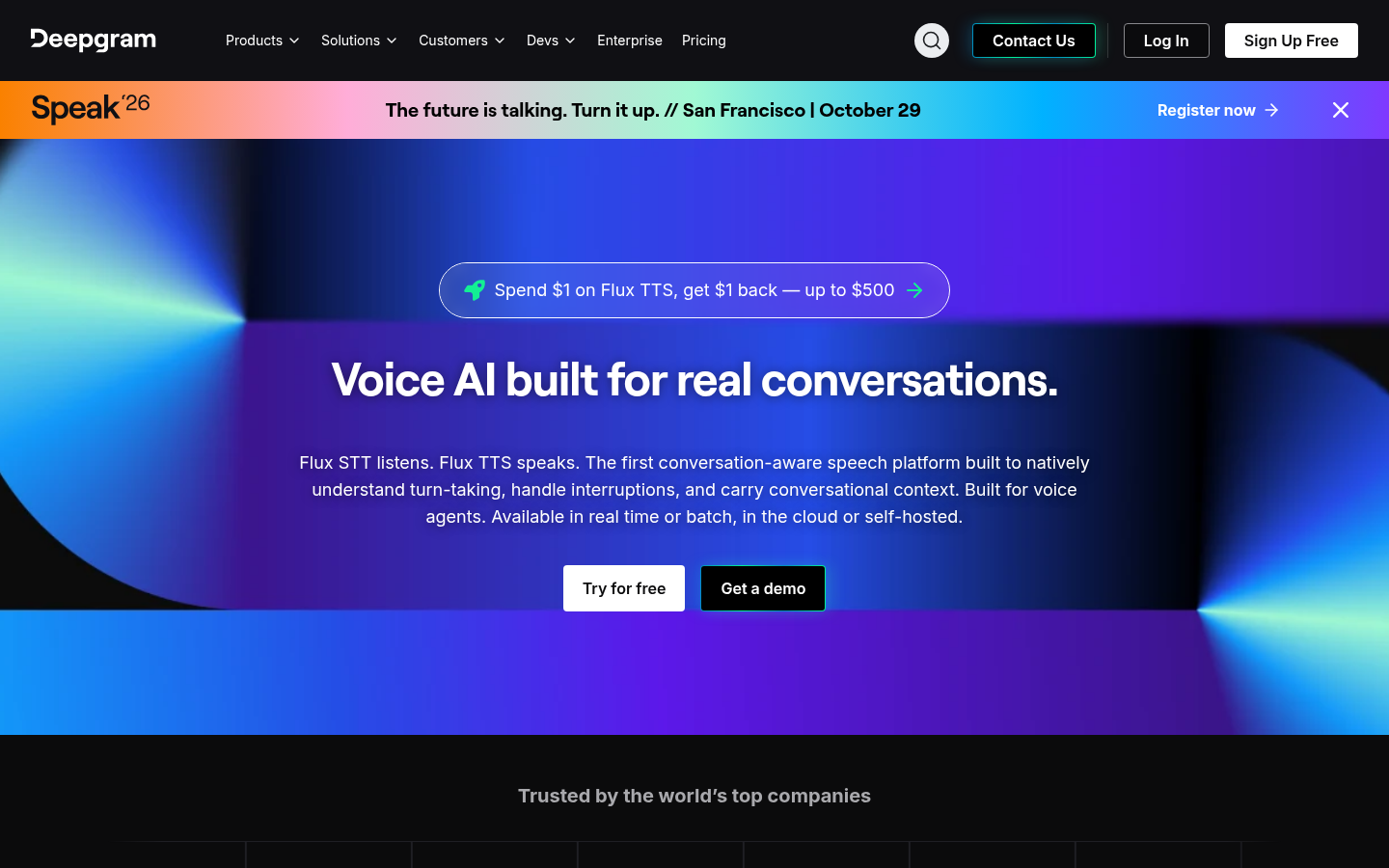
Deepgram runs its own STT and TTS models and the orchestration between them, and you can bring your own LLM. The company built its API to handle interruptions and take actions during a call.
Its voices quote latency as low as 80ms. You can deploy the API fully managed, single-tenant, in your own VPC, or self-hosted, with HIPAA and GDPR support.
Pricing starts at $0.075/min pay as you go, and new accounts get $200 in free credit.
Pros:
- Own speech models in one API
- VPC and self-hosted deployment
- $200 in free credit
Cons:
- Billing runs on connection time, so idle seconds count
- No end-to-end latency figure on the product page
Bottom line: choose Deepgram if you need to run agents in your own cloud or on-prem, because it supports VPC and self-hosted deployment with HIPAA and GDPR support.
Speech-to-speech APIs
These APIs use one model that listens to audio and answers in audio, with no separate transcription step. Compare them on voices, languages, and price. OpenAI and Grok work this way.
OpenAI Realtime API
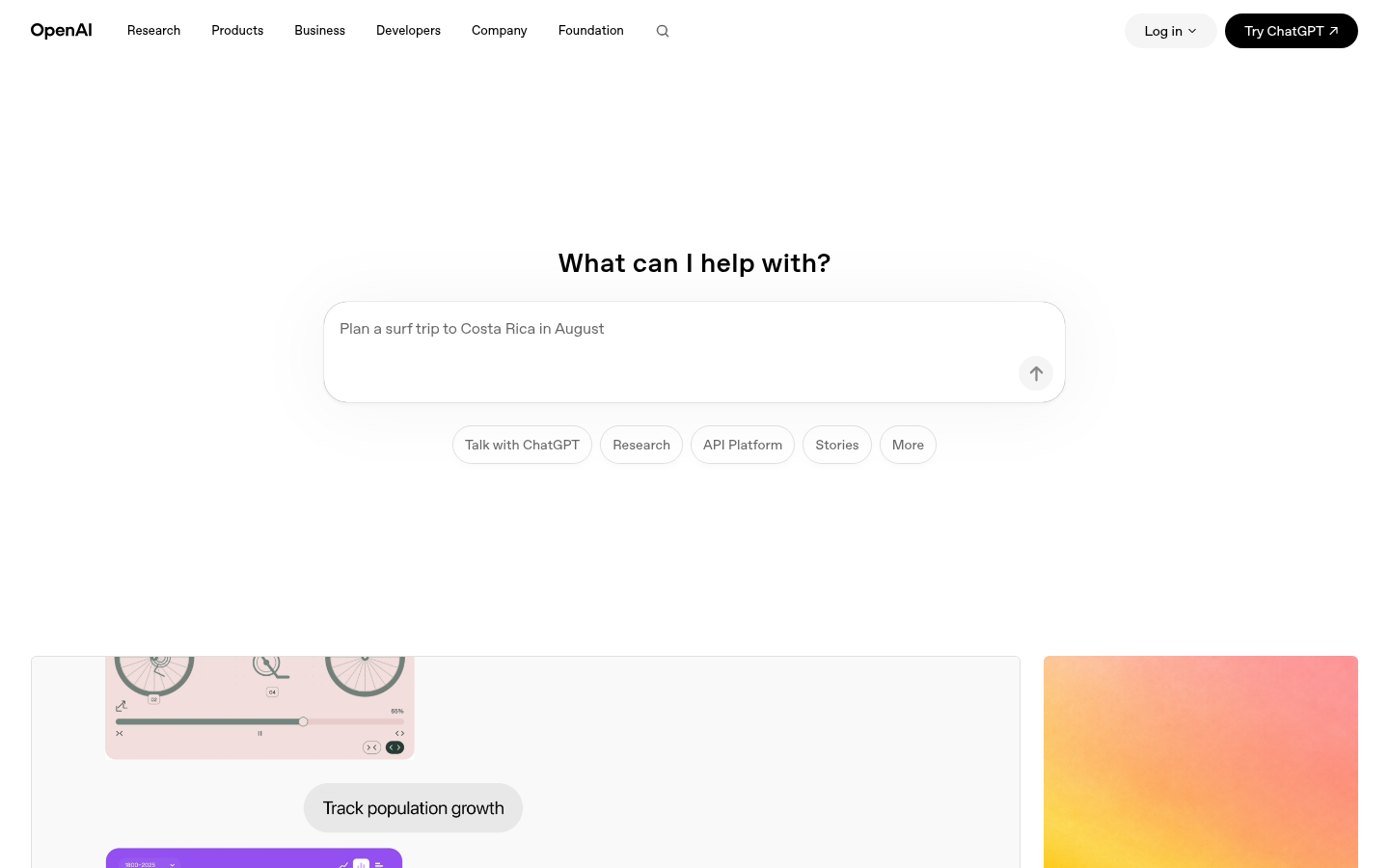
OpenAI's speech-to-speech model, gpt-realtime-2.1, works directly with audio, keeps conversation state, and calls tools. Each session handles audio turns, tools, interruptions, and handoffs.
Browser apps connect over WebRTC, and servers connect over WebSocket. You can configure automatic turn detection and add functions, MCP servers, and connectors to the session.
Pricing is per token, and GPT-Realtime-2.1 audio input costs $32 per 1M tokens.
Pros:
- One model with tools and MCP built in
- WebRTC for browsers and a server-side connection for backends
- Interruptions and handoffs handled inside the session
Cons:
- Token pricing makes the cost per minute harder to forecast
- No published latency figure
Bottom line: choose OpenAI's model if you want one model to hear, reason, and speak with tools and MCP built in, because gpt-realtime-2.1 handles the whole turn in a single session.
Grok
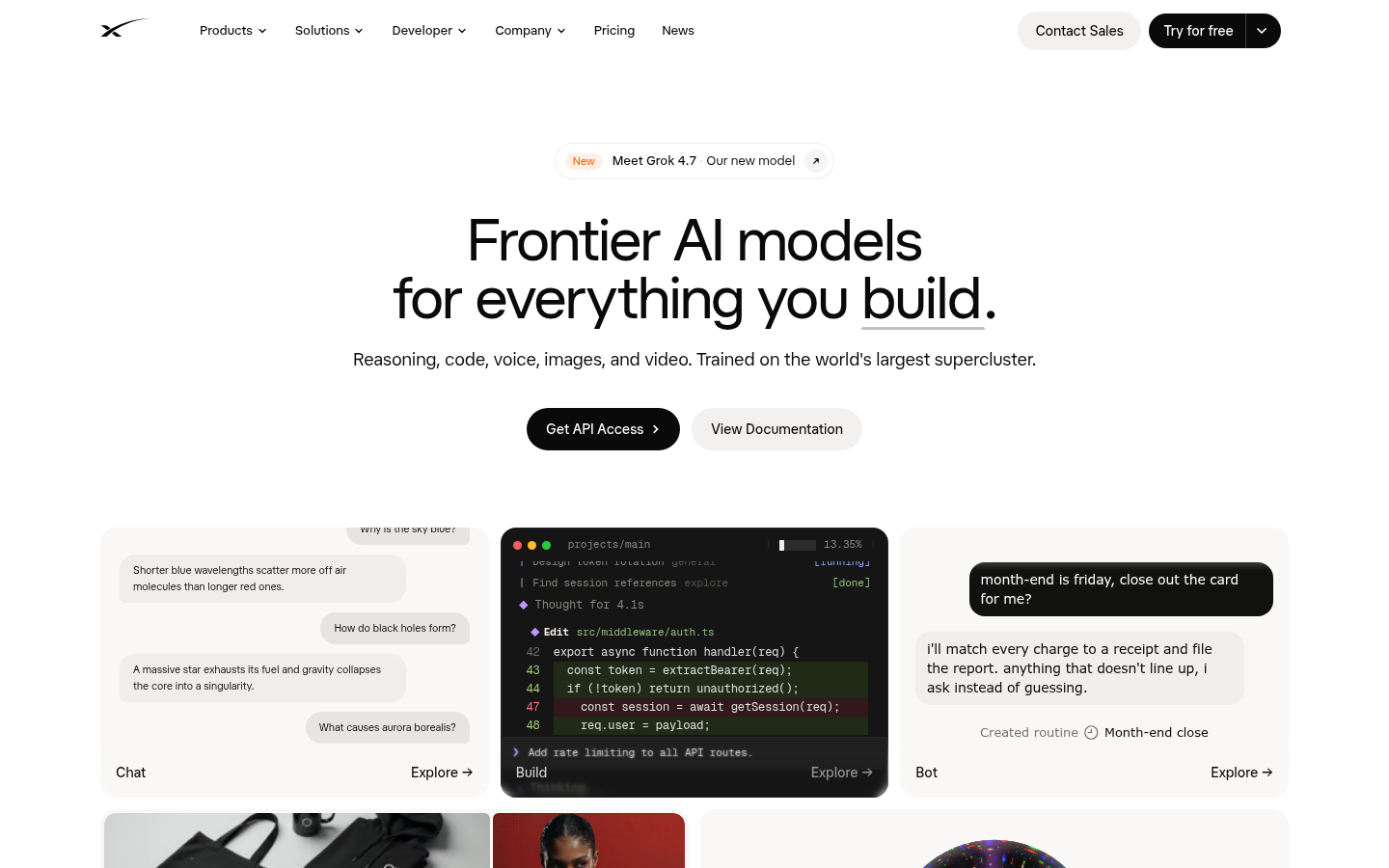
SpaceXSI's Grok voice API runs a single audio model for real-time agents with tool use, search, and multi-turn conversation. SpaceXSI trained its own VAD and audio models from scratch.
The company quotes sub-second latency and offers expressive TTS voices in 25+ languages, and you can clone custom voices from a short recording. The API follows the OpenAI Realtime API specification, including events like session.update. SpaceXSI also sells a separate text-to-speech API.
Conversations cost $0.08/min.
Pros:
- Sub-second quoted latency
- 25+ languages and custom voices
- Follows OpenAI's event format
Cons:
- No self-hosted deployment listed on the API page
Bottom line: choose Grok if you need many languages at a low per-minute rate, because it supports 25+ languages at $0.08/min.
Orchestration APIs
An orchestration API runs the call and passes audio between models you choose from other vendors. Compare it on which providers it supports. Vapi works this way.
Vapi
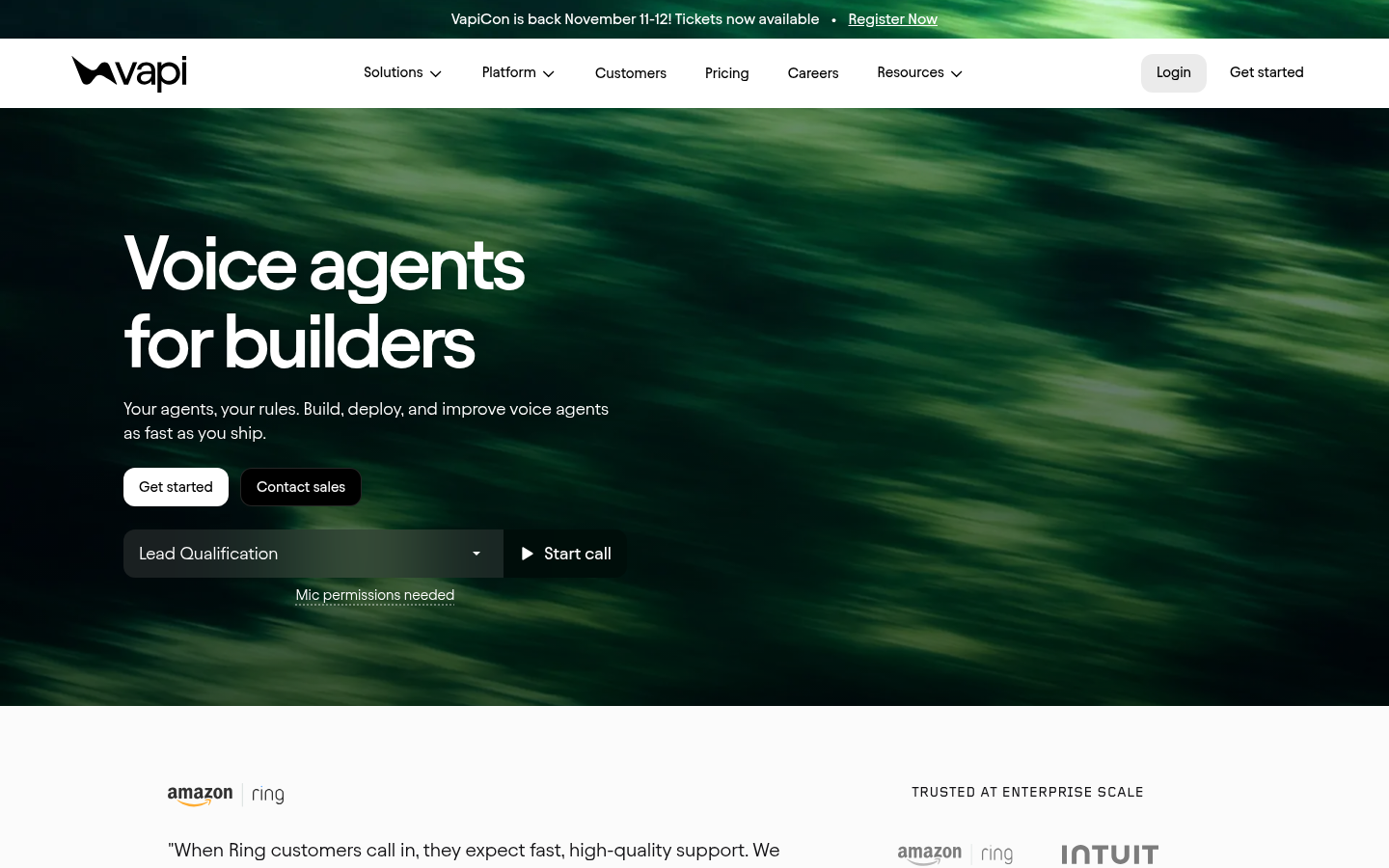
Vapi is API-native and lets you pick each layer of the call. You can use AssemblyAI for transcription, a model from OpenAI or Anthropic for reasoning, and voices from ElevenLabs or Cartesia.
Calls run through Twilio or Telnyx, and the platform connects to contact center software like Genesys and Five9. Its published latency is under 500ms, and it lists SOC 2 and PCI compliance, with HIPAA available as a paid add-on.
New accounts get $5 in free credits, hosting runs $0.05/min, and you pay for each model at cost.
Pros:
- Any provider at every layer of the call
- Models billed at cost
- Telephony built in
Cons:
- The pay-as-you-go plan allows 4 concurrent calls
- Your total cost depends on the models you pick
Bottom line: choose Vapi if you want to mix providers, because it lets you swap the transcription, reasoning, and voice models one at a time and bills them at cost.
Add an interactive avatar to your voice agent API
LemonSlice is an interactive AI avatar platform. It takes the audio your agent already produces and turns it into a real-time character that talks and listens on screen. It works with any LLM and any TTS, so your API keeps handling the listening and the reasoning. Teams use it for customer support, sales training, tutoring, and lead qualification.
- Any character: one photo becomes a live avatar with no training, including non-humans like a turtle or a teacup. LemonSlice generates each frame live at 20 fps, and as the only interactive avatar provider with hand gestures, it lets you update an avatar's appearance, emotions, and actions during a live session.
- Response speed: LemonSlice adds minimal latency on top of your existing voice agent, and it runs thousands of simultaneous sessions. Its global fleet of GPUs means calls can run from regions close to your users.
- Let your coding agent add it: install the LemonSlice skill, then ask Cursor, Claude, or Copilot to add a video avatar to your voice app. The skill scaffolds a starter app with keys, the voice cascade, an image, and a ringing UI.
- Wire any stack: beyond the skill, you can wire any stack that streams audio using LemonSlice's WebSocket endpoints, and the avatar's video reaches your users in a WebRTC call.
The WebSocket connection is the whole integration:
const socket = new WebSocket(websocketAddress);

{
  "command": "audio",
  "audio": "<base64_pcm16_mono>",
  "sampleRate": 16000,
  "encoding": "PCM16"
}
Code sample from lemonslice.com/docs/websocket
Developers can start with as little as $8 a month, and every plan includes unlimited avatars and API access, so you can add a face to each agent you build. Add your first interactive AI avatar to your voice agent API.
How to choose a voice agent API
Shortlist two APIs on these points, then run the same script through both.
| Criterion | What to check | From the APIs above |
|---|---|---|
| Architecture | Full pipeline, a single audio model, or orchestration | Pick the full pipeline for the simplest setup, a single audio model for fewer hand-offs, or orchestration to choose each vendor |
| Connection | Browser, server, or phone line | OpenAI supports WebRTC in the browser, and AssemblyAI works with any telephony provider |
| Latency | The delay before the first reply on your own prompts | AssemblyAI quotes about 1 second end to end, and Grok quotes sub-second |
| Languages and voices | The languages your users speak | Grok supports 25+ languages |
| Pricing | Per hour, per minute, or per token | Per hour or per minute for most APIs, and per token for OpenAI |
If your agent will run on a website, in an app, or anywhere people see a screen, that's where a LemonSlice face layer fits, on top of whichever API you pick.
Run your first test session
A voice agent API turns your app's audio into a spoken conversation through one integration. Full-pipeline APIs keep everything on one connection, single audio models hear and speak directly, and orchestration lets you mix providers. Pick two, send the same script through both, and compare time-to-first-audio, turn detection, and cost per conversation before you commit.
If your agent will appear on a website, in an app, or anywhere people see a screen, add an interactive avatar with LemonSlice. You can talk to a featured avatar for free before you build.