Speed to Lead: Why Response Time Wins Deals

Speed to lead boosts conversions by 391%. Learn the 5-minute rule, key statistics, and how AI-powered video agents deliver instant lead response 24/7.

Conversational AI
February 27, 2026
5
 min read
Speed to Lead: Why Response Time Wins Deals
SHARE

https://lemonslice.com/blog/speed-to-lead

Build an interactive avatar that truly connects

Deploy an avatar that answers questions, guides customers, and drives meaningful conversations 24/7.

Get started

The difference between closing a deal and losing it often comes down to minutes. Speed to lead measures the time between when a potential customer submits their information and when they receive a real first response. According to research on lead response, 78% of B2B customers buy from the company that responds first.

The problem? Most sales teams respond in hours or days. By then, the lead has gone cold, moved to a competitor, or forgotten why they reached out in the first place. In 2026, this gap represents both a crisis and an opportunity.

Here's what you need to know about why speed to lead matters, the benchmarks your team should hit, and how conversational AI for sales eliminates response delays entirely.

What Speed to Lead Means and Why It Matters

Speed to lead is the elapsed time from when a lead opts in (fills out a form, requests a demo, sends an inquiry) to when your team makes first contact. It sounds simple, but most companies measure it poorly or not at all.

The Speed to Lead Formula:

Lead Response Time = Lead Processing Time + Rep Response Time

Lead processing time covers everything that happens before a rep sees the lead: form submission, CRM entry, lead routing, assignment, and notification. Rep response time is how long the sales rep takes to actually reach out after receiving the assignment.

The 5-minute rule has become the baseline benchmark. Research shows that after 5 minutes, the odds of qualifying a lead drop by 80%. But here's the reality: 5 minutes is no longer fast enough to win. The new competitive edge is sub-1-minute response.

Why the urgency? Buyers today complete their research before ever filling out a contact form. Google's 7-11-4 rule describes this process: prospects consume approximately 7 hours of content across 11 touchpoints in 4 different locations before making a decision. By the time they reach out, they're ready to act. Every minute of delay erodes that intent.

Technologies like NLP and automation tools now make instant response achievable at scale, but most companies haven't caught up.

Speed to Lead Statistics: The Numbers That Drive Urgency

The data on lead response time is unambiguous. Faster responses convert dramatically better.

Responding in the first minute increases conversion rates by 391%. Outreach within 5 minutes is 100 times more likely to result in a connection than waiting 30 minutes. According to InsideSales, calling within 5 minutes versus 30 minutes makes you 21 times more likely to qualify the lead. The Harvard Business Review study found that responding within an hour makes you 7 times more likely to qualify compared to waiting just one hour longer.

The neglect crisis compounds the problem. 73% of inbound leads never receive any follow-up at all. The average B2B company takes between 17 and 47 hours to respond to a new B2B lead. Only 7% of companies respond within 5 minutes. And 63.5% never respond at all.

Response Time Impact on Conversion
Under 1 minute +391% conversion rate
Under 5 minutes 21x more effective than 30 min
After 5 minutes 80% drop in qualification odds
After 30 minutes 100x less likely to connect

These statistics reveal a massive opportunity gap. If your competitors are taking hours or days to respond, and you respond in seconds, you capture the deal before they even see the notification.

Why Traditional Lead Response Falls Short

The statistics paint a clear picture, but understanding why response times lag so far behind requires examining the bottlenecks in manual lead response.

  • Manual assignment delays trap leads in queues. Without routing tools, managers struggle to assign new leads efficiently to the right reps.
  • Disjointed systems create friction. Your CRM, marketing automation platform, and sales tools don't sync in real time.
  • Notification gaps mean reps discover new leads hours later instead of seconds after submission, whether alerts come through email, SMS, or push notifications.
  • Human scaling limitations make it impossible for reps to personally engage every lead instantly, especially during peak traffic.
  • Time zone mismatches create dead zones where leads arrive at 2 AM and sit untouched until morning. By then, a competitor with conversational AI for lead generation has already qualified the prospect and booked a meeting.

The sales process breaks down at each handoff. Every workflow step, every routing decision, every queue adds minutes or hours. The result: competitors who streamline their lead management and eliminate bottlenecks capture deals that should have been yours.

How AI Video Agents Solve Speed to Lead

These bottlenecks share a common thread: they all stem from relying on humans to manually handle every step of the response process. AI-powered video agents fundamentally change the equation by delivering immediate, face-to-face engagement without the delays.

  • Instant 24/7 response in video format. Zero wait time from form submission to live conversation. No queues, no routing delays, no after-hours gaps.
  • Video builds trust faster than alternatives. A face captures attention and creates the personal connection that text chatbots, email autoresponders, and canned bot replies lack. Prospects experience something closer to a face-to-face meeting rather than filling out another form.
  • Qualification happens during the conversation. The AI agent asks relevant questions, captures key information, performs lead enrichment, and scores high-value leads in real time. When a human sales rep joins, they have full context on what the prospect needs and how engaged they are.
  • Scalability without compromise. Text chatbots feel transactional and impersonal. Pre-recorded videos can't adapt to what leads actually say. Human reps can't handle unlimited concurrent conversations. AI video agents using machine learning combine the trust-building power of video with the scalability of automation and the intelligence to respond contextually.

For conversational AI for customer service and sales applications alike, this means every lead gets immediate, personalized engagement regardless of when they arrive or how many arrive simultaneously.

Deploying LemonSlice Video Agents: 8-Step Implementation

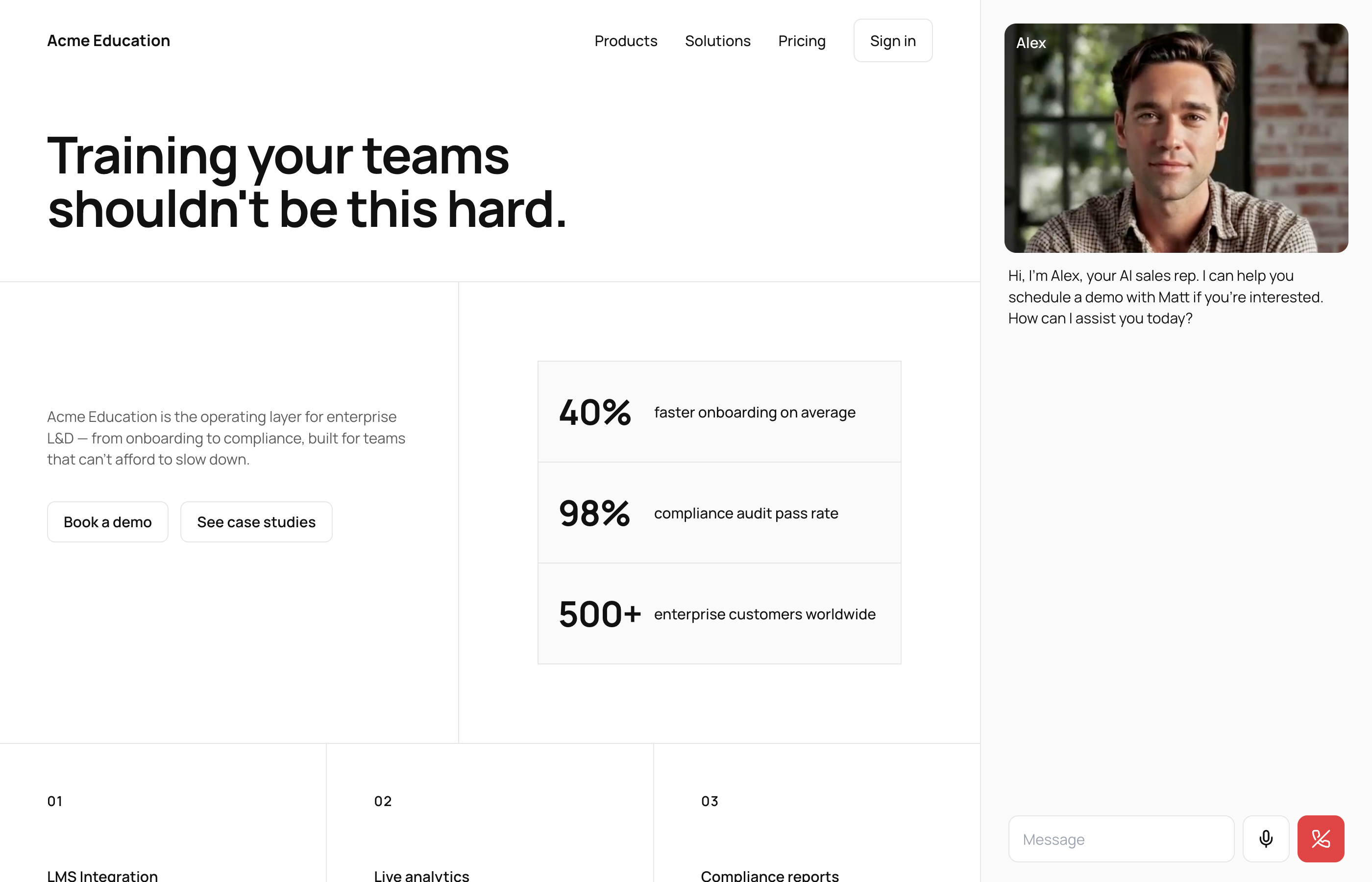
LemonSlice Video Agents engage leads instantly with real-time video conversations. The agent replies to users in video format, creating face-to-face interactions that build trust faster than any chatbot or form. Here's how to deploy one:

1. Create Your Avatar

Upload a single photo: portrait, cartoon, or brand mascot. LemonSlice animates it into a speaking avatar in seconds. No video recording or model training required.

2. Customize Appearance

Adjust welcome screens, default expressions, and visual styling. LemonSlice supports photorealistic humans, illustrated characters, and stylized designs to match your brand.

3. Configure Voice

Choose from the built-in voice library or create custom voices with AI using prompts like "warm, professional female voice." Clone voices from audio samples. The same avatar speaks multiple languages fluently without retraining.

4. Connect Your LLM

LemonSlice is LLM-agnostic. Plug in OpenAI, Anthropic, or any model via API. The conversational interface stays consistent regardless of which model powers the responses.

5. Upload Your Knowledge Base

Provide the information your agent needs: documents, FAQs, product specs, pricing, or company policies. Agents reference this knowledge base to answer questions accurately and stay on-brand.

6. Enable Real-Time Interaction

The system streams video, audio, and conversational state simultaneously with approximately 2-3 second average latency. Agents listen continuously and handle interruptions naturally, stopping mid-response to process new input. Video streams at 20fps. Sessions can run up to 30 minutes. This real-time generation, powered by video diffusion technology, separates conversational AI from scripted video playback.

7. Deploy Instantly

Embed the agent with a single line of code. The widget integrates natively into your site as a lightweight, responsive interface element without iframes or layout constraints.

8. Go Live

Users click to start conversing. Avatars respond with synchronized lip movement, natural gestures, and context-aware dialogue that adapts dynamically based on what users say. Conversational AI for lead scoring happens automatically as the conversation progresses.

For conversational AI for real estate teams, this means capturing motivated buyers and sellers the moment they inquire, not hours later when they've already contacted three other agents.

Speed to Lead Across Industries

While the implementation steps above apply universally, the stakes of speed to lead vary by industry. Some verticals feel the pressure more acutely than others.

  • Real Estate. Motivated sellers and buyers expect immediate response. When someone requests a home valuation or schedules a showing, they're likely contacting multiple agents simultaneously. The first real response often wins the listing or the buyer. AI video agents capture leads before competitors even see the notification, qualifying prospects and answering property questions around the clock.
  • SaaS and B2B. Demo requests signal peak intent. A prospect who fills out your form has done their research and is ready to evaluate. Instant video engagement qualifies them, answers initial questions, and books meetings while interest is highest. Waiting even an hour lets that momentum dissipate.
  • Home Services. Homeowners comparing contractors choose whoever responds first. A leaky pipe or broken HVAC system creates urgency. AI handles after-hours inquiries that would otherwise go to voicemail. Every lead gets immediate attention regardless of when the request arrives.
  • Financial Services. Insurance and mortgage leads are fiercely competitive. Lead aggregators often sell the same lead to multiple providers. First contact frequently determines which provider wins the policy. Conversational AI for insurance gives teams the edge, capturing leads before they finish shopping.
  • Education. Prospective students researching programs expect instant answers about curriculum, admissions requirements, and financial aid. Conversational AI for education enrollment agents guide them through the decision process, answering questions and booking campus visits.

Measuring Speed to Lead Performance

You can't improve what you don't measure. Establishing benchmarks and tracking metrics transforms speed to lead from an abstract goal into a measurable KPI.

The Core Formula:

Time of First Contact − Time of Lead Submission = Speed to Lead

For team averages, sum all individual response times and divide by the number of leads contacted. Track response time by source (paid ads, organic, LinkedIn, referral, landing pages) to identify which channels receive faster or slower follow-up.

Compare conversion rates by response timeframe to prove ROI. When you can show that leads contacted in under 1 minute convert at 4x the rate of leads contacted after 30 minutes, the investment in automation tools becomes obvious.

Metric What to Track
Average response time Minutes from submission to first contact
Response rate by timeframe % of leads contacted in <1 min, <5 min, <1 hour
Conversion by response speed Close rate segmented by response time
After-hours coverage % of leads engaged outside business hours

Your CRM analytics through platforms like Salesforce or HubSpot should track these metrics automatically. Set SLA thresholds and notifications when response times exceed targets. For team members, create leaderboards that reward fast responses. For workflows, identify where leads get stuck and optimize those routing steps.

The goal: drive average response time toward zero within a defined timeframe. Quick responses increase lead conversion and improve the customer experience.

Stop Losing Deals to Slower Competitors

Speed to lead determines who wins and who gets left checking voicemail. The data is unambiguous: first responders capture 78% of deals, and sub-minute responses boost conversions by 391%.

LemonSlice Video Agents eliminate response delays by engaging every lead instantly with real-time video conversations. The AI qualifies prospects, answers questions from your knowledge base, and hands off seamlessly to human reps with full context. For teams serious about conversational AI for inbound leads, this is how you turn speed into a competitive advantage.

Ready to respond faster than your competitors? Get started with LemonSlice Video Agents today.

Create your first interactive AI avatar

Design your avatar, upload your knowledge base, and launch it on your website in minutes.

Get started

Create your first interactive AI avatar

Design your avatar, upload your knowledge base, and launch it on your website in minutes.

Red Gradient Over a boy
Blue Gradient over a girl with glasses
Yellow Gradient over a girl a tied hair and a bun
Red Gradient Over a Lady in the evening time
Blue Gradient over a men
Green Gradient Over a Lady at a subset time
Red Gradient Over a boy
Blue Gradient over a girl with glasses
Yellow Gradient over a girl a tied hair and a bun
Red Gradient Over a Lady in the evening time
Blue Gradient over a men
Green Gradient Over a Lady at a subset time
Red Gradient Over a boy
Blue Gradient over a girl with glasses
Yellow Gradient over a girl a tied hair and a bun
Red Gradient Over a Lady in the evening time
Blue Gradient over a men
Green Gradient Over a Lady at a subset time
Red Gradient Over a boy
Blue Gradient over a girl with glasses
Yellow Gradient over a girl a tied hair and a bun
Red Gradient Over a Lady in the evening time
Blue Gradient over a men
Green Gradient Over a Lady at a subset time
Red Gradient Over a boy
Blue Gradient over a girl with glasses
Yellow Gradient over a girl a tied hair and a bun
Red Gradient Over a Lady in the evening time
Blue Gradient over a men
Green Gradient Over a Lady at a subset time
Red Gradient Over a boy
Blue Gradient over a girl with glasses
Yellow Gradient over a girl a tied hair and a bun
Red Gradient Over a Lady in the evening time
Blue Gradient over a men
Green Gradient Over a Lady at a subset time
Red Gradient Over a boy
Blue Gradient over a girl with glasses
Yellow Gradient over a girl a tied hair and a bun
Red Gradient Over a Lady in the evening time
Blue Gradient over a men
Green Gradient Over a Lady at a subset time
Red Gradient Over a boy
Blue Gradient over a girl with glasses
Yellow Gradient over a girl a tied hair and a bun
Red Gradient Over a Lady in the evening time
Blue Gradient over a men
Green Gradient Over a Lady at a subset time
Red Gradient Over a Lady in the evening time
Green Gradient Over a Lady at a subset time
Blue Gradient over a men
Yellow Gradient over a girl a tied hair and a bun
Blue Gradient over a girl with glasses
Red Gradient Over a boy
Red Gradient Over a Lady in the evening time
Green Gradient Over a Lady at a subset time
Blue Gradient over a men
Yellow Gradient over a girl a tied hair and a bun
Blue Gradient over a girl with glasses
Red Gradient Over a boy
Red Gradient Over a Lady in the evening time
Green Gradient Over a Lady at a subset time
Blue Gradient over a men
Yellow Gradient over a girl a tied hair and a bun
Blue Gradient over a girl with glasses
Red Gradient Over a boy
Red Gradient Over a Lady in the evening time
Green Gradient Over a Lady at a subset time
Blue Gradient over a men
Yellow Gradient over a girl a tied hair and a bun
Blue Gradient over a girl with glasses
Red Gradient Over a boy
Red Gradient Over a Lady in the evening time
Green Gradient Over a Lady at a subset time
Blue Gradient over a men
Yellow Gradient over a girl a tied hair and a bun
Blue Gradient over a girl with glasses
Red Gradient Over a boy
Red Gradient Over a Lady in the evening time
Green Gradient Over a Lady at a subset time
Blue Gradient over a men
Yellow Gradient over a girl a tied hair and a bun
Blue Gradient over a girl with glasses
Red Gradient Over a boy
Red Gradient Over a Lady in the evening time
Green Gradient Over a Lady at a subset time
Blue Gradient over a men
Yellow Gradient over a girl a tied hair and a bun
Blue Gradient over a girl with glasses
Red Gradient Over a boy
Red Gradient Over a Lady in the evening time
Green Gradient Over a Lady at a subset time
Blue Gradient over a men
Yellow Gradient over a girl a tied hair and a bun
Blue Gradient over a girl with glasses
Red Gradient Over a boy
Blue Gradient over a men
Yellow Gradient over a girl a tied hair and a bun
Green Gradient Over a Lady at a subset time
Red Gradient Over a Lady in the evening time
Red Gradient Over a boy
Blue Gradient over a girl with glasses
Blue Gradient over a men
Yellow Gradient over a girl a tied hair and a bun
Green Gradient Over a Lady at a subset time
Red Gradient Over a Lady in the evening time
Red Gradient Over a boy
Blue Gradient over a girl with glasses
Blue Gradient over a men
Yellow Gradient over a girl a tied hair and a bun
Green Gradient Over a Lady at a subset time
Red Gradient Over a Lady in the evening time
Red Gradient Over a boy
Blue Gradient over a girl with glasses
Blue Gradient over a men
Yellow Gradient over a girl a tied hair and a bun
Green Gradient Over a Lady at a subset time
Red Gradient Over a Lady in the evening time
Red Gradient Over a boy
Blue Gradient over a girl with glasses
Blue Gradient over a men
Yellow Gradient over a girl a tied hair and a bun
Green Gradient Over a Lady at a subset time
Red Gradient Over a Lady in the evening time
Red Gradient Over a boy
Blue Gradient over a girl with glasses
Blue Gradient over a men
Yellow Gradient over a girl a tied hair and a bun
Green Gradient Over a Lady at a subset time
Red Gradient Over a Lady in the evening time
Red Gradient Over a boy
Blue Gradient over a girl with glasses
Blue Gradient over a men
Yellow Gradient over a girl a tied hair and a bun
Green Gradient Over a Lady at a subset time
Red Gradient Over a Lady in the evening time
Red Gradient Over a boy
Blue Gradient over a girl with glasses
Blue Gradient over a men
Yellow Gradient over a girl a tied hair and a bun
Green Gradient Over a Lady at a subset time
Red Gradient Over a Lady in the evening time
Red Gradient Over a boy
Blue Gradient over a girl with glasses
Yellow Gradient over a girl a tied hair and a bun
Blue Gradient over a men
Red Gradient Over a Lady in the evening time
Red Gradient Over a boy
Green Gradient Over a Lady at a subset time
Blue Gradient over a girl with glasses
Yellow Gradient over a girl a tied hair and a bun
Blue Gradient over a men
Red Gradient Over a Lady in the evening time
Red Gradient Over a boy
Green Gradient Over a Lady at a subset time
Blue Gradient over a girl with glasses
Yellow Gradient over a girl a tied hair and a bun
Blue Gradient over a men
Red Gradient Over a Lady in the evening time
Red Gradient Over a boy
Green Gradient Over a Lady at a subset time
Blue Gradient over a girl with glasses
Yellow Gradient over a girl a tied hair and a bun
Blue Gradient over a men
Red Gradient Over a Lady in the evening time
Red Gradient Over a boy
Green Gradient Over a Lady at a subset time
Blue Gradient over a girl with glasses
Yellow Gradient over a girl a tied hair and a bun
Blue Gradient over a men
Red Gradient Over a Lady in the evening time
Red Gradient Over a boy
Green Gradient Over a Lady at a subset time
Blue Gradient over a girl with glasses
Yellow Gradient over a girl a tied hair and a bun
Blue Gradient over a men
Red Gradient Over a Lady in the evening time
Red Gradient Over a boy
Green Gradient Over a Lady at a subset time
Blue Gradient over a girl with glasses
Yellow Gradient over a girl a tied hair and a bun
Blue Gradient over a men
Red Gradient Over a Lady in the evening time
Red Gradient Over a boy
Green Gradient Over a Lady at a subset time
Blue Gradient over a girl with glasses
Yellow Gradient over a girl a tied hair and a bun
Blue Gradient over a men
Red Gradient Over a Lady in the evening time
Red Gradient Over a boy
Green Gradient Over a Lady at a subset time
Blue Gradient over a girl with glasses